
In addition to the larger total weight of the blades, pylons, mainframe and transformer transport vehicles, the length of the body and the back wheel trajectory also magnify the risks in the turn and the top of the slopes of the participating areas.Any section of the route softened, slabs were not wide enough or sutures were missing, which could halt the entire convoy.Widely spread by direct line only, neglects the inside wheel differentials, the swinging of the tractor and the ramp.The project should carry out route simulations and test vehicles prior to transport, mark broad areas, no-stop areas and rescue points, and be certified at low speed with representative full capacity;Each large shipment was reviewed for drainage, sutures and ground deposition, and the results of the passage during the construction period could not be considered to be directly valid for the suspension period.
Project guidance
Product selection for Wind and Solar Infrastructure Ground Protection and Equipment Solutions
For wind and solar infrastructure, check traffic or equipment loads, site bearing conditions and the working route before selecting ground protection mats.
The useful specification depends on axle loads, the ground under the mats, drainage, turns and repeat vehicle passes. Confirm connection details and site layout against the actual project.
View HDPE ground protection mats product details →Field applications for wind, photovoltaic and new energy sources
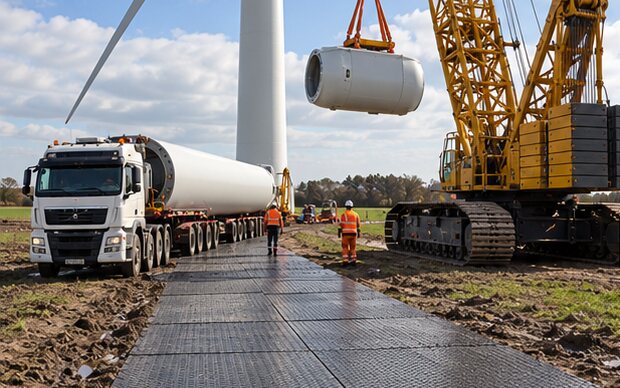
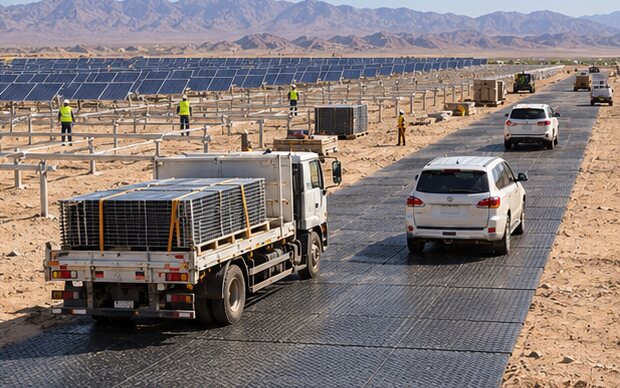
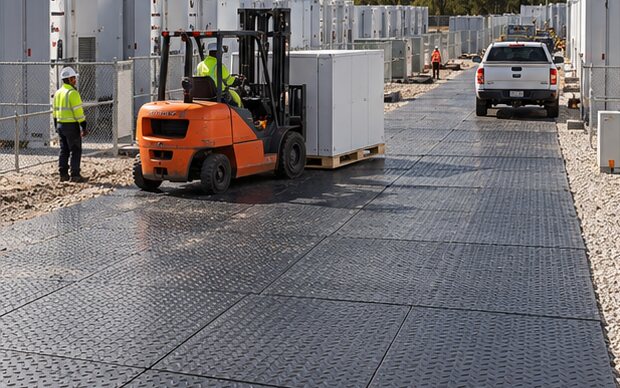
Common project applications for wind, photovoltaic and new energy projects
Description of the business processes, vehicle equipment, ground conditions and the project cycle.
Wind, voltage, and new energy projects include wind engine infrastructure and suspension, transportation of towers and blades, construction of mountain or desert photovoltaics, installation of storage containers, construction of lifting stations and post-rehabilitation. Large-component transport vehicles are large, axle-mounted and equipped in large quantities, often located in areas far from permanent roads, such as mountains, wastelands, grasslands, deserts or coasts.
The transport requirements for the different phases of the new energy project vary significantly: the construction period is dominated by earth and concrete vehicles, the installation period is increased by excessive transport and heavy lifting, while the duration of the operation emphasizes the availability of a small number of vehicles over the long term.Within the PV zone, there is also a need to avoid crushing cable trenches, ground networks and the building of components, and storage stations are equipped with containers for suspension and precise positioning.The programme shall assess the main transport route, feeder, hanger platform, equipment offload area and permanent transportway separately and record the maximum vehicle type, turn track, slope, ground-based load, reversibility of legs and seasonal rainfall or wind and sand effects.
Common Issues
The actual performance of wind, voltage and new energy projects, respectively, explains the causes of formation, possible impacts, focus of inspections and management methods.
New energy sites are often widely distributed, with surfaces likely to consist of weather, grass, sand or backfilling platforms.Heavy rain washes the slopes and shoulders, and sudden precipitation following prolonged drought can lead to deep softening;Sands are transported along the winds and form loose pits under wheel-driven vehicles.If drainage, slope and edge constraints are addressed only on surface sheeting, the sheeting moves along the grass-roots level.The project should be designed in accordance with the geomorphological subsectors, with slopes set for drainage and speed limits, sand cleared of loose piles and keeping route boundaries, and low-lying areas reserved for drainage exports.Weather changes are followed by a tour of the line and the discharge of the heavy vehicle.The wind, photovoltaic and new energy project site should set clear standards for decommissioning of the “desolate land, mountain and desert base as weather changes become apparent”, such as continued tipping, incomplete support surfaces, extended depositions, visible slides in vehicles or loose links.Unusual isolation and unloading were detected, and then the floors were repaired or reconfigured, and temporary pads were prohibited in carrying conditions.The head of the mission may not resume operations until he or she has been qualified to do so, and records of disposal are maintained.
Wind-capturing machines, the installation of lifting station equipment and the positioning of energy containers can generate high retroactivity of legs or a downside pressure of belts.The crane tonnage is only preliminary information and the actual reaction will vary with the weight, range, revolving position and weight;Particular care is needed on the edge of the platform, in the base backfill area and in the vicinity of underground cables.The suspension schedule shall be obtained prior to the operation to confirm the maximum retroactivity of the leg, the size of the original foot and the ground floor to allow pressure, and the platform shall be reviewed by the engineer as necessary.Outrigger Pads shall be fully exposed and maintained at the level, with deposition observations during the suspension, and re-checks after wind speed, rainfall or cranes have moved, avoiding any increase in temporary wood.For “high concentration loads in position of large-scale suspension and storage equipment”, the wind, photovoltaic and new energy project should also include the results of the inspection in the pre-class confirmation and handover records, specifying who is responsible for release, who is responsible for inspection, what deposition or relocation must be discontinued.Retroactive recording of photographs, measurements and usages will make it possible to distinguish ground-based changes, operational deviations from product damage and avoid repetition of the same problem between different groups.
Solution Recommendations
The route, the grass-roots, the support or the unloading of the material is addressed first, and the corresponding products are recommended according to the work situation.
The stratification programme should be established in accordance with the construction phase and route level.The main transport line first treats drainage, slopes and weak grass-roots levels, and then is set up on the basis of maximum vehicles, maximum components and the pass-through Ground Protection Mats;The in-field feeder is carried out using a mobile module, which follows the construction site.The long vehicle bends widens the course of the sweep, and the crane platform and the storage area are individually verified and not designed directly as a leg bearing pressure.Three review nodes were set up for construction, installation and transport to record the state of sedimentation and sutures following each weather event and to reserve the location of rescue and transport vehicles.
HDPE Ground Protection Mats—for the temporary movement of wind engine components, photovoltaic materials and transport vehicles, sand, wet soil and high frequency heavy load sections shall be evaluated for thicker specifications of 25 mm or 30 mm and for the means of connection, based on the results of the trial pavement;Equipment for vehicle suspension, auxiliary suspension and storage should be equipped with a single-leg reaction Crane Outrigger Pads to expand the area of exposure and control the surface pressure.The project could be assessed separately if there were large amounts of earth and sandstone offload transports, but the core remains the ground and hanging platform of the first solution route.The number of products should be measured by the length of the main line, the rotational beat and the reserve ratio, so as to avoid only estimating the total area of the site.
Ground Protection Mats
For the establishment of temporary vehicle access, protection of the original ground and dispersion of the wheel; specific thickness, size, texture and connection will be determined by vehicle and base level.
Crane Outrigger Pads
For the purpose of increasing the area of the foot exposure and reducing average ground pressure; must be calculated in conjunction with maximum single-leg reaction, original foot size and a permissible ground pressure.
Manufacturing
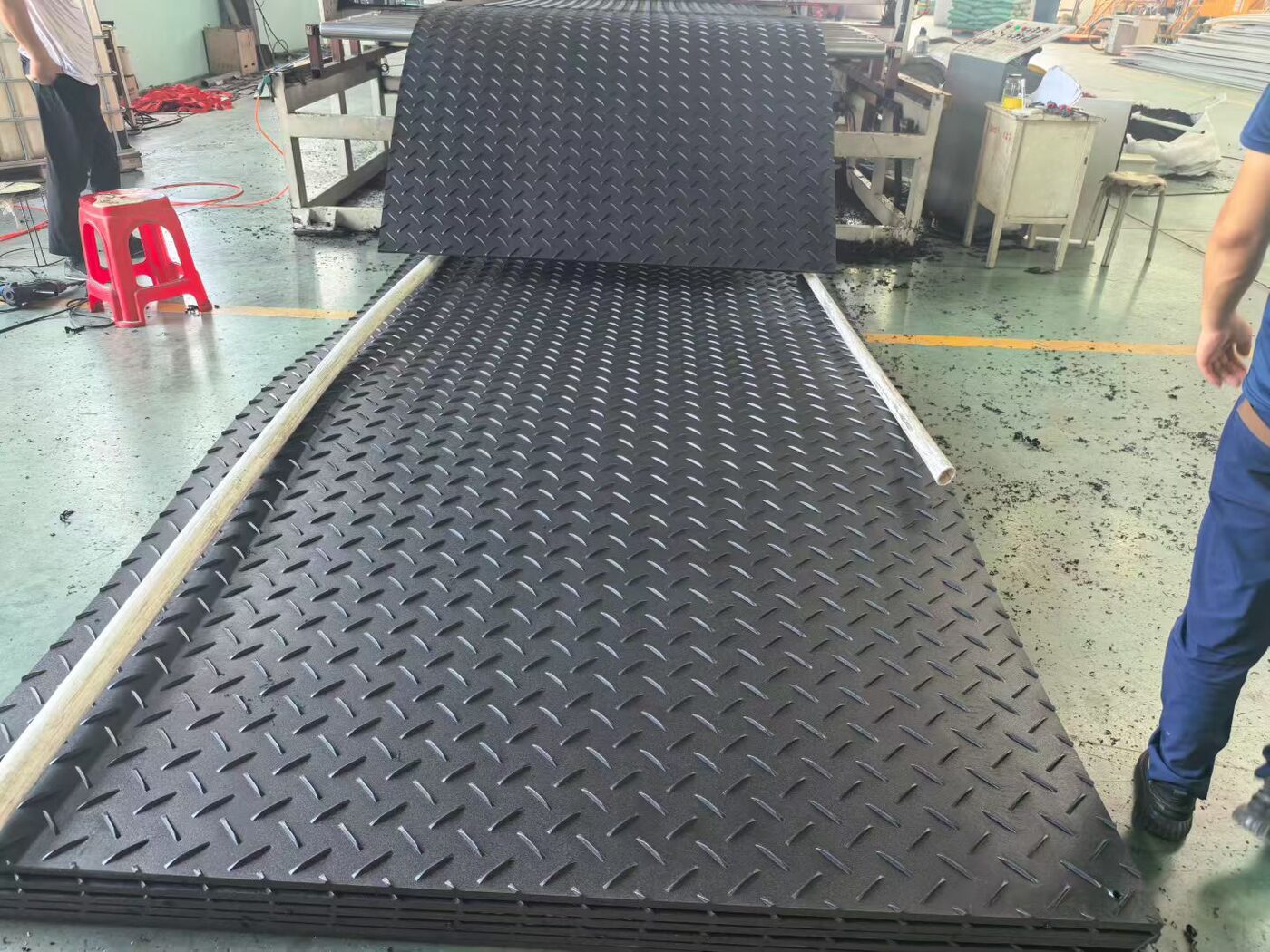
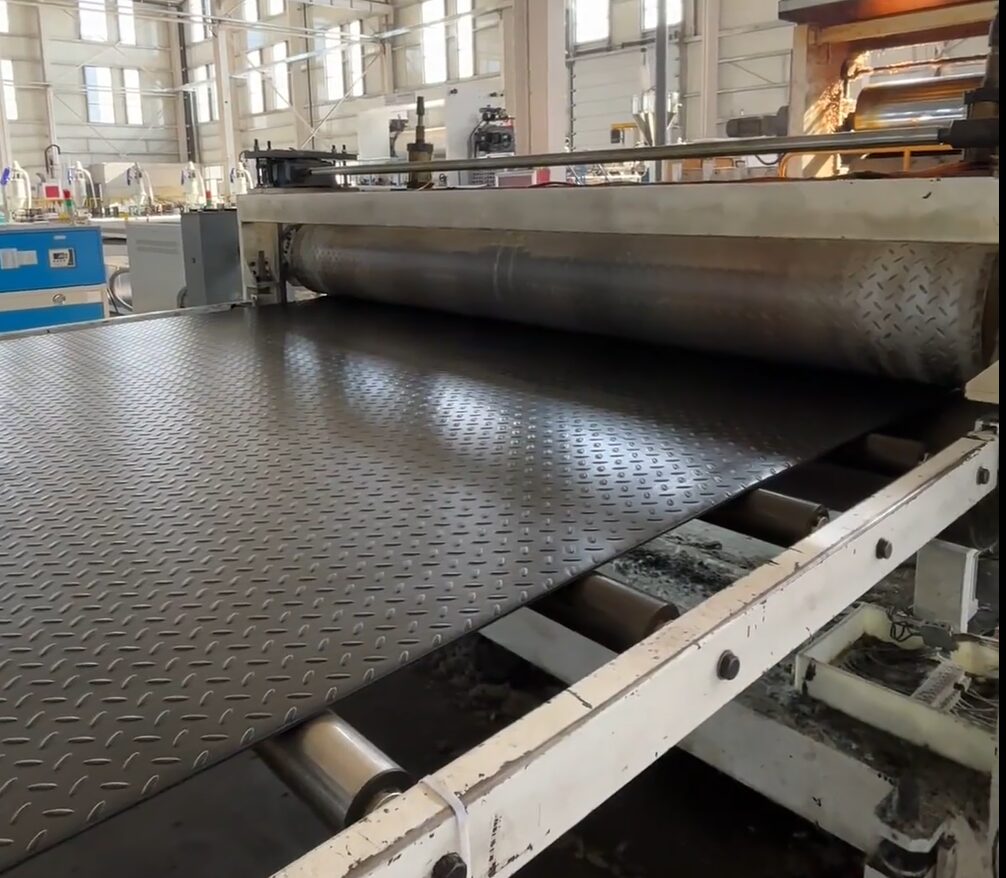
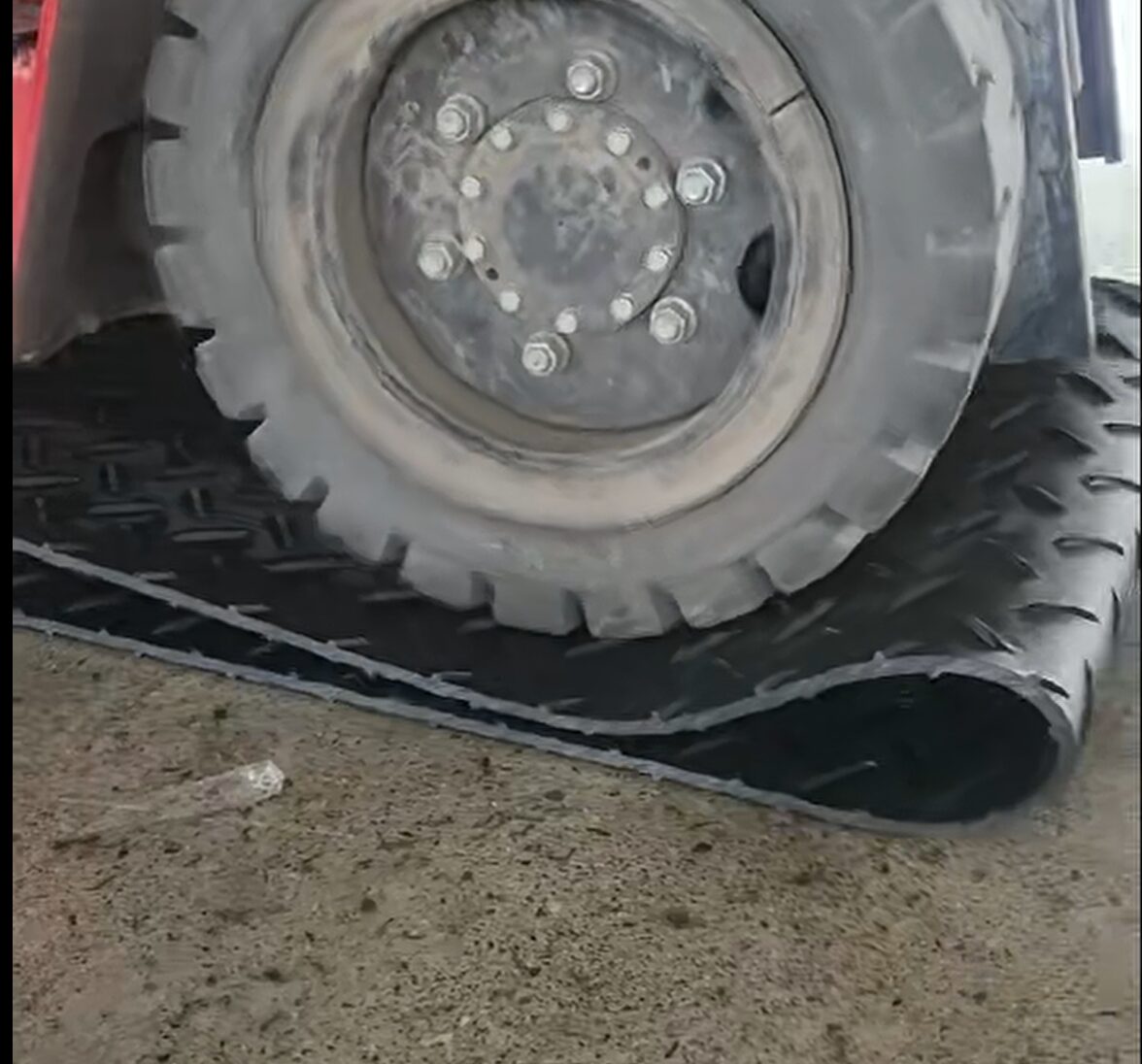
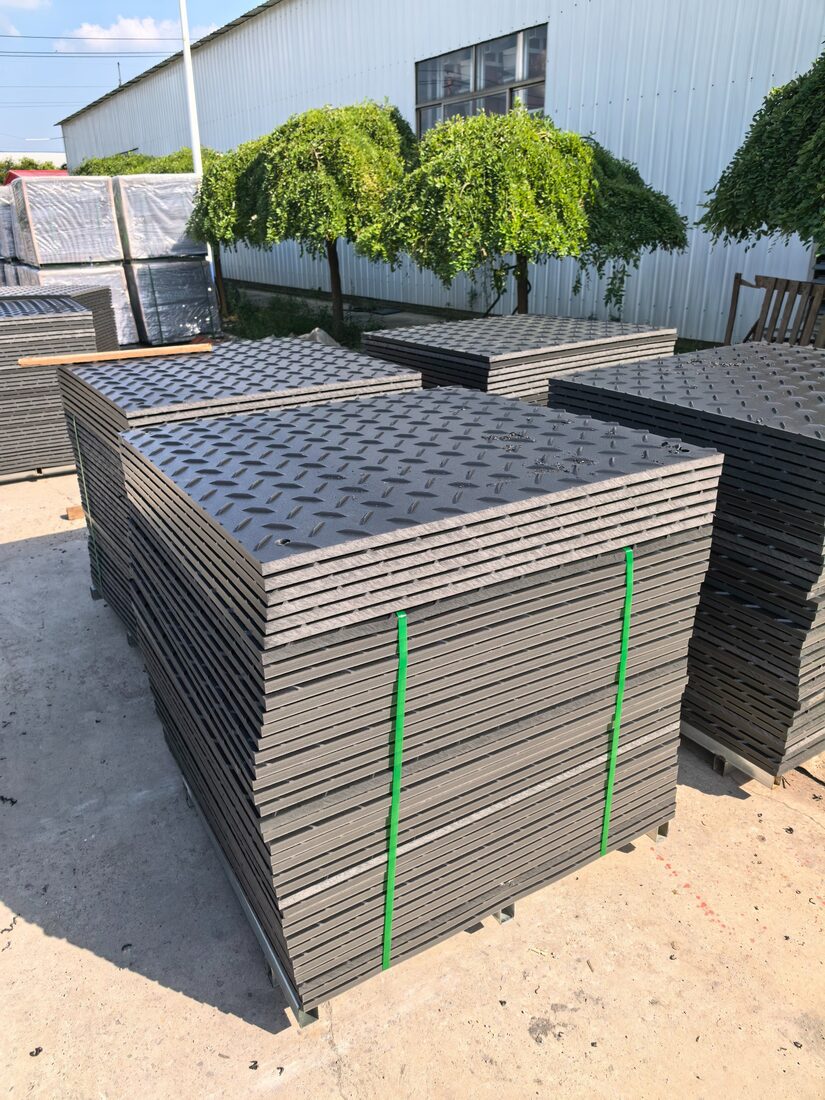
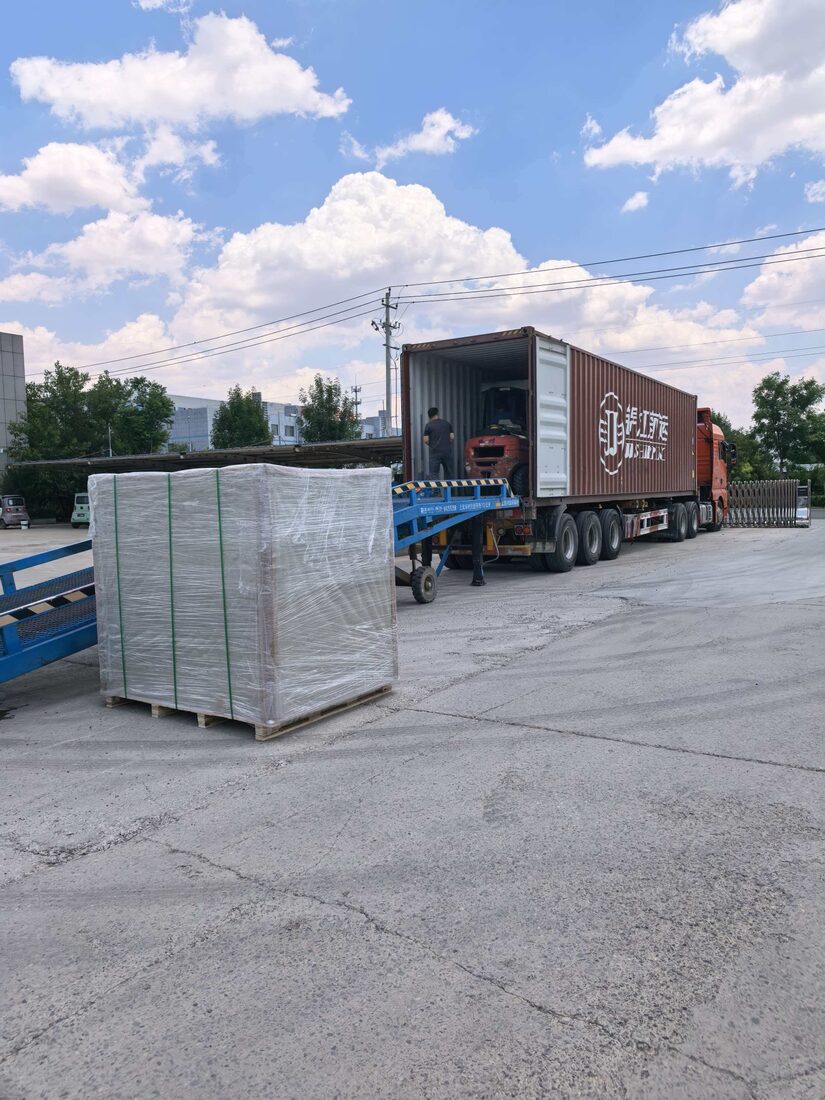
01Ground Protection Mats Production and bulk delivery
From smooth-truck road formation to vehicle load validation, to mass stacking, packaging and loading.
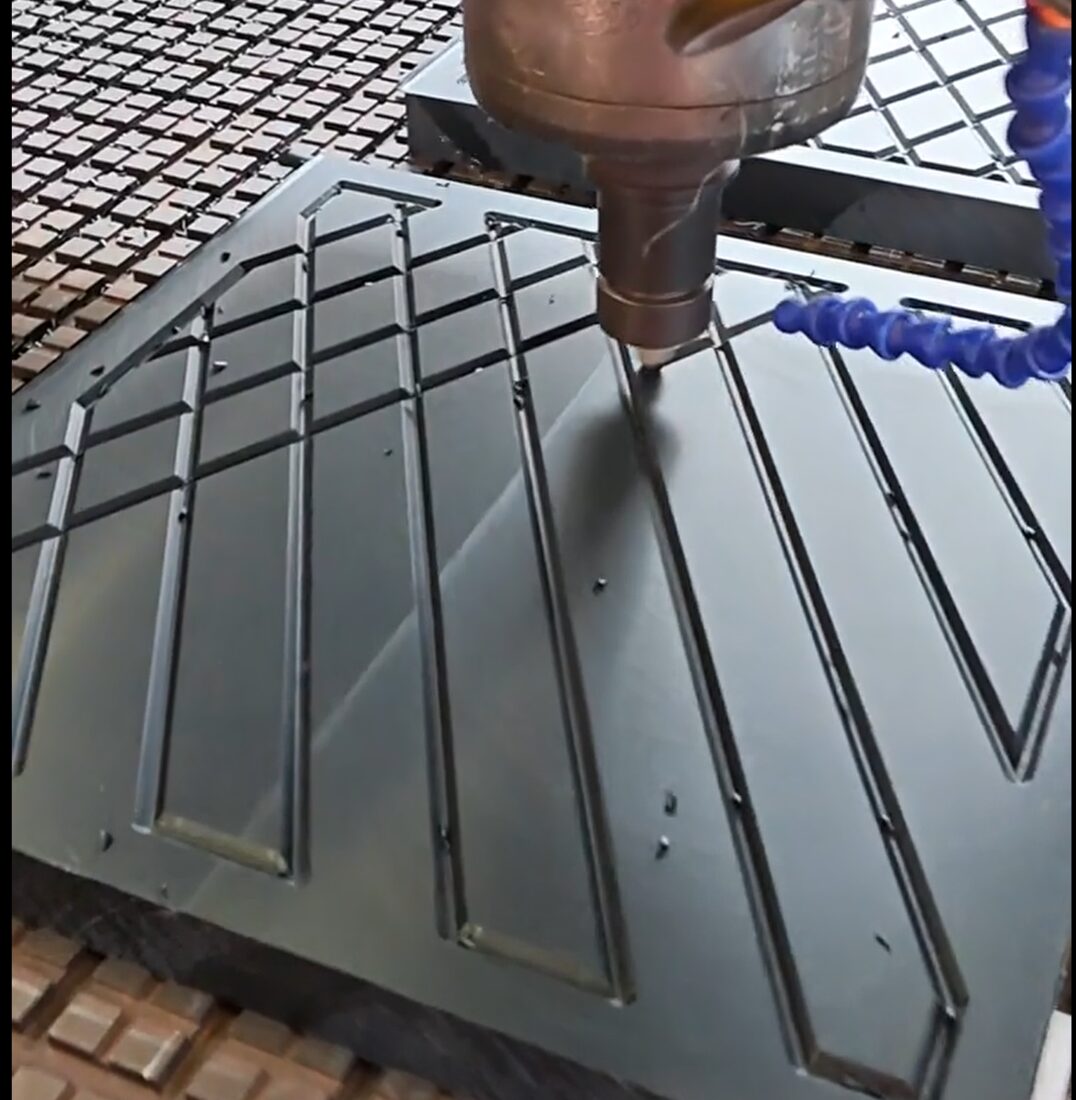
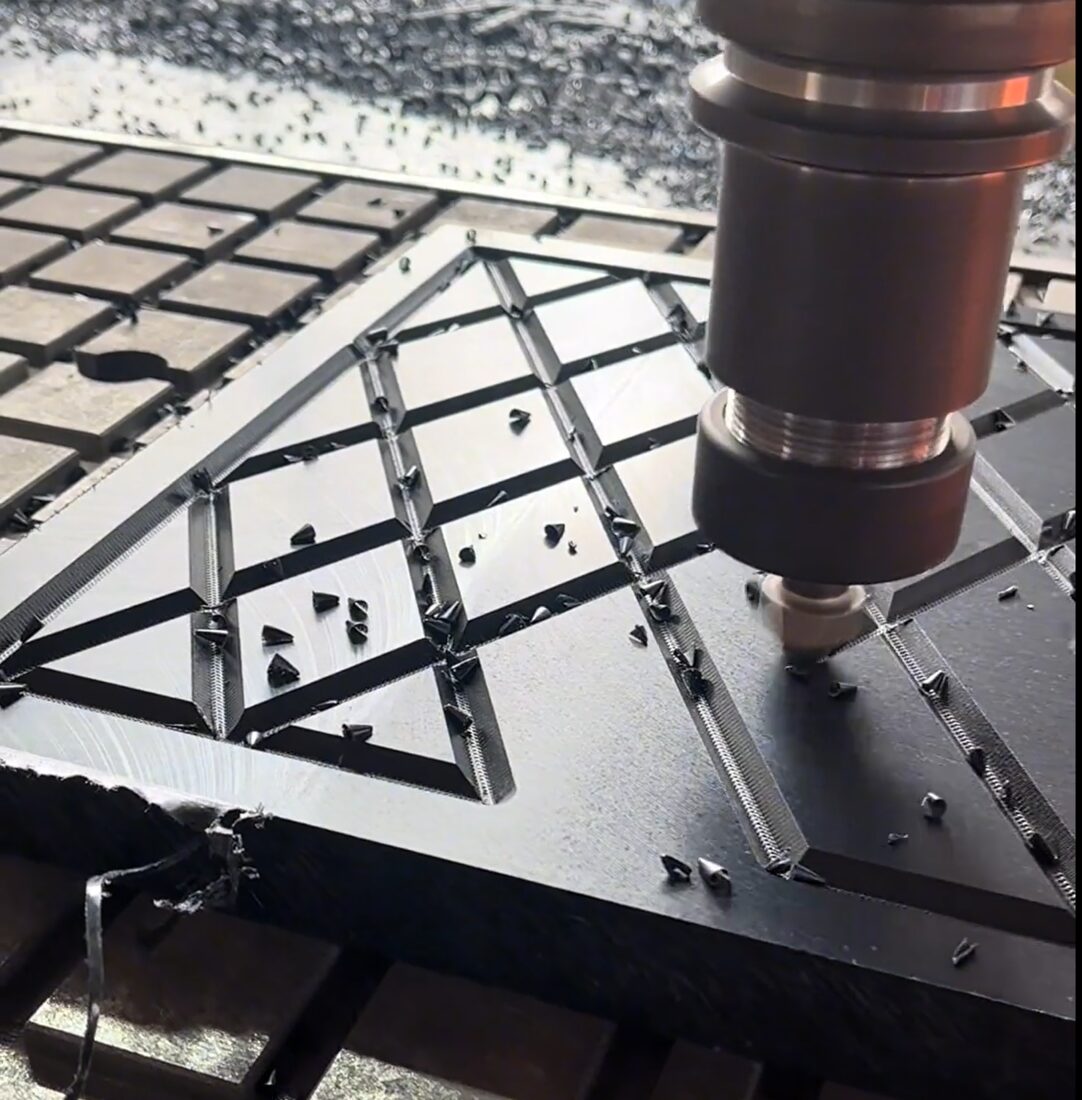
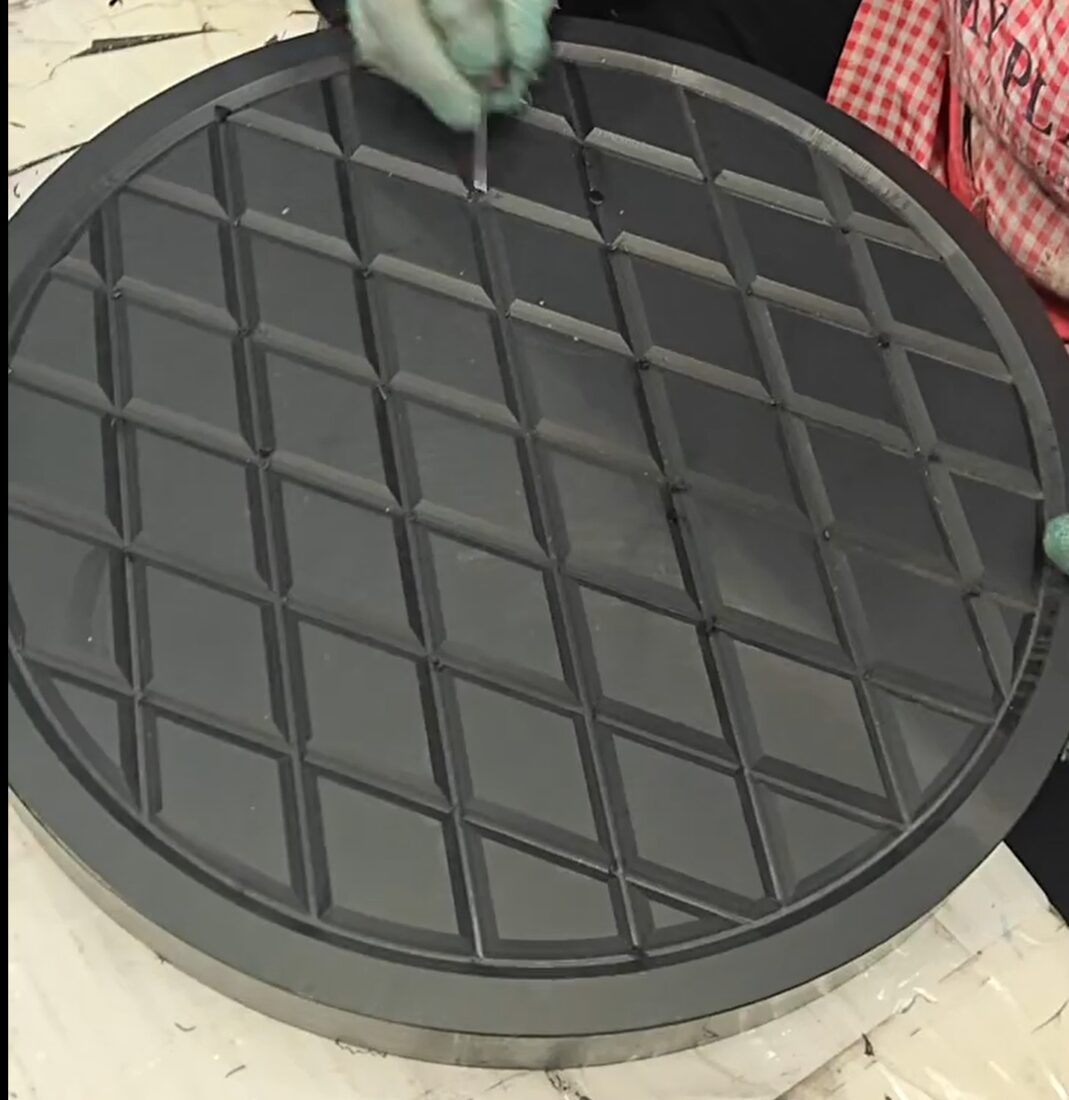
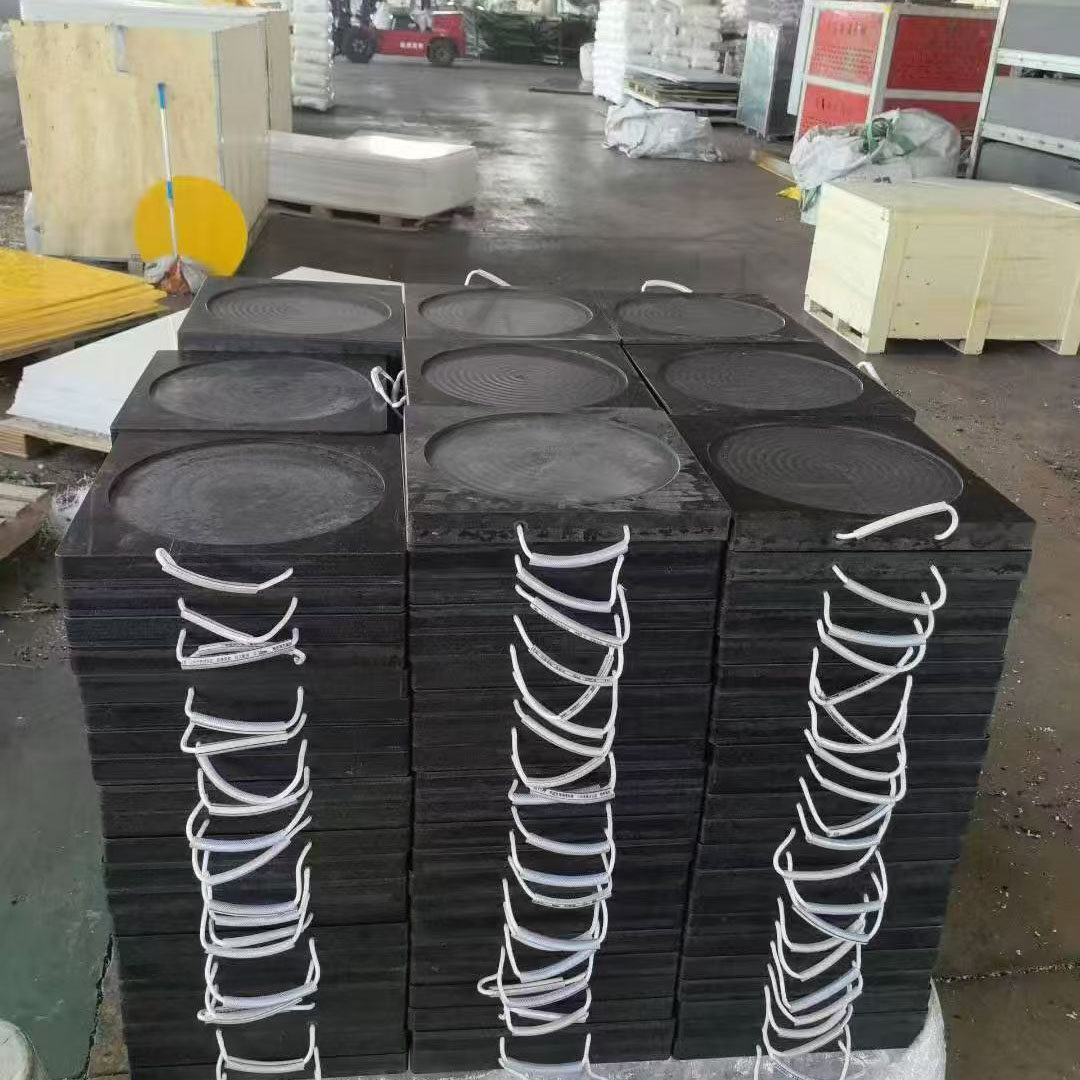
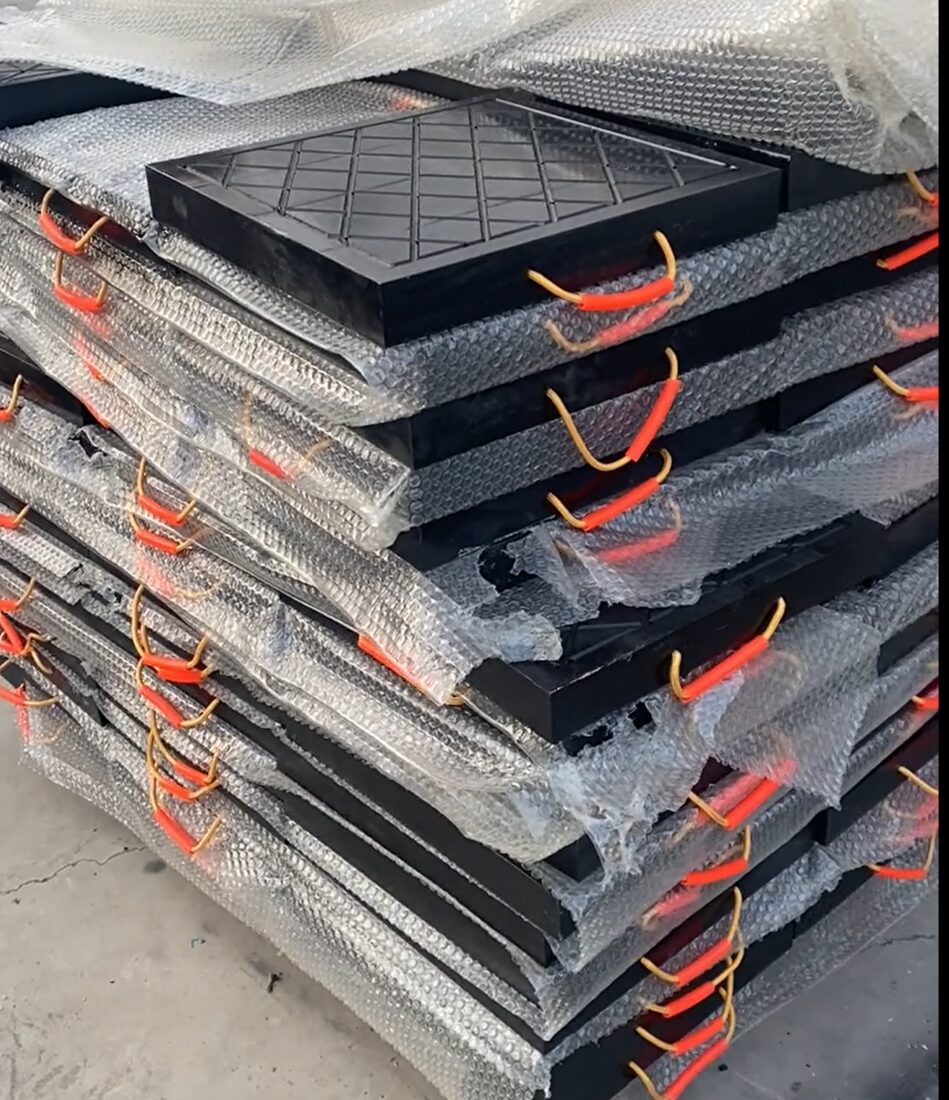
02Crane Outrigger Pads Processing and Inspection
CNC processes, surface structural checks, attachment configurations and packagings showing circles, squares—Outrigger Pads.
Information proposed before request for quotations
The more complete the information, the easier it is to quickly determine the appropriate size, thickness, structure, quantity and customization.
- Type and weight of vehicle/equipment
- Ground type versus hardness
- Length, width and turn of route
- Retroactivity of equipment model with maximum leg
- Size of original foot
- Ground carrying conditions
- Projected number of acquisitions
- Port of destination/delivery area
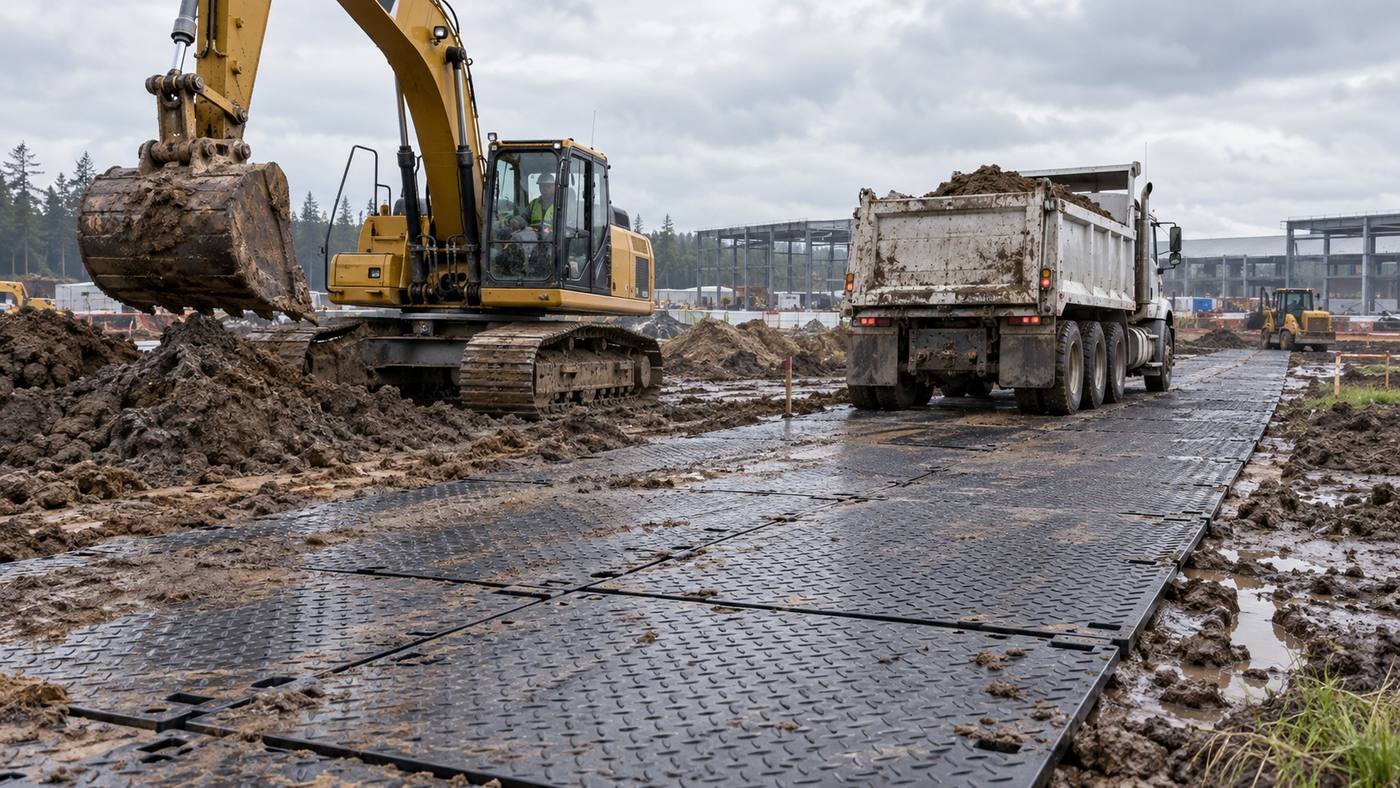
(b) The need for wind, photovoltaic and new energy project programmes?
We continue to assess the actual conditions of work for the distribution of site photographs, equipment/vehicle parameters, application conditions, quantity and port of destination.
Industry application cases
Browse the typical applications of Ground Protection Mats-, Dump Truck Bed Liners- and Outrigger Pads-- in different industries, click on pictures to enter the corresponding industry pages.
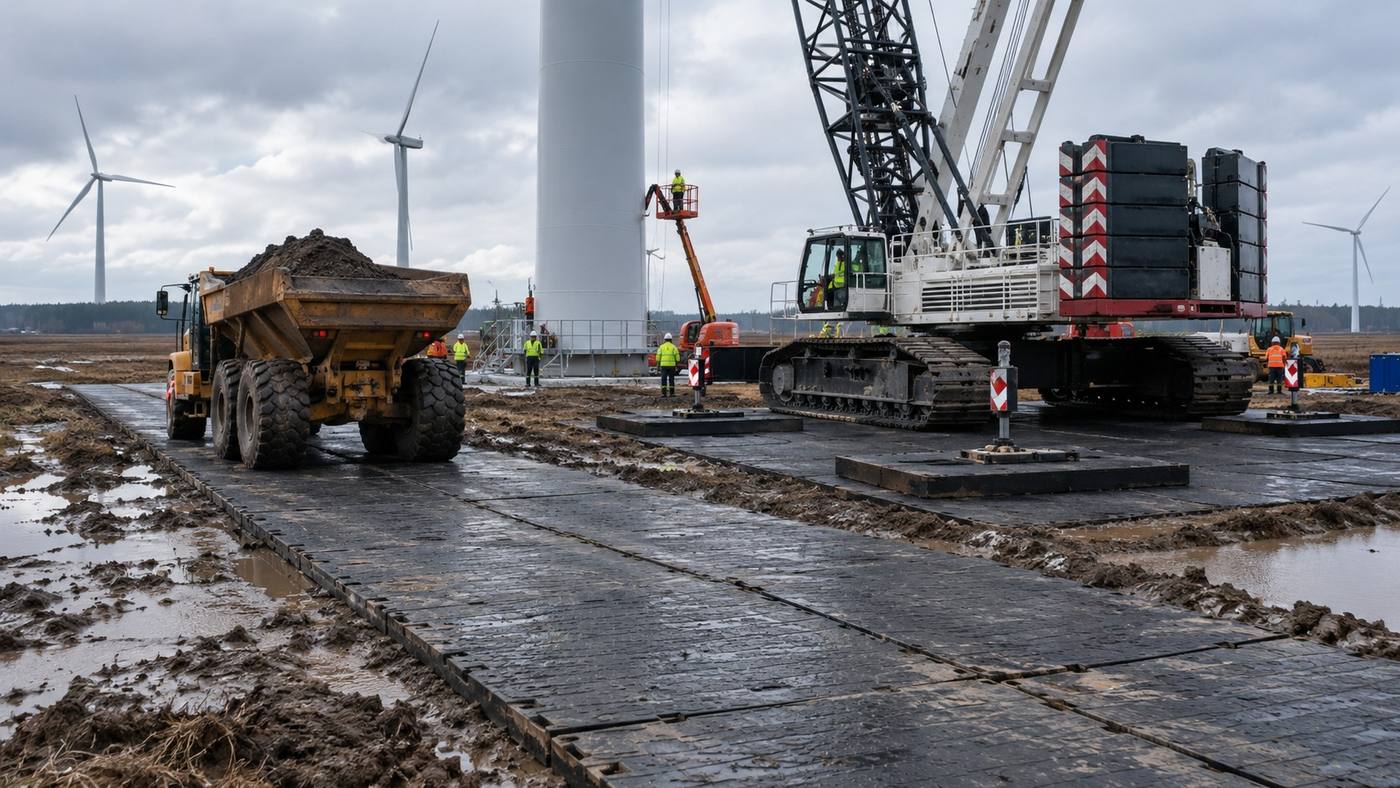 Construction & Infrastructure
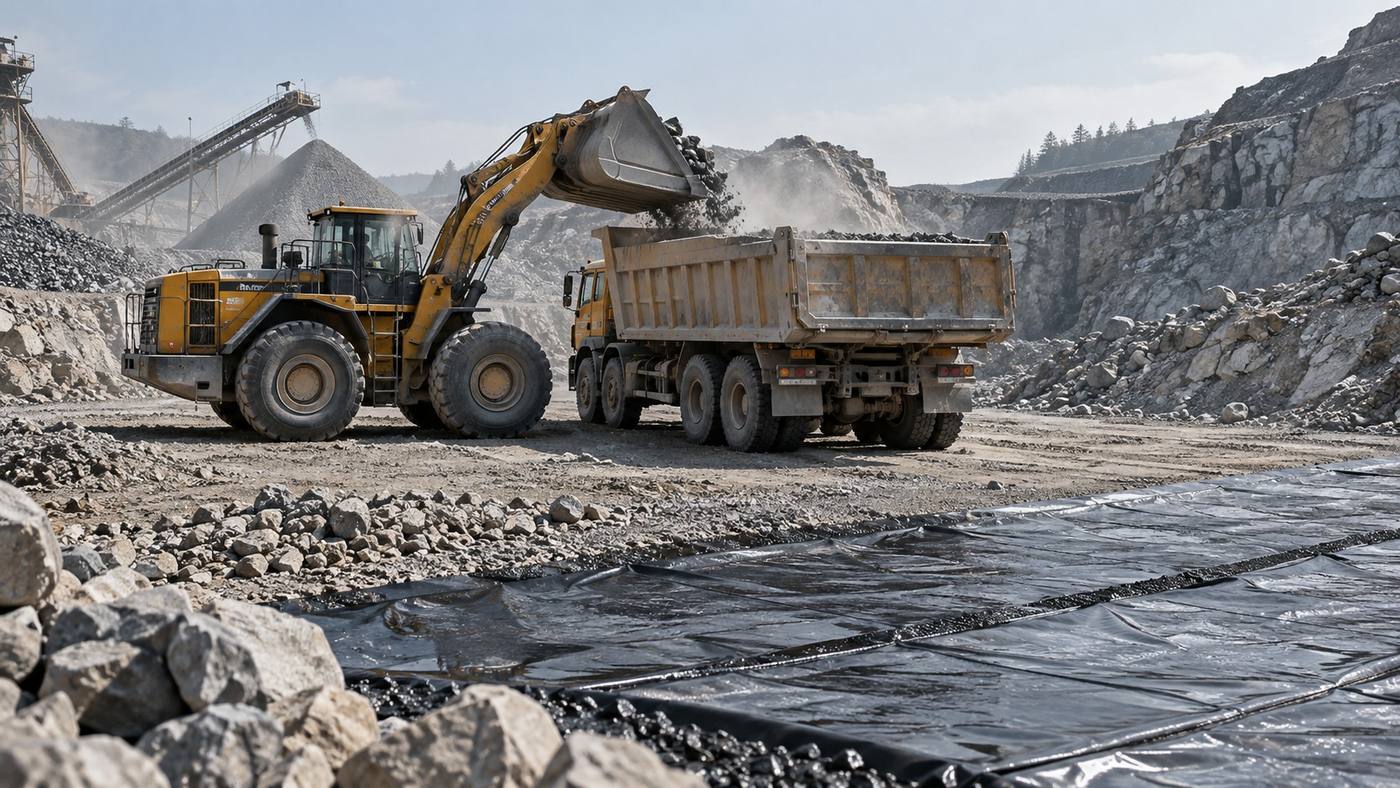 Mines, quarrying and drilling
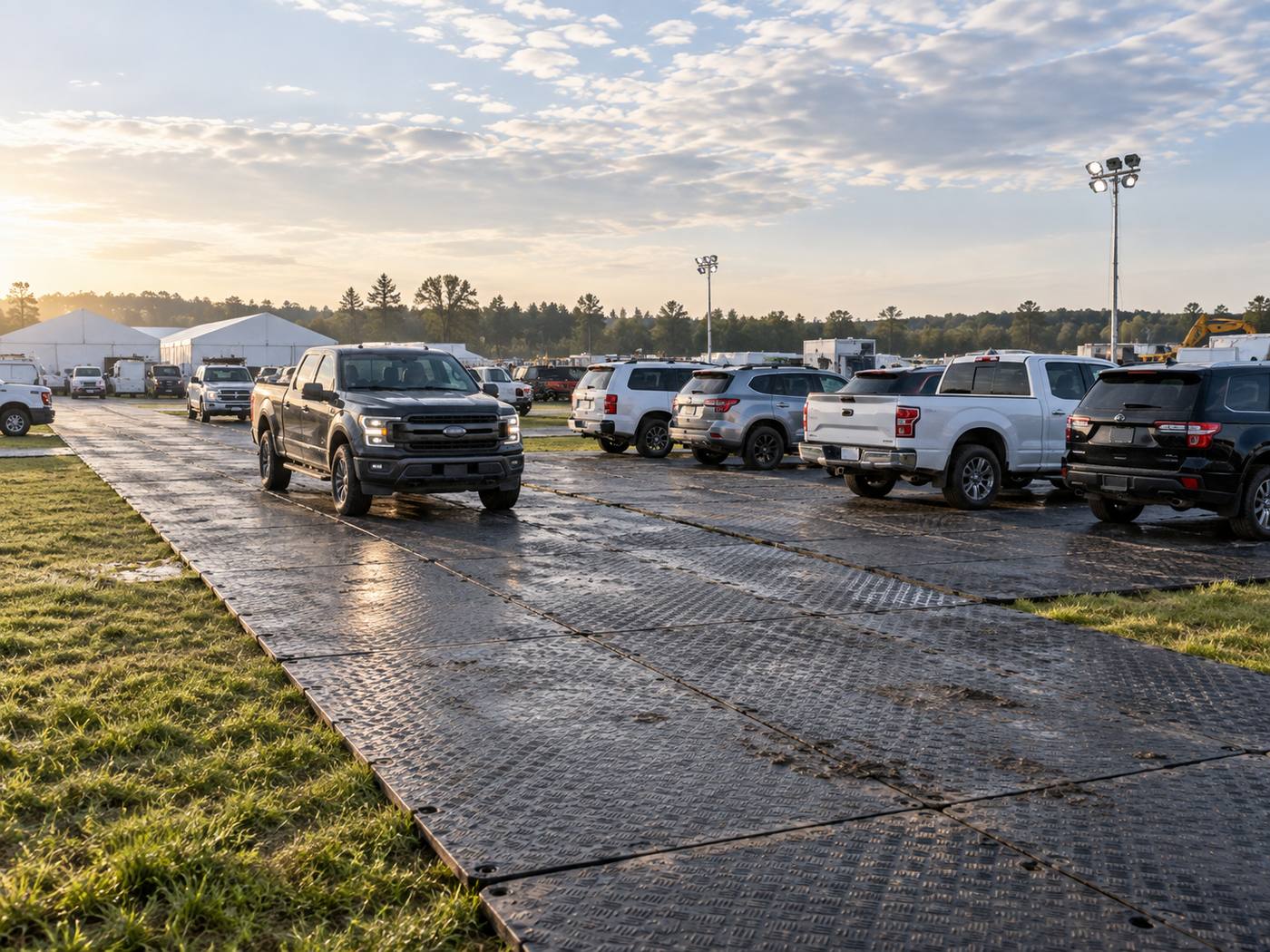 Agriculture, plantations and forestry
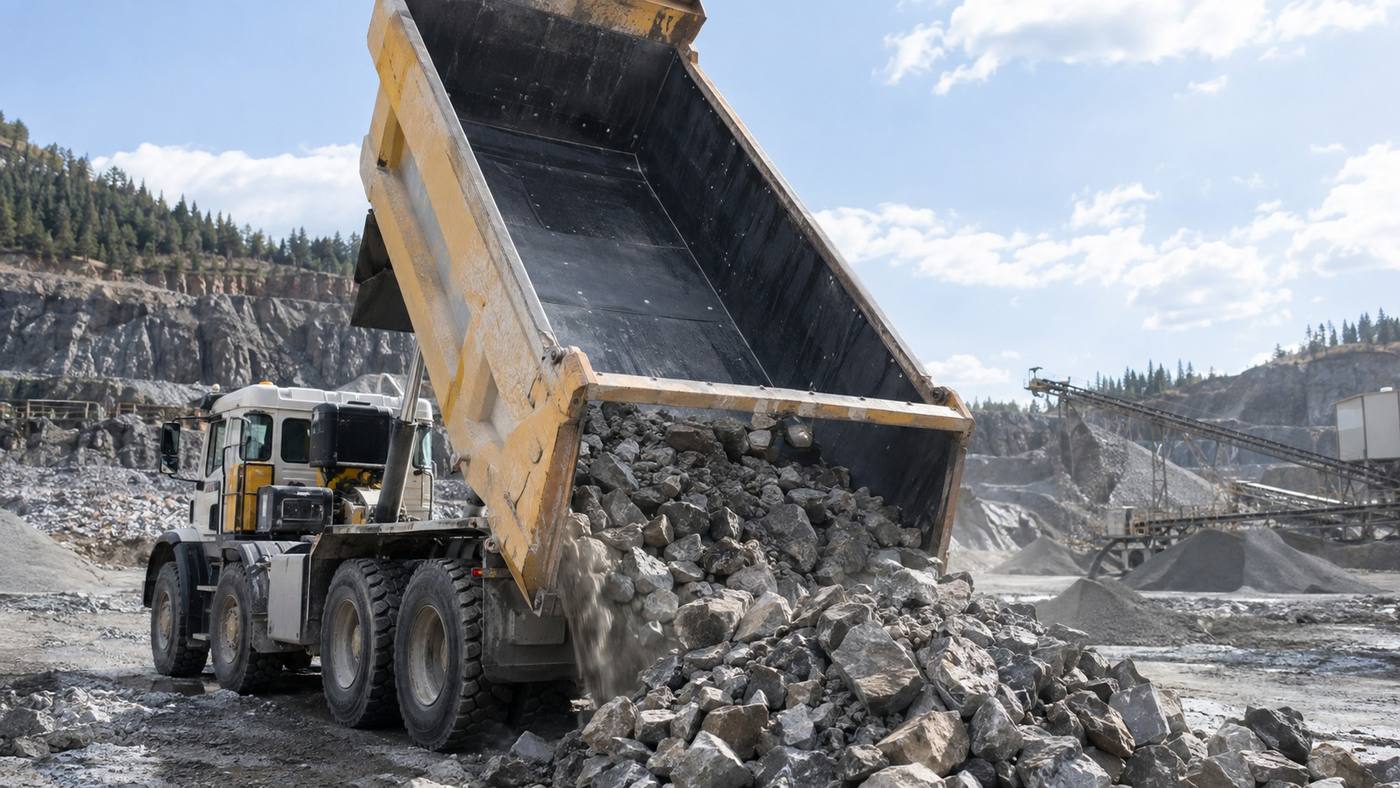 Transport fleet and self-loading vehicles
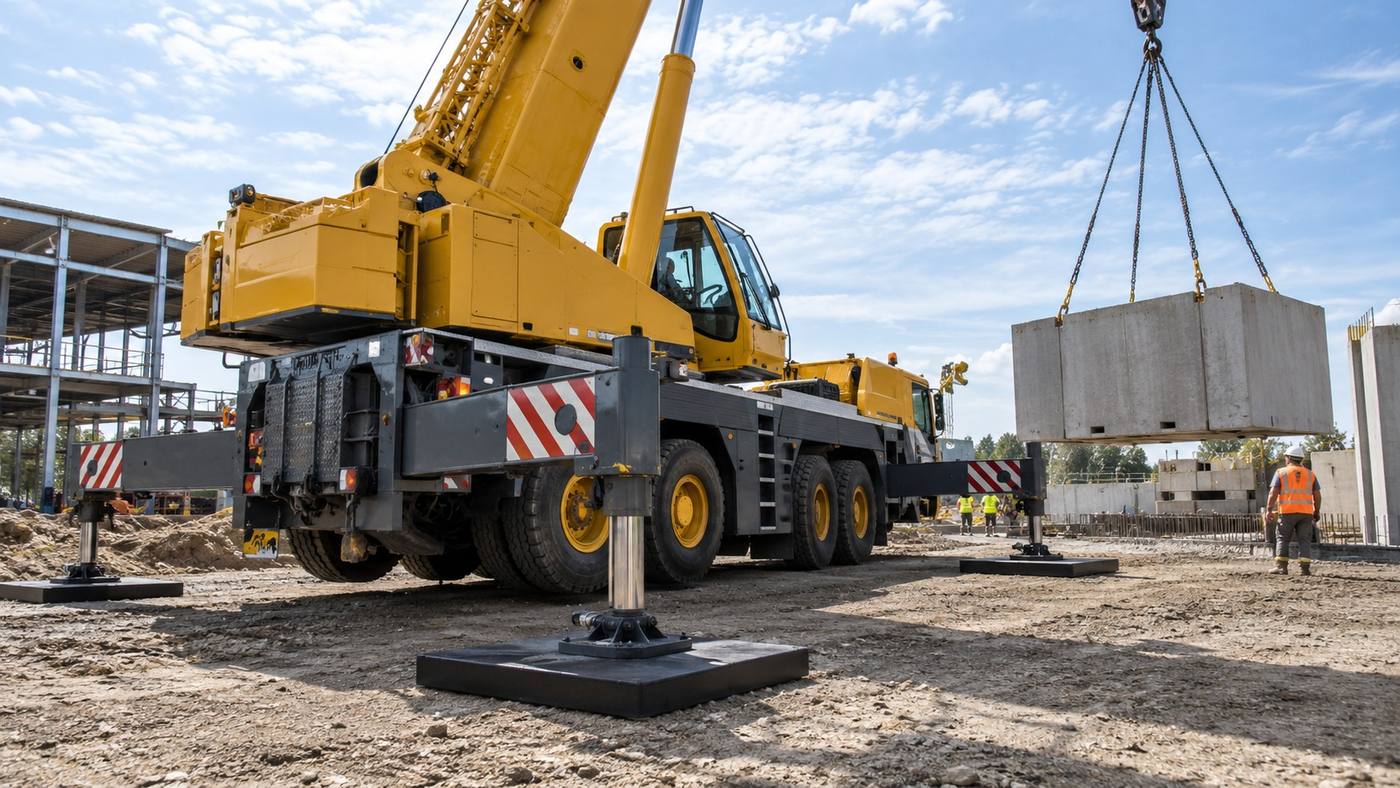 Lifting and lease of equipmentEnergy, electricity and new sources of energy
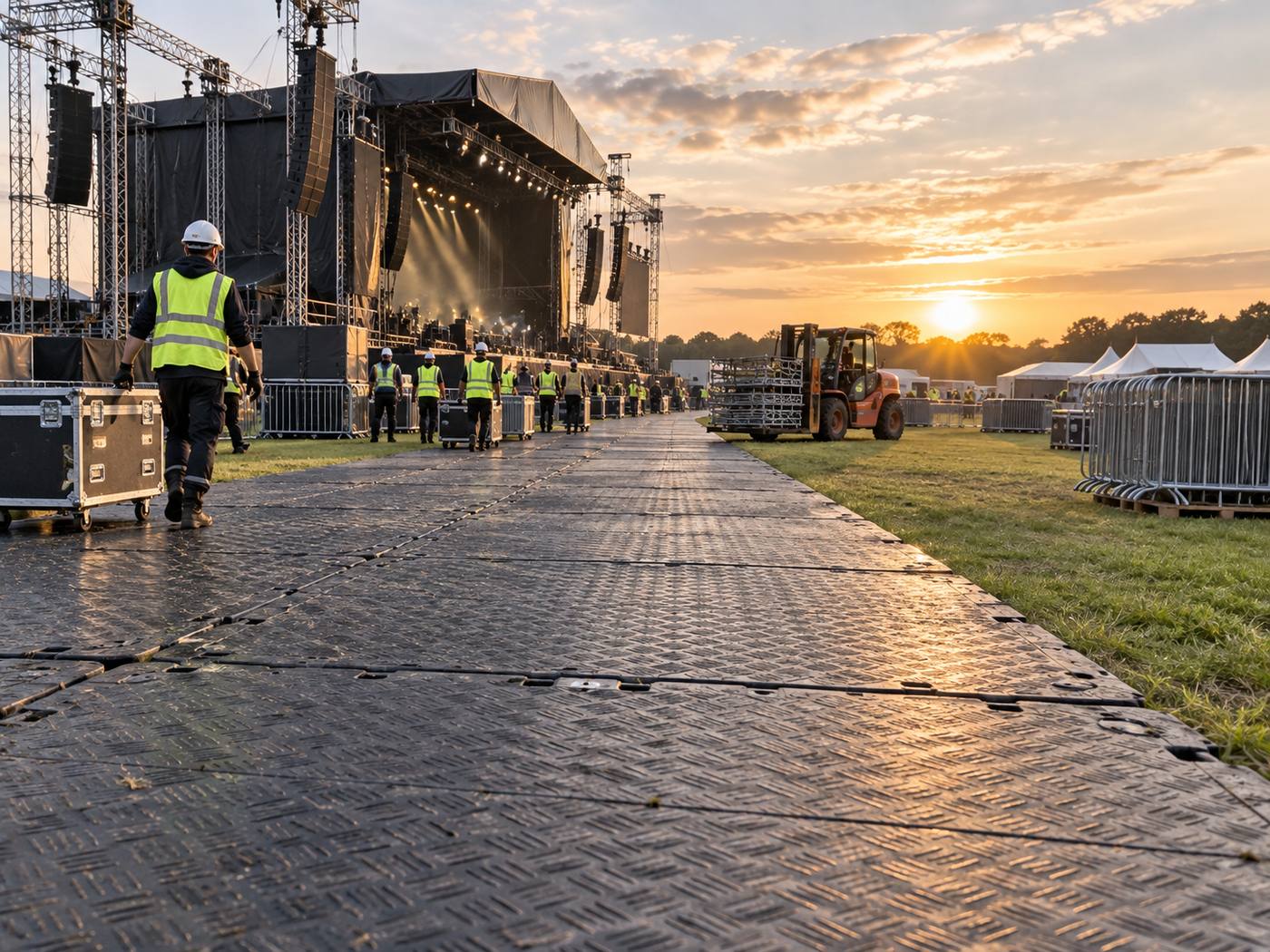 Events, performances and temporary venues
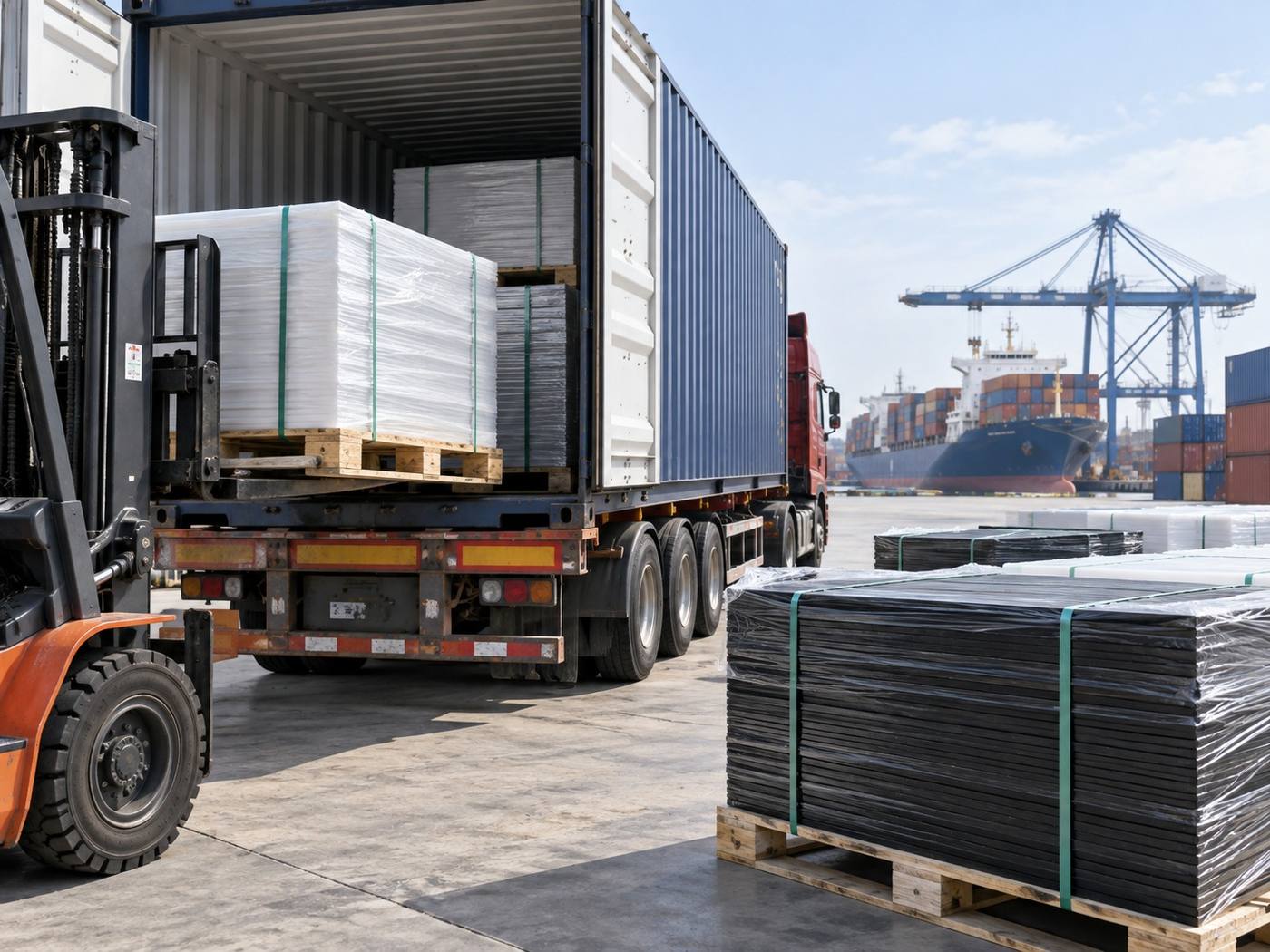 Ports, logistics and industrial sitesConstruction & InfrastructureMines, quarrying and drillingAgriculture, plantations and forestryTransport fleet and self-loading vehiclesLifting and lease of equipmentEnergy, electricity and new sources of energyEvents, performances and temporary venuesPorts, logistics and industrial sites