
Car liners are often transported on wet soil, clay, sandstone fine, coal, mine powder, salt, lime, fertilizer, grain, fodder, sludge and partially recycled materials, but “common” does not apply to any number. The selection must be preceded by an understanding of the particle size, angles, water-bearing rate, temperature, stack density, corrosivity, flammability and discharge methods of the material. The shock caused by large, sharp ores, and the adhesion caused by fine, wet clay, are two completely different mechanisms of failure.
For fine-wet material, the focus is on low friction, seam direction and surface flatness; for coal, ore and gravel, the focus is on wear, shock and load differences. Salts, fertilizers and industrial powders may have a corrosive effect on metal cars, and plastic linings can form an isolation layer, but specific media, concentrations, temperature and long-term exposure are identified. The materials of lime, heat ash or fresh process lines may be of a high temperature and cannot be judged solely by a room temperature-resistant chemical table.
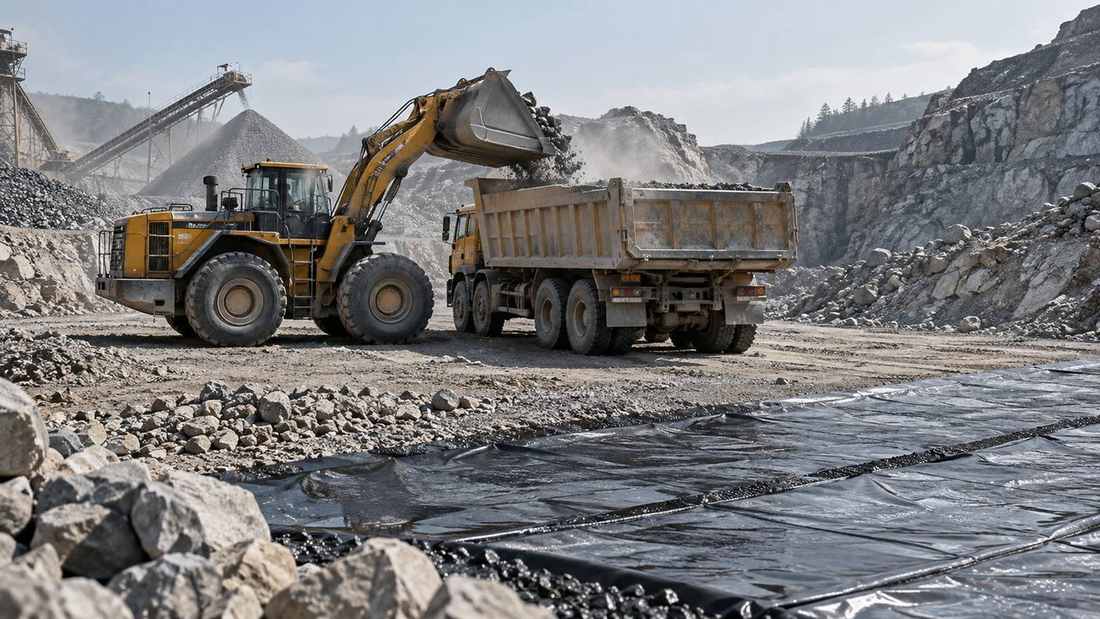
Web site map: mineral quarrying and bulk material transport
The transport of sludge and waste also involves changes in composition. Slurry from different plants or treatment links may contain oil, solvents, sharp impurities or high-temperature liquids; urban waste and recycling materials may contain metal edges, increasing the risk of cutting. The procurement party should provide a security data sheet or material description and identify the most adverse ingredients for compatibility. If there is an unknown mixture, a sample should be taken to perform a leaching, friction or small-scale vehicle loading test.
Food, feed, pharmaceutical or other controlled materials require additional confirmation that the material meets the corresponding exposure regulations, cleaning methods and retroactive requirements. UHMWPE or HDPE of the general industrial grade cannot automatically be equated to a food exposure level. Colour additives, regenerants, process aids and fixtures are also subject to compliance. Flammable dust environments may also involve electrostatic and blast-proof management, which should be assessed by professionals and not as static-resistant products for conventional plastics.
It is recommended that a material table be established, with name, maximum particle size, temperature, water content, density, corrosive composition, weight per vehicle, daily circulation and load differences, with a photograph of the car and the available wear and tear map. On this basis, the supplier may determine the applicability, recommend the material and thickness, determine the priority coverage area and make test requests. For materials that cannot be identified as compatible or whose temperature exceeds the material range, the selection shall be suspended and the verification completed.
Need for further evaluation of the actual project?
Applications, sizes, quantities, site photographs or drawings and delivery destinations are sent, on which we can identify more suitable products and processing programmes.







