
Crumbs, diamonds, strips or composite stripes on the surface of the pavement are used primarily to increase the mechanical collage of tyres with the plate and to reduce the probability of slippage when covered by wet mud, rain or fine sand. The two-sided pattern does not mean that the two-sided function is identical: some products use higher and stronger vehicle-printing, while others use relatively mild structures to improve plate-to-grass or ground-based contact; and others are oriented towards heavy equipment. Prior to the procurement, it should be determined which side is up, the height of the pavement and the type of tyre to apply.
The deeper the texture, the less likely it is for all projects. High-printed roads can lift low-speed toweds, but may increase vibrations, cleaning difficulties and lawn mosaics of small-wheeling equipment; excessively sharp structures may also be unfriendly for certain solid tyres or for those on the ground. Priority should be given to flattening, cracking and trip risk when used in the area of operation, carts and pedestrian areas, and for mines, forestry and construction vehicles, more emphasis should be placed on ground grabs, grinding and shear resistance in mud conditions.
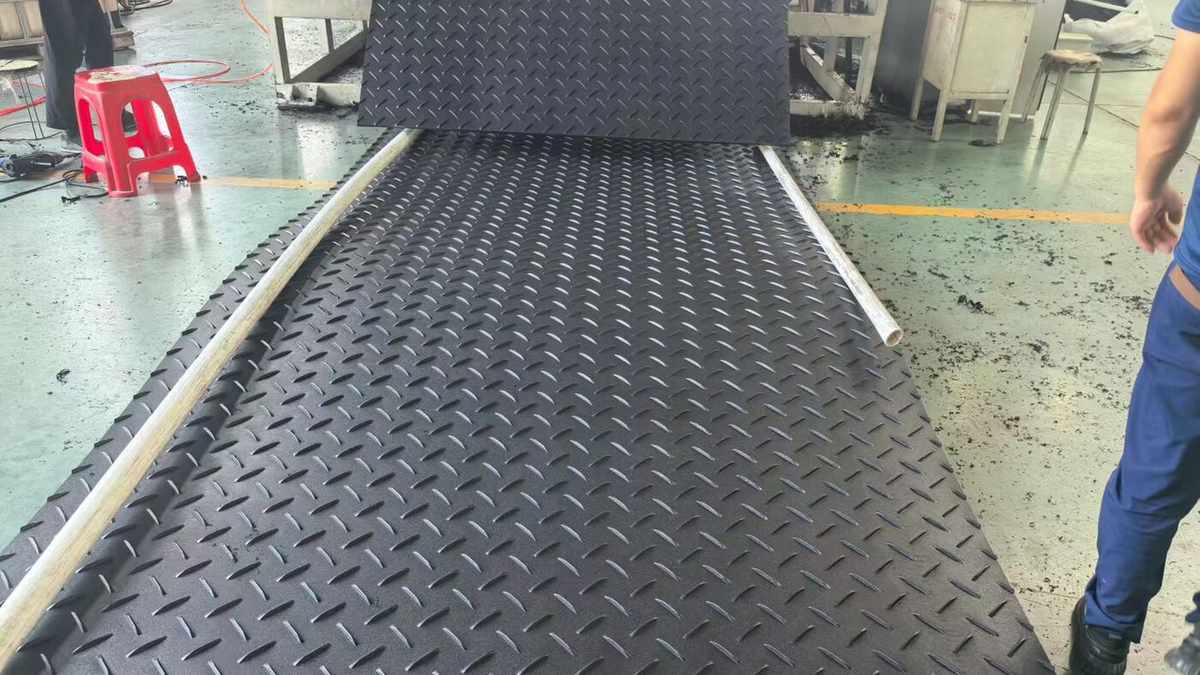
On the Net: Scrolling Lines and Line Details
The bottom line is equally important. It can help the plates to grab the grass roots, reduce lateral slides and, to some extent, provide access to water and small particles. But if the grass-roots level is very soft, the smaller dots may be crushed into mud and cannot be a substitute for flatting and draining; if the hard ground is caught with sharp stones, the dots may also form a concentration of stress. Therefore, it is still necessary to clean up the sharp and impurities and to select the appropriate bottom structure based on the nature of the ground, rather than looking only at the front photographs.
In practice, the texture is filled with clay, ice, oil or fine matter, and the pull is reduced. Project managers should arrange for cleaning and inspection, with particular attention to ramps, bends, entrances and vehicle brake areas. Vehicles shall travel at low speed and shall avoid, to the extent possible, rapid turn-arounds, brakes and air-turns, and shall be accompanied, as necessary, by speed limits, one-way traffic, tyre-resistant measures and additional connections. No smooth-lined road guarantees no slippage in all pollution and weather conditions.
When comparing products, suppliers can provide clear texture sizes, double-sided photographs, material hardness, pre- and post- wear samples and application records for similar vehicles. If the project included both heavy cards and personnel access, it would be possible to consider using different textures in the subdistricts rather than having a board take on all tasks. The request for quotations, indicating the type of vehicle tyres, ground, oil pollution, slopes and cleaning conditions, can be more reliable advice than simply requiring “the most smooth road”.
Need for further evaluation of the actual project?
Applications, sizes, quantities, site photographs or drawings and delivery destinations are sent, on which we can identify more suitable products and processing programmes.







