
In the warehouse swing space, in-house roads and open piles of industrial parks, the frequency of inspections directly affects the ability of vehicles to access the operational surface as planned. Forklifts, tractors, distribution trucks, scalding arm forklifts and clean-up maintenance vehicles are common on site, with different dynamic wheel pressure, static detour and power. The narrow route, the high number of turnovers and the mixing of man-cars, the shift of sides, the rise of edges and the protection of sight all require control. The programme should, therefore, first target routes and time windows that must be kept open, before arranging for materials and personnel to avoid temporary changes in rules of passage on the construction side.
On-site measurements cover powders with higher water content after the rain and record weak ranges, slopes, drainage directions and underground pipes. Changes in the water-bearing state and the car tracks should be observed before and after consecutive rainfalls. Mobile equipment will need to provide the whole vehicle with its own weight, full load weight, a single axle load, tyre size, turn radius and projected duration; the crane will also need to provide the maximum reversibility of the leg and leg extension. Data sources and measurement dates should also be recorded to avoid different versions.
The selection is based on the calculation of the local pressure and the examination of whether the plate remains continuous at the grass-roots level. The pavements allow for a clear separation of the temporary driveway from the area of operations, and a leg pad stabilizes the support point for the lift and maintenance equipment. The common thickness ranges from 15 mm to 30 mm, and this option can first assess 15 mm and then adjust it through a trial preparation or project accounting. The so-called 50-80-ton carrier should have a clear test boundary and cannot be cited separately from the distance, temperature, payload distribution and safety factor.
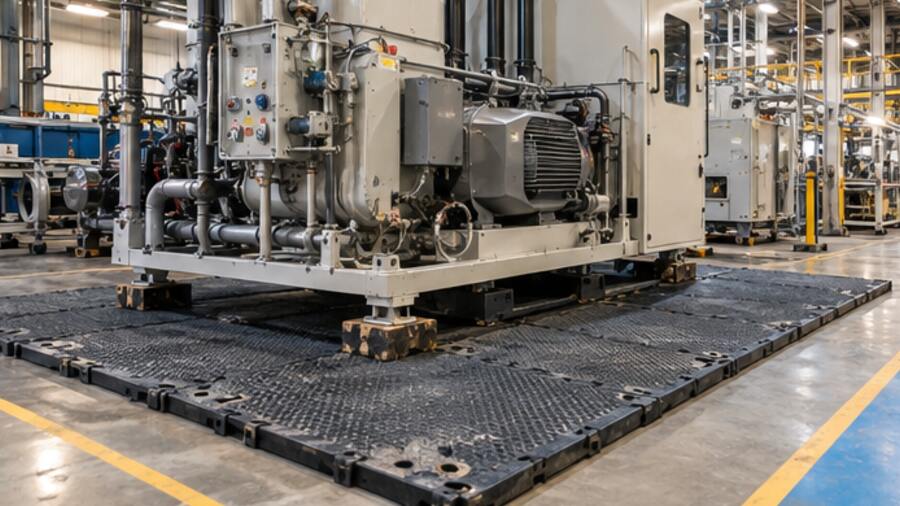
When the plates arrive at the site, the quantity, the connector and the crane are checked and the goods are discharged by route number. Upon completion of the grass-roots level, the vehicle entrance is prepared in sub-sections, and the level and edge support is checked at each stage of completion. The leg area of operation shall be separated from the area of passage. The inclusion of “segregation of damaged plates” in the installation programme would allow field personnel to convert abstract requirements into actionable.
Maintenance staff can divide the straight-line, turn-out, waiting areas and support points into different levels of inspection. The straight-line sections focus on the sutures and the tracks, turn around and look for lateral shifts, wait areas to see long-term static sinking, and support points to check whether the pads and the ground are sunk. Shorter check intervals after rain or when the traffic suddenly increases; any plate-side rise, loose connection or grass-roots plasma should trigger decommissioning.
In a simulation plan for a warehouse site retrofit project requiring the maintenance of daily incoming and outgoing shipments, the peak transport phase involves the zonal release of areas that have completed grass-roots processing and plate connectivity, with unaccepted areas remaining isolated. Each region designates a person responsible for the inspection and uses a number corresponding to the photograph. This example does not represent a specific project commitment, but allows the team to move from ad hoc decision-making to a pre-set process for post-rainfall repairs. If the records show repeated maintenance at the same location, they should be re-analysed back to the ground and transport organization.
In the integrated site, different problems were solved by the pavement, leg mats and carboards. Vehicle traffic is supported by a continuous focus on the maximum retroactivity of the leg and the friction and adhesion of material from the surface of the vehicle. If MHMWPE skateboards are used, thermal stretches should be set aside and fixed systems checked; if relevant material is not available at the site, they should be removed from the list and the investment targeted.
The request for quotations shall, in addition to the total area, provide the maximum gross vehicle weight and single axle load, indicating the country, duration, conditions of handling, packing and port of destination. Compared suppliers can check the documentation, size difference, surface routing, connector, piece weight, effective area coverage, cabinet list and batch retroactive. The whole container shall be purchased in advance to confirm the discharge equipment. The final programme, which involves the safety of the ground, assembly or operation of the airport, must be approved by the project professional.
Need for further evaluation of the actual project?
Applications, sizes, quantities, site photographs or drawings and delivery destinations are sent, on which we can identify more suitable products and processing programmes.







