
The warehouse and industrial field vehicle pass project cases should record which data cannot be answered in single-product parameters. Project leaders need to view the flow organization, ground support and maintenance capacity at the same time; the case should record the pre-input, the time of laying, the type of vehicle, the number of maintenance, the recovery and the results of the ground restoration. When forklifts, tractors, distribution trucks, scalding arm forklifts and cleaning and maintenance vehicles enter the warehouse ' s swing space, inside the industrial park roads and open dumps, problems with turnovers, ramps, seams and waiting positions on the route may arise earlier than normal straight-line segments and should be individually marked on drawings.
In order to determine whether the case data are enforceable, the site should be set up at a point rather than taking only a few photographs. In particular, there is a need to review the spill-off areas resulting from the contamination of the bulk, as the drying of the surface does not represent a continuous carrying of the lower part. The project information shall also include the maximum daily traffic, the length of vehicle stay, the direction of handling and the drainage route during the cryogenic thaw. For troughs, inspection wells and underground facilities, the prohibited support or need to be reinforced should be indicated in the road map.
Product selection should be differentiated by stress. The pavements allow for a clear separation of the temporary driveway from the area of operations, and a leg pad stabilizes the support point for the lift and maintenance equipment. 15, 20, 25 and 30 mm are in the common thickness range and 30 mm can only serve as a starting point for comparison for this project; if there are holes or sediments at the grass-roots level, the increase in thickness is not a substitute for peace and reinforcement. The 160 to 200 tonnes in the product information should also be understood in conjunction with the test conditions, with the final specifications to be confirmed by the approved programme and field professionals.
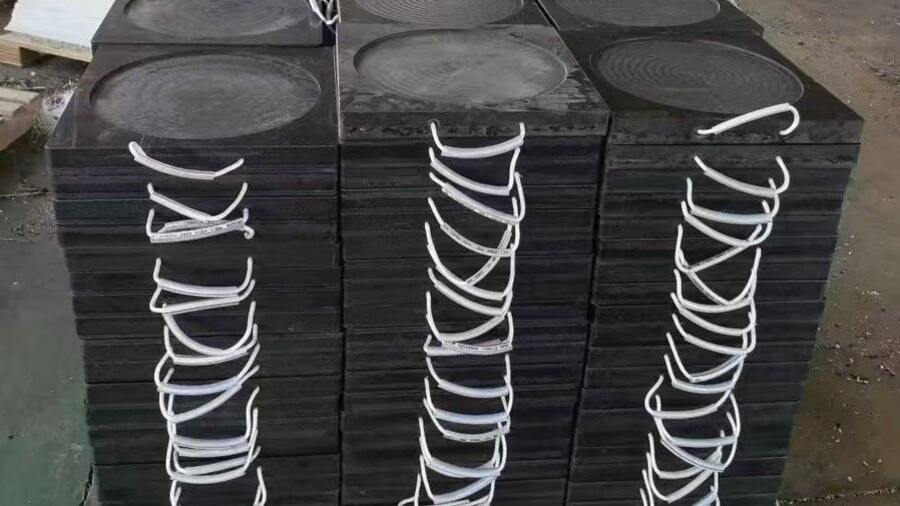
The fast-track installation still requires the retention of basic processes: drainage, debarment, peace-building, positioning, connection and trial passage. The plates remain continuous in line segments, leaving sufficient width at the intersections and outside areas; and they are to be removed from the rigid surface interface. Project leaders should arrange for “pre-validation of seams and connectors”, while specifying the conditions for decommissioning to prevent irregularity from being left to the next group during rush hours.
Maintenance staff can divide the straight-line, turn-out, waiting areas and support points into different levels of inspection. The straight-line sections focus on the sutures and the tracks, turn around and look for lateral shifts, wait areas to see long-term static sinking, and support points to check whether the pads and the ground are sunk. Shorter check intervals after rain or when the traffic suddenly increases; any plate-side rise, loose connection or grass-roots plasma should trigger decommissioning.
In a simulation plan for a warehouse site retrofit project requiring the maintenance of daily incoming and outgoing shipments, the installation phase of the equipment has been decentralized: the area that has completed the grass-roots processing and plate connection has been opened and the unaccepted area remains isolated. Each region designates a person responsible for the inspection and uses a number corresponding to the photograph. This example does not represent a specific project commitment, but allows the team to reduce vehicle mud to the hardened area. If the records show repeated maintenance at the same location, they should be re-analysed back to the ground and transport organization.
Three products may be used in this category at the same time, but the boundaries of the use are clear: road-painted service vehicle routes, leg-past services are centrally supported, and carboard services are applied to bulk discharges. In particular, UHMWPE skateboards need to check the material particle size, water content rate, temperature, impact and car shape. No product could compensate for the error, and the configuration list should be deleted from the field mission.
The procurement list should allow suppliers to see the real situation, in which the size of the car, the type of material and the temperature of the work are data that need to be highlighted. The remaining information includes vehicle and leg loads, ground photographs and sizes, projected number of vehicles, number of days of use, colour trails, destination port and desired period. A comparison of the quotations should be converted to a valid area coverage and complete connection system and not only a single block price; the acceptance and inspection criteria should also be included in the document before the next list.
Need for further evaluation of the actual project?
Applications, sizes, quantities, site photographs or drawings and delivery destinations are sent, on which we can identify more suitable products and processing programmes.







