
In the warehouse swing space, in-house roads and open piles of industrial parks, the request for quotation parameters have a direct impact on the ability of vehicles to access the operational surface as planned. Forklifts, tractors, distribution trucks, scalding arm forklifts and clean-up maintenance vehicles are common on site, with different dynamic wheel pressure, static detour and power. The narrow route, the high number of turnovers and the mixing of man-cars, the shift of sides, the rise of edges and the protection of sight all require control. The programme should, therefore, first target routes and time windows that must be kept open, before arranging for materials and personnel to avoid temporary changes in rules of passage on the construction side.
The survey forms can be completed by the four columns of ground, equipment, route and time. Ground bars mark restricted loads above underground ditches and adjacent drains; equipment columns specify vehicle weights, cargo weights, axle numbers and tyre specifications; route bars take a clean width, slope and turn radius; timebar indicates continuous rainfall and shift arrangements. If a crane is present, it should be based on the retroactivity of the leg in the manufacturer ' s worksheet, and it cannot be rated as a ground load.
Material parameters should serve the field rather than be propaganda figures. The pavements allow for a clear separation of the temporary driveway from the area of operations, and a leg pad stabilizes the support point for the lift and maintenance equipment. The project allows for the comparison of 20 mm and the adjacent specification of the single mass, rigidity, laying efficiency and number of containers, as well as for the reconciliation of the links to the surface. Between 80 and 120 tonnes are only primary sifts; ground-based and support designs should be completed when underground holes, weak shoulder or suspension loads are overloaded.
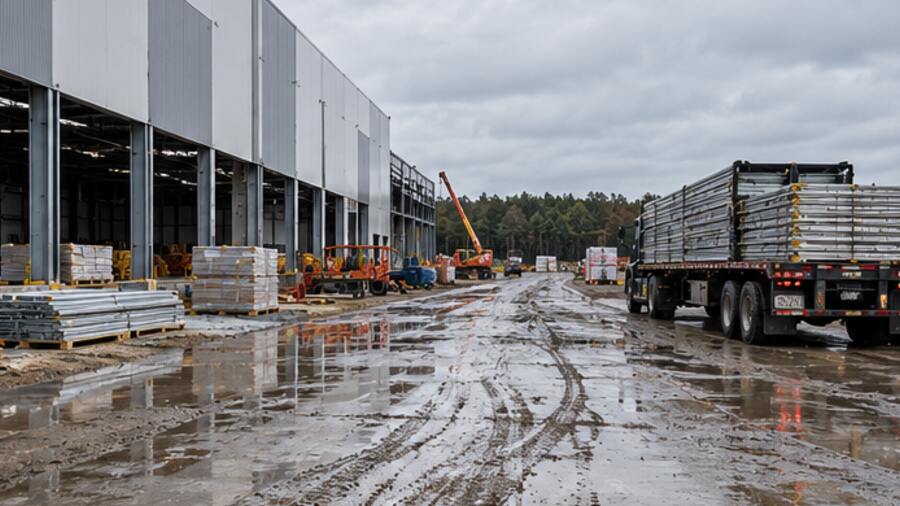
Pre-installation to remove sharp waste, loose rock and mobile mud, and to purge and level the ground. The plates were set up in the main direction and were sewd to avoid the deep path and to check the wells and legs. The turn and reverse areas are to be slightly wider and the connectors are to be locked as required. The “restriction of speed and prohibition of in situ movement of vehicles” should also be implemented on the ground and this requirement should be included at the end of the shift and in the traffic organization chart.
Temporary roads cannot be paved for long. Vehicle brakes, loading overloading and water stowing can gradually change the support under the plate, and surfaces may appear flat and may have created gaps. The site should be inspected before and after peak traffic, after continuous rainfall and when the route changes. In the event of a sinking, the ground and drainage should be checked before deciding whether to change or replace the panels, so as to avoid covering up the problem by filling the panels.
In the case of a warehouse site retrofit project that requires the maintenance of day-to-day delivery and delivery, the site could be divided into five areas at the peak transport stage: entrance, straight, turn, operation and recovery. The entry point is responsible for vehicle reconciliation, maintaining continuous coverage of the straight-line segment, increasing the outer width of the turn-band, separate validation of the operating segment and completion of clean bundles in the recovery area. This simulation programme is used to illustrate the methodology and is not a client-specific performance; it helps project teams to synchronize the clean-up and classification of panels when they are evacuated and to keep records of the number of maintenances and the length of breaks.
If the transport chain contains coal, ore, wet soil or food, self-release efficiency may be assessed as an independent subject. Car skateboards help to reduce the adhesiveness of certain materials, but prior to installation, the lining thickness, scalables, bolts or presses and tail door motion space should be confirmed. If there is no need for bulk discharges, there is no need to add the subparagraph; the procurement programme should be consistent with the use.
The procurement list should provide suppliers with a real picture of the work, with the number of trips per day and the number of days spent projected to be the data to be highlighted for the current section. The remaining information includes vehicle and leg loads, ground photographs and sizes, projected number of vehicles, number of days of use, colour trails, destination port and desired period. A comparison of the quotations should be converted to a valid area coverage and complete connection system and not only a single block price; the acceptance and inspection criteria should also be included in the document before the next list.
Need for further evaluation of the actual project?
Applications, sizes, quantities, site photographs or drawings and delivery destinations are sent, on which we can identify more suitable products and processing programmes.







