
When dealing with demolition and recycling, “where to go, what to go, how many times a day” is written as a verifiable on-site condition. The flow of vehicles in the warehouse swing space, in-house roads and open dumps of industrial parks often consists of forklifts, tractors, distribution trucks, forklifts with stretch arms and cleaning maintenance vehicles, with the impact of tyre exposures and low-speed rotations being ignored only in view of the total tonnage. A more reliable conclusion is that recovery should be carried out in reverse from the end to the entrance, while cleaning, checking, sorting and binding should be completed before deciding on a combination of pavement, leg pads or local grass-roots treatment.
The survey forms can be completed by the four columns of ground, equipment, route and time. The surface column shows the arctics and the adjacent drainage vents that form the tracks after repeated crushing; the equipment column lists the vehicle ' s own weight, cargo weight, number of axes and tyre specifications; the route column takes a clean width, slope and turn radius; and the time bar describes the high temperature storm sun and the shift schedule. If a crane is present, it should be based on the retroactivity of the leg in the manufacturer ' s worksheet, and it cannot be rated as a ground load.
The selection is based on the calculation of the local pressure and the examination of whether the plate remains continuous at the grass-roots level. The pavements allow for a clear separation of the temporary driveway from the area of operations, and a leg pad stabilizes the support point for the lift and maintenance equipment. The common thickness ranges from 15 mm to 30 mm, and this option can first assess 15 mm and then adjust it through a trial preparation or project accounting. The so-called 50-80-ton carrier should have a clear test boundary and cannot be cited separately from the distance, temperature, payload distribution and safety factor.
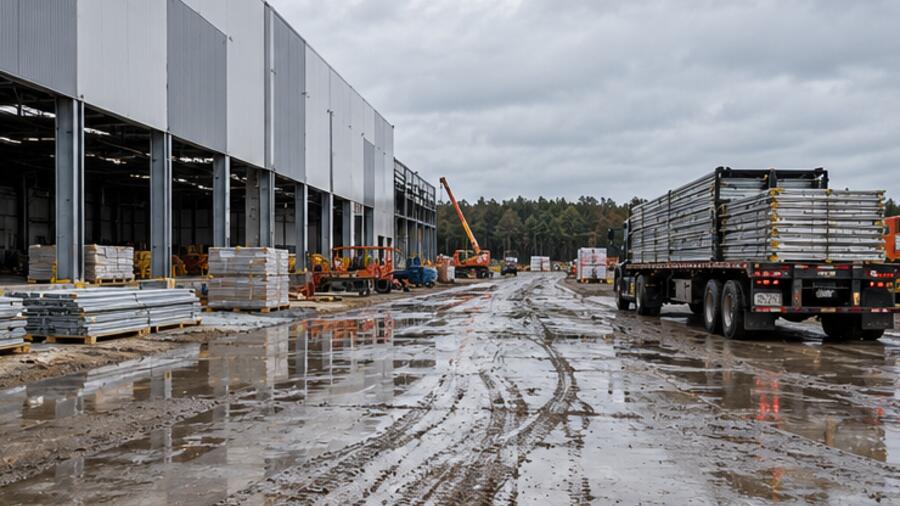
The fast-track installation still requires the retention of basic processes: drainage, debarment, peace-building, positioning, connection and trial passage. The plates remain continuous in line segments, leaving sufficient width at the intersections and outside areas; and they are to be removed from the rigid surface interface. Project leaders should arrange “one-way access and check the total weight of vehicles at the entrance”, while specifying the conditions for decommissioning to prevent irregularity from being left to the next group during rush hours.
Operating records include at least open hours, traffic through vehicles, unusual locations and disposal results. The first group of vehicles shall travel at a low speed to observe whether the plates are moving with the tyres; the second class shall then adjust the speed limits and frequency of the inspection to the records. Forklifts with frequent and rapid turnovers should check for surface wear and, if the crane changes the condition, re-check the retroactivity of the leg. Once maintenance is completed, access will be restored to the designated person.
A reference scenario is a warehouse site retrofit project that requires the maintenance of routine deliveries and deliveries. The project involves short-term trial preparation during the start-up phase, recording the relocation and deposition of the first vehicle after its adoption, and a gradual extension of the route. The turn areas, parking areas and pick-up points are inspected separately and no result is used to replace the full condition. This is an example of a methodology rather than a statement of performance, and the expected management effect is to focus the inspection on turnovers, ramps and seams; after completion, a comparison of the original ground photographs, cleaning hours and the number of plates that can be used for use.
Three products may be used in this category at the same time, but the boundaries of the use are clear: road-painted service vehicle routes, leg-past services are centrally supported, and carboard services are applied to bulk discharges. In particular, UHMWPE skateboards need to check the material particle size, water content rate, temperature, impact and car shape. No product could compensate for the error, and the configuration list should be deleted from the field mission.
In order to obtain a comparable offer, the purchaser should harmonize the request for quotations to at least specify the type of ground, water-bearing state and capacity allowed, route size, vehicle condition, ground condition and project time. Vendors are required to respond to material plates, sheeting, single weight, connection, packaging, containerization and quantity and quality documents. If the project is purchased on a containerized basis, the capability of the forklift or forklift on site or forklift is also confirmed. All safety-related selections are based on the equipment manual and the approval programme.
Need for further evaluation of the actual project?
Applications, sizes, quantities, site photographs or drawings and delivery destinations are sent, on which we can identify more suitable products and processing programmes.







