
In the warehouse swing space, internal roads and open piles of industrial parks, acceptance and inspection standards directly affect the ability of vehicles to access the operational surface as planned. Forklifts, tractors, distribution trucks, scalding arm forklifts and clean-up maintenance vehicles are common on site, with different dynamic wheel pressure, static detour and power. The narrow route, the high number of turnovers and the mixing of man-cars, the shift of sides, the rise of edges and the protection of sight all require control. The programme should, therefore, first target routes and time windows that must be kept open, before arranging for materials and personnel to avoid temporary changes in rules of passage on the construction side.
In order to determine whether or not the acceptance criteria are being implemented, a spot should be set up, rather than just a few photographs. In particular, there is a need to review the surface, which is hard but empty, since the surface is dry and does not represent a continuous carrying of the lower. The project information shall also include the maximum daily traffic, the duration of the vehicle ' s stay, the direction of the loading and unloading and the drainage route during continuous rainfall. For troughs, inspection wells and underground facilities, the prohibited support or need to be reinforced should be indicated in the road map.
Where the route has both a mobile device and a fixed support point, the choice should be made between the pavement and the leg pad, respectively. The pavements allow for a clear separation of the temporary driveway from the area of operations, and a leg pad stabilizes the support point for the lift and maintenance equipment. The thickness can be screened from commonly used specifications such as 15, 20, 25, 30 mm, and the 25 mm appearing in this section does not constitute a direct recommendation. For information ranging from 120 to 160 tons, the purchaser should also request a test method and give priority to the equipment description, construction programme and on-site validation.
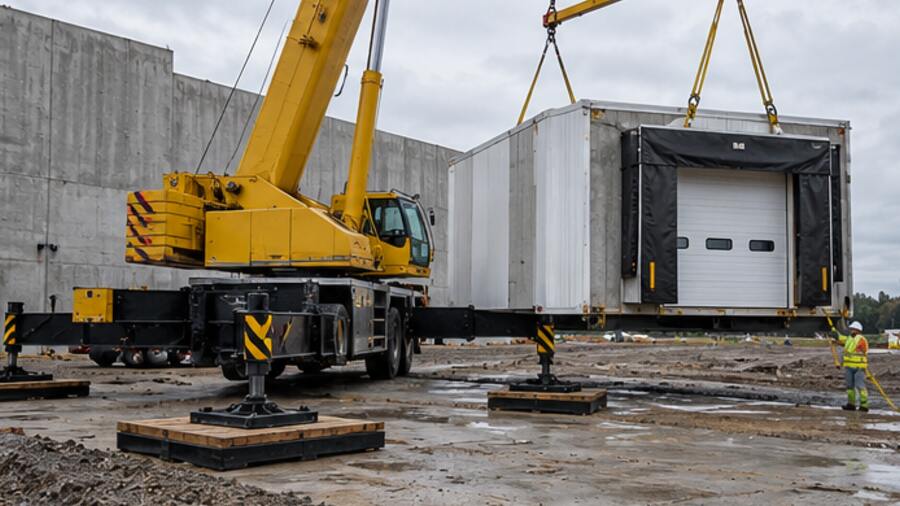
The sequence of laying would allow for the advance from the stable entrance to the area of operations. First, water and high differentials are processed, then the first plate is located; the subsequent plate is consistent in the direction of the texture and check if the seams form the steps. The ramp, turn and brake points shall increase the horizontal constraints or the width of the coverage. For this project, a “low-speed test and post-exit check for the first heavy vehicle” could be used as a key action, with the completion time and results recorded by the dedicated person.
Following the opening of access, the focus of the inspection was on the continued support under the plate. The first heavy vehicle passes by to check for high seams, peripheries, mudslides and planks; the shift is repeated after weather changes. The pressure of contact of the forklift ' s solid-heart wheel differs significantly from the concentrated static of the crane ' s legs, and anomalies should be detected first in isolation before being drained, evened or replaced, and the subsequent flow of the vehicle cannot continue to magnify the damage.
Assuming that a warehouse site retrofit project requiring the maintenance of day-to-day incoming and outgoing shipments encounters an increase in traffic during the peak transport phase, managers can first freeze route changes and then divide problems into four categories: ground, board, vehicle and movement control. Weak positions are reinforced, damage plates are replaced, vehicles are limited in speed, and one-way access is introduced for peak hours. The example does not correspond to the true customer, but shows how the shoulder of the original repeater is integrated into the continuous coverage and how the on-site judgement can be converted into the next reusable list of items.
The bulk material project will also examine car car stickers, impact and wear. The UHMWPE car skateboard can improve offloading when materials, temperature and car structure are appropriate, but it is necessary to confirm fixation, thermal condensation, the end door gap and cleaning methods; it is not a substitute for the safe offloading procedure. If the project does not involve a self-loading vehicle, the budget should be focused on physical access and support points and not add irrelevant configurations to complete product portfolios.
In order to obtain a comparable offer, the purchaser should harmonize the request for quotations to at least indicate the level of the forklock and the cleanness of the passage, the size of the route, the condition of the vehicle, the condition of the ground and the time of the project. Vendors are required to respond to material plates, sheeting, single weight, connection, packaging, containerization and quantity and quality documents. If the project is purchased on a containerized basis, the capability of the forklift or forklift on site or forklift is also confirmed. All safety-related selections are based on the equipment manual and the approval programme.
Need for further evaluation of the actual project?
Applications, sizes, quantities, site photographs or drawings and delivery destinations are sent, on which we can identify more suitable products and processing programmes.







