
When handling the back-up configuration, the words “where to go, what to go, how many times a day” are written as verifiable on-site conditions. The flow of vehicles in the warehouse swing space, in-house roads and open dumps of industrial parks often consists of forklifts, tractors, distribution trucks, forklifts with stretch arms and cleaning maintenance vehicles, with the impact of tyre exposures and low-speed rotations being ignored only in view of the total tonnage. A more reliable conclusion is that the back-up should be in the vicinity of a weak section, a turning area and a recovery point, and that a fast-tracked connector should be reserved before deciding on a pavement, leg pad or local grass-roots treatment combination.
In order to determine whether the back-up configuration is operational or not, a spot should be installed rather than just a few photographs. In particular, the refilling of the floors after the temporary excavation is reviewed, as the drying of the surface does not represent a continuous carrying of the lower part. Information on the project should also include the maximum daily traffic, the length of vehicle stay, the direction of handling and the drainage route during high-temperature tan. For troughs, inspection wells and underground facilities, the prohibited support or need to be reinforced should be indicated in the road map.
Material parameters should serve the field rather than be propaganda figures. The pavements allow for a clear separation of the temporary driveway from the area of operations, and a leg pad stabilizes the support point for the lift and maintenance equipment. The project allows for the comparison of 20 mm and the adjacent specification of the single mass, rigidity, laying efficiency and number of containers, as well as for the reconciliation of the links to the surface. Between 80 and 120 tonnes are only primary sifts; ground-based and support designs should be completed when underground holes, weak shoulder or suspension loads are overloaded.
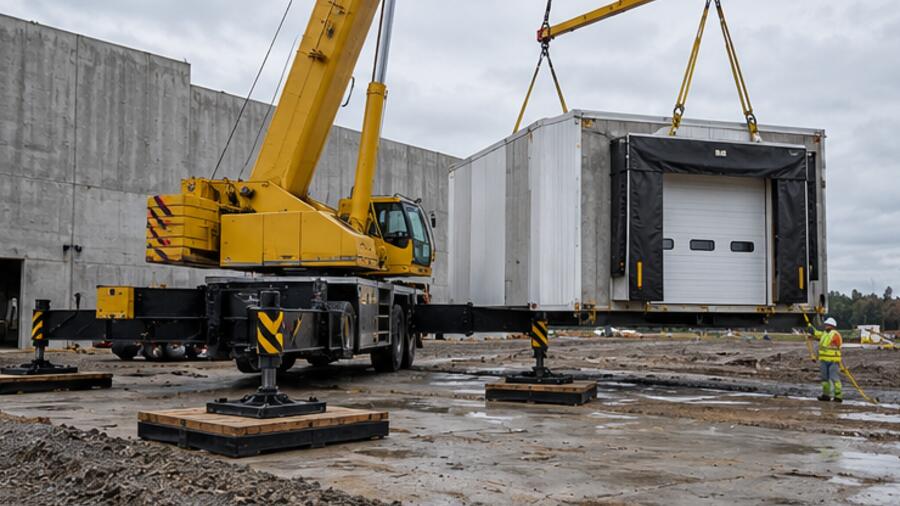
When the plates arrive at the site, the quantity, the connector and the crane are checked and the goods are discharged by route number. Upon completion of the grass-roots level, the vehicle entrance is prepared in sub-sections, and the level and edge support is checked at each stage of completion. The leg area of operation shall be separated from the area of passage. The inclusion in the installation programme of “drain drainage before rain and preparation of cleaning tools” would allow field personnel to convert abstract requirements into actionable.
The day-to-day management will include vehicle behaviour in the inspection. Speed-limiting, prohibition of in-situ movement, fixed reverse routes and placement of commanders are often more effective than simply adding plates. The inspectors should touch or step on the suspicious seams, check the links and take photographs to locate them. Where there are repeated shifts, the width of the road, the turn radius and the grass-roots level should be re-evaluated, rather than the continuous consolidation of the same position.
For a warehouse site retrofit project that requires the maintenance of routine incoming and outgoing shipments, the entry preparation phase could be established as an independent inspection node. On-site identification of vehicle lists and weather is followed by a check of drainage, connections and borders; if any conditions change, release is suspended and the road map updated. This scenario is used only to illustrate how the project is organized, with a focus on the softest 20 metres as the focus of the maintenance segment. It should also record the number of inputs, the time of laying, the time of stoppage, the location of maintenance and the condition of the ground after the evacuation site.
In the integrated site, different problems were solved by the pavement, leg mats and carboards. Vehicle traffic is supported by a continuous focus on the maximum retroactivity of the leg and the friction and adhesion of material from the surface of the vehicle. If MHMWPE skateboards are used, thermal stretches should be set aside and fixed systems checked; if relevant material is not available at the site, they should be removed from the list and the investment targeted.
It is best to complete small-scale technical confirmation before the next list. First, the plate colour, texture and custom holes and complete field parameters were submitted to the supplier for specification, quantity and packaging advice; then the sample trail, connection holes, size differences and material documents were checked; and the container type, destination port, discharge method and batch identification were finally confirmed. The supplier recommended that it be used only as an input and that the project party remain responsible for the stabilization of the ground load, traffic organization and lifting.
Need for further evaluation of the actual project?
Applications, sizes, quantities, site photographs or drawings and delivery destinations are sent, on which we can identify more suitable products and processing programmes.







