
Quantities are accounted for in terms of “where to go, what to go, how many times a day” as a verifiable on-site condition. The flow of vehicles in the warehouse swing space, in-house roads and open dumps of industrial parks often consists of forklifts, tractors, distribution trucks, forklifts with stretch arms and cleaning maintenance vehicles, with the impact of tyre exposures and low-speed rotations being ignored only in view of the total tonnage. A more reliable conclusion is that the quantity is calculated on the basis of net coverage, staggering, wide turns, back-up ratio and turn-off batches, followed by a decision on the combination of pavement boards, leg pads or local grass-roots processes.
On-site measurements cover temporary intersections shared between construction and production and record weak ranges, slopes, drainage directions and underground pipes. Changes in the water-bearing state and in the car tracks should be observed before and after the heatstorm. Mobile equipment will need to provide the whole vehicle with its own weight, full load weight, a single axle load, tyre size, turn radius and projected duration; the crane will also need to provide the maximum reversibility of the leg and leg extension. Data sources and measurement dates should also be recorded to avoid different versions.
Road-paving boards are responsible for spreading wheel pressure and leg mats for expanding static support areas, which cannot be replaced by one another. For this scenario, the pavement will allow for a clear separation of the temporary driveway from the area of operations, and the leg pads will stabilize the support point for the lift and maintenance equipment. 30 mm could be included as an option and compared with other thickness, subject to the simultaneous validation of plate sizes, connection structures, grass-roots stratification and number of passages. The labelling of 160 to 200 tons of products does not mean that all the same vehicles are available on the ground, and ground conditions remain the determining factor.
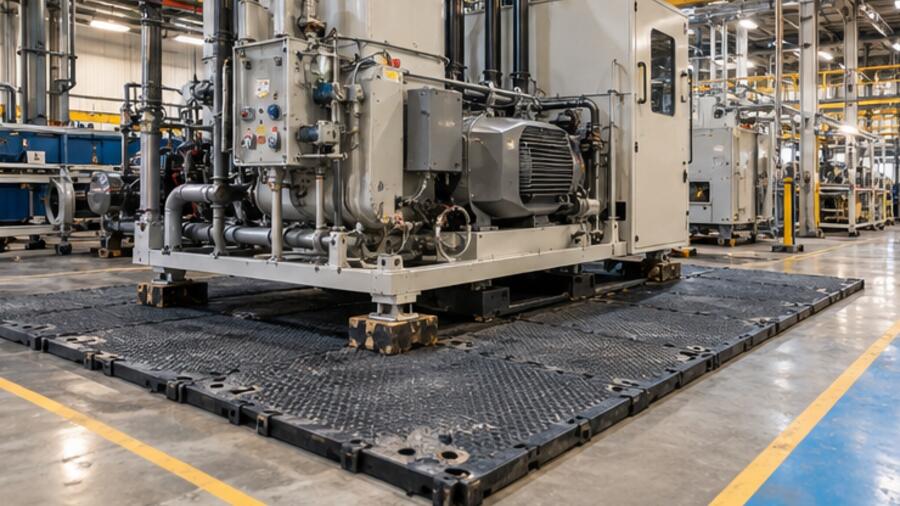
The construction staff should first seal the belts and confirm that no vehicles enter, then clear the floors and tablets. Do not leave the seams in the softest position, and do not let the edges remain open for long periods. Cleaning and installation of sandstones when the link is pierced, so that the connector is not fully in place. A low-speed test traffic was completed and the “dismantling of bulk and sharp material before being removed” was implemented before the next section was opened.
Following the opening of access, the focus of the inspection was on the continued support under the plate. The first heavy vehicle passes by to check for high seams, peripheries, mudslides and planks; the shift is repeated after weather changes. The pressure of contact of the forklift ' s solid-heart wheel differs significantly from the concentrated static of the crane ' s legs, and anomalies should be detected first in isolation before being drained, evened or replaced, and the subsequent flow of the vehicle cannot continue to magnify the damage.
Assuming that a warehouse site retrofit project requiring the maintenance of day-to-day shipments is subject to increased traffic during the entry phase, managers can first freeze route changes and then divide problems into four categories: ground, board, vehicle and movement control. Weak positions are reinforced, damage plates are replaced, vehicles are limited in speed, and one-way access is introduced for peak hours. The example does not correspond to the true client, but shows how project managers can locate the problem sheets by number and how to convert the on-site judgement into a reusable list for the next project.
Auxiliary equipment also affects the overall programme. A leg pad is required to accompany a vehicle, a forklift is required to focus on tyre contact, and a bulk vehicle may require a slab. The suitability of the UHMWPE liner depends on the work temperature, the chemical environment, the material impact and the car structure, and the manufacturer provides the installation requirements. Each product should be matched to specific equipment in the project form to avoid the use of the same parameter across uses.
The procurement list should give suppliers a real view of the work, with the expectation that the due date and the order of arrival would be data that would need to be added to this section. The remaining information includes vehicle and leg loads, ground photographs and sizes, projected number of vehicles, number of days of use, colour trails, destination port and desired period. A comparison of the quotations should be converted to a valid area coverage and complete connection system and not only a single block price; the acceptance and inspection criteria should also be included in the document before the next list.
Need for further evaluation of the actual project?
Applications, sizes, quantities, site photographs or drawings and delivery destinations are sent, on which we can identify more suitable products and processing programmes.







