
The answer to how vehicle traffic in warehouses and industrial stations establishes a usage record should start with the operational route, rather than with a fixed specification. Establish numbering, location, pass, damage and maintenance records for each batch to facilitate turnover management. Forklifts, tractors, distribution trucks, scalding arm forklifts and cleaning and maintenance vehicles are usually present at the same time in the warehouse swing areas, in-house roads and open dumps, with different pressures on tyres, axles and diversions. The narrow route, the high number of turnovers and the mixing of man-cars, the shift of sides, the rise of edges and the protection of sight all require control. The project team shall first delineate the main corridor, the waiting areas, the loading and unloading points and the emergency export, and then the boundary shall be confirmed jointly by the construction, logistics and security authorities.
In order to determine whether the use of the records is enforceable, a spot should be set up, rather than just a few photographs. In particular, the ramps in which the warehouse entrance is permanently flushed by water are reviewed, as the drying of the surface does not mean a continuous carrying of the next. The project information shall also include the maximum daily traffic, the duration of the vehicle ' s stay, the direction of loading and unloading, and the drainage route during short and heavy rainfall. For troughs, inspection wells and underground facilities, the prohibited support or need to be reinforced should be indicated in the road map.
The selection is based on the calculation of the local pressure and the examination of whether the plate remains continuous at the grass-roots level. The pavements allow for a clear separation of the temporary driveway from the area of operations, and a leg pad stabilizes the support point for the lift and maintenance equipment. The common thickness ranges from 15 mm to 30 mm, and this option can first assess 15 mm and then adjust it through a trial preparation or project accounting. The so-called 50-80-ton carrier should have a clear test boundary and cannot be cited separately from the distance, temperature, payload distribution and safety factor.
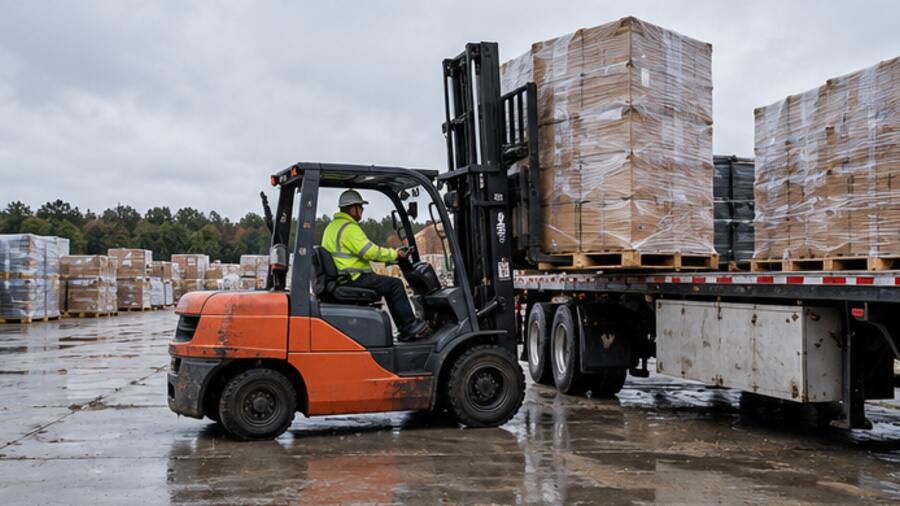
The construction staff should first seal the belts and confirm that no vehicles enter, then clear the floors and tablets. Do not leave the seams in the softest position, and do not let the edges remain open for long periods. Cleaning and installation of sandstones when the link is pierced, so that the connector is not fully in place. A low-speed test of access after a period of completion and the implementation of “arrangement of commanding officers to control a meeting and a back-up” will be completed before the next section becomes operational.
Temporary roads cannot be paved for long. Vehicle brakes, loading overloading and water stowing can gradually change the support under the plate, and surfaces may appear flat and may have created gaps. The site should be inspected before and after peak traffic, after short and heavy rainfall and when the route changes. In the event of a sinking, the ground and drainage should be checked before deciding whether to change or replace the panels, so as to avoid covering up the problem by filling the panels.
In the case of a warehouse site retrofit project that requires the maintenance of routine incoming and outgoing shipments, the site can be divided into five areas during the recovery phase of the evacuation site, straight, turning, operation and recovery. The entry point is responsible for vehicle reconciliation, maintaining continuous coverage of the straight-line segment, increasing the outer width of the turn-band, separate validation of the operating segment and completion of clean bundles in the recovery area. This simulation programme is used to illustrate the methodology and is not a client-specific performance; it can help the project team to separate the main wheel tracks of heavy vehicles from the people ' s lanes and leave a record of the number of maintenances and the length of breaks.
Auxiliary equipment also affects the overall programme. A leg pad is required to accompany a vehicle, a forklift is required to focus on tyre contact, and a bulk vehicle may require a slab. The suitability of the UHMWPE liner depends on the work temperature, the chemical environment, the material impact and the car structure, and the manufacturer provides the installation requirements. Each product should be matched to specific equipment in the project form to avoid the use of the same parameter across uses.
There must be a connection and a need for tools in the request for quotations, otherwise different suppliers are likely to calculate on different assumptions. The procurement staff shall also require the description of the effective size, weight, number of attachments, packing units, container load and delivery cycle of each plate. The evaluation will be based on technical conformity, installation efficiency and turnover. Where key payloads or ground data have not been confirmed, the quotations should be marked as preliminary and the review retained.
Need for further evaluation of the actual project?
Applications, sizes, quantities, site photographs or drawings and delivery destinations are sent, on which we can identify more suitable products and processing programmes.







