
The question of how to establish an advance survey list for the rapid installation and recycling of temporary roads cannot be answered with a single product parameter. Project leaders need to view the flow organization, ground support and maintenance capacity at the same time; first, they need to record the route, load, ground and operational beats, and then determine the number of plates and the order in which they are laid. When transport trucks, forklifts, engineering vehicles and slabs are recycled into ports for repairs, logistics peaks, airport maintenance windows and short-term construction at industrial sites, problems with turnovers, ramps, seams and waiting positions on routes may arise earlier than normal straight-line segments and should be individually marked on drawings.
The project team could complete a joint pedal before the vehicle enters the site, focusing on the sides, drainage lows, ramps and available vehicle space after repeated crushing. The retroactivity of the legs of the vehicle ' s axial load, the exterior dimensions, the minimum convective radius and the equipment for the suspension was then collected. High-temperature tans may change the state at the grass-roots level, so measurements need to be date- and weather-specific. All parameters should be consolidated in the same version of the road map and equipment list.
The selection is based on the calculation of the local pressure and the examination of whether the plate remains continuous at the grass-roots level. The HDPE pavement with access holes and smooth-lined roads is suitable for modularization and can be moved to the next item after cleaning. The common thickness ranges from 15 mm to 30 mm, and this option can first assess 15 mm and then adjust it through a trial preparation or project accounting. The so-called 50-80-ton carrier should have a clear test boundary and cannot be cited separately from the distance, temperature, payload distribution and safety factor.
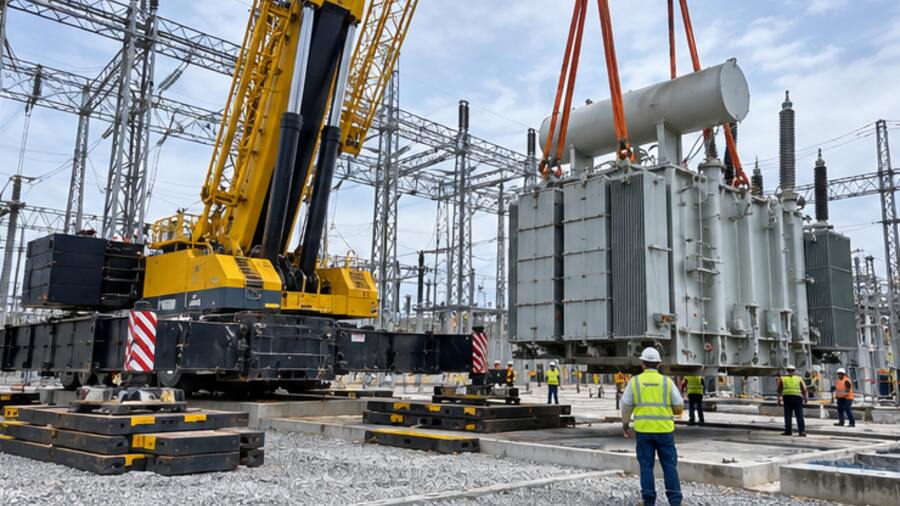
The sequence of laying would allow for the advance from the stable entrance to the area of operations. First, water and high differentials are processed, then the first plate is located; the subsequent plate is consistent in the direction of the texture and check if the seams form the steps. The ramp, turn and brake points shall increase the horizontal constraints or the width of the coverage. For this project, the “segregation of damaged plates” can be used as a key action to record the time of completion and the results of the review.
Following the opening of access, the focus of the inspection was on the continued support under the plate. The first heavy vehicle passes by to check for high seams, peripheries, mudslides and planks; the shift is repeated after weather changes. The pressure of contact of the forklift ' s solid-heart wheel differs significantly from the concentrated static of the crane ' s legs, and anomalies should be detected first in isolation before being drained, evened or replaced, and the subsequent flow of the vehicle cannot continue to magnify the damage.
A reference scenario is a temporary route mission that requires that the site be laid on the same day and evacuated immediately after the completion of operations. During the peak transport phase, the project made a short-term test preparation to record the relocation and deposition of the first vehicle after its adoption, before gradually extending the route. The turn areas, parking areas and pick-up points are inspected separately and no result is used to replace the full condition. This is an example of a methodology rather than a statement of performance, and it is expected that the management effect will be to maintain access without the expansion of permanent hardened areas; after completion, a comparison of the original ground photographs, cleaning hours and the number of plates that can continue to be used is required.
Auxiliary equipment also affects the overall programme. A leg pad is required to accompany a vehicle, a forklift is required to focus on tyre contact, and a bulk vehicle may require a slab. The suitability of the UHMWPE liner depends on the work temperature, the chemical environment, the material impact and the car structure, and the manufacturer provides the installation requirements. Each product should be matched to specific equipment in the project form to avoid the use of the same parameter across uses.
In addition to the total area, the request for quotations shall provide information on the ground type, water-bearing state and permissible carrying capacity, as well as a description of the country, the duration, the conditions of handling, the manner of packing and the port of destination. Compared suppliers can check the documentation, size difference, surface routing, connector, piece weight, effective area coverage, cabinet list and batch retroactive. The whole container shall be purchased in advance to confirm the discharge equipment. The final programme, which involves the safety of the ground, assembly or operation of the airport, must be approved by the project professional.
Need for further evaluation of the actual project?
Applications, sizes, quantities, site photographs or drawings and delivery destinations are sent, on which we can identify more suitable products and processing programmes.







