
When handling the frequency of inspections, “where to go, what to go, how many times a day” is written as a verifiable on-site condition. Port repairs, logistics peaks, airport maintenance windows and short-term construction of industrial sites often include transport trucks, forklifts, engineering vehicles and the installation of recovery equipment on board, with only full tonnage neglecting the impact of tyre exposure and low-speed turns. The more reliable conclusion is that sews, sunk and contaminated should be checked after the first car is passed, before the shift is handed over and after heavy rainfall, and then the combination of pavements, leg mats or local grass-roots treatment should be determined.
On-site measurements cover the transition between grasslands and hardened surfaces and record weak ranges, slopes, drainage directions and underground pipes. The wet salt fog should be followed by a change in the water-bearing state and the car trail, respectively. Mobile equipment will need to provide the whole vehicle with its own weight, full load weight, a single axle load, tyre size, turn radius and projected duration; the crane will also need to provide the maximum reversibility of the leg and leg extension. Data sources and measurement dates should also be recorded to avoid different versions.
Road-paving boards are responsible for spreading wheel pressure and leg mats for expanding static support areas, which cannot be replaced by one another. For this scenario, the HDPE pavement board with a connection to the hole and a smooth-lined road is suitable for modularization and can be moved to the next item after cleaning. 15 mm could be included as an option and compared with other thickness, provided that the size of the plate, the connection structure, the base level and the number of passages were verified. The labelling of 50 to 80 tons of products does not mean that all the same vehicles are available on the ground, and ground conditions remain the determining factor.
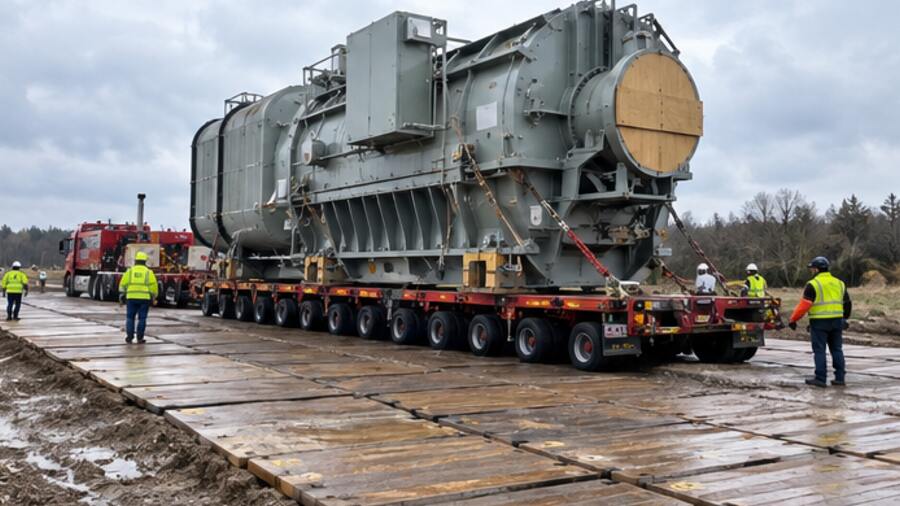
The fast-track installation still requires the retention of basic processes: drainage, debarment, peace-building, positioning, connection and trial passage. The plates remain continuous in line segments, leaving sufficient width at the intersections and outside areas; and they are to be removed from the rigid surface interface. Project leaders should “arrange for the commanders to control the meeting and reverse the car”, while specifying the conditions for decommissioning to prevent irregularity from being left to the next group during rush hours.
Following the opening of access, the focus of the inspection was on the continued support under the plate. The first heavy vehicle passes by to check for high seams, peripheries, mudslides and planks; the shift is repeated after weather changes. The pressure of contact of the forklift ' s solid-heart wheel differs significantly from the concentrated static of the crane ' s legs, and anomalies should be detected first in isolation before being drained, evened or replaced, and the subsequent flow of the vehicle cannot continue to magnify the damage.
A reference scenario is a temporary route mission that requires that the site be laid on the same day and evacuated immediately after the completion of operations. The project involves short-term trial preparation during the recovery phase of the evacuation site, recording the relocation and deposition of the first vehicle after its adoption, and a gradual extension of the route. The turn areas, parking areas and pick-up points are inspected separately and no result is used to replace the full condition. This is an example of a methodology rather than a statement of performance, and the expected management effect is to focus the inspection on turnovers, ramps and seams; after completion, a comparison of the original ground photographs, cleaning hours and the number of plates that can be used for use.
In the integrated site, different problems were solved by the pavement, leg mats and carboards. Vehicle traffic is supported by a continuous focus on the maximum retroactivity of the leg and the friction and adhesion of material from the surface of the vehicle. If MHMWPE skateboards are used, thermal stretches should be set aside and fixed systems checked; if relevant material is not available at the site, they should be removed from the list and the investment targeted.
It is best to complete small-scale technical confirmation before the next list. The project was first submitted in phases with the plan and complete field parameters, and the supplier was given specifications, quantities and packing suggestions; then the sample trails, links, dimensions and material documents were checked; and the container type, destination port, discharge method and batch identification were finally confirmed. The supplier recommended that it be used only as an input and that the project party remain responsible for the stabilization of the ground load, traffic organization and lifting.
Need for further evaluation of the actual project?
Applications, sizes, quantities, site photographs or drawings and delivery destinations are sent, on which we can identify more suitable products and processing programmes.







