
When dealing with the thickness option, “where to go, what to go, how many times a day” is written as a verifiable on-site condition. Port repairs, logistics peaks, airport maintenance windows and short-term construction of industrial sites often include transport trucks, forklifts, engineering vehicles and the installation of recovery equipment on board, with only full tonnage neglecting the impact of tyre exposure and low-speed turns. The more reliable conclusion is that the thickness cannot be seen solely in the total weight of the vehicle, but in combination with axle load, tyre contact, grass-roots support and the number of times passed, and then decide on the combination of pavement, leg pads or local grass-roots treatment.
The project team could complete a joint pedal before the vehicle enters the site, focusing on the mixed ground, drainage lows, ramps and available car space in a wet salt fog environment in the port area. The retroactivity of the legs of the vehicle ' s axial load, the exterior dimensions, the minimum convective radius and the equipment for the suspension was then collected. Moist salt mists may change the state of the grass-roots level, so measurements need to be date- and weather-specific. All parameters should be consolidated in the same version of the road map and equipment list.
Product selection should be differentiated by stress. The HDPE pavement with access holes and smooth-lined roads is suitable for modularization and can be moved to the next item after cleaning. 15, 20, 25 and 30 mm are in the common thickness range and 30 mm can only serve as a starting point for comparison for this project; if there are holes or sediments at the grass-roots level, the increase in thickness is not a substitute for peace and reinforcement. The 160 to 200 tonnes in the product information should also be understood in conjunction with the test conditions, with the final specifications to be confirmed by the approved programme and field professionals.
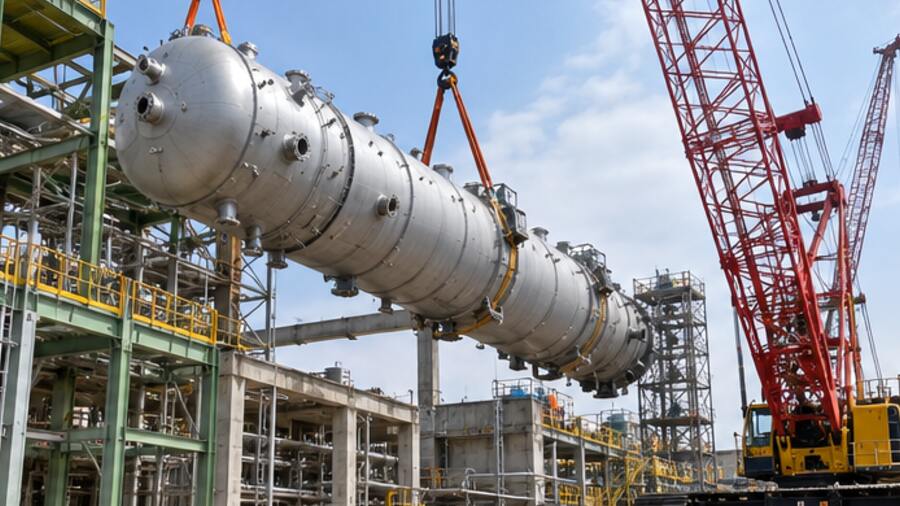
The construction staff should first seal the belts and confirm that no vehicles enter, then clear the floors and tablets. Do not leave the seams in the softest position, and do not let the edges remain open for long periods. Cleaning and installation of sandstones when the link is pierced, so that the connector is not fully in place. A low-speed test pass after completion of a period and the implementation of a “review of the original ground condition after completion of the project” before the opening of the next section.
Temporary roads cannot be paved for long. Vehicle brakes, loading overloading and water stowing can gradually change the support under the plate, and surfaces may appear flat and may have created gaps. The site should be inspected before and after peak traffic, after damp salt fog and when the route is changed. In the event of a sinking, the ground and drainage should be checked before deciding whether to change or replace the panels, so as to avoid covering up the problem by filling the panels.
Assuming an increase in traffic during the recovery phase of the evacuation site for a temporary access mission that was to be laid on the same day and vacated immediately after the completion of operations, managers could first freeze the change of route and then divide the problems into four categories: ground, board, vehicle and movement control. Weak positions are reinforced, damage plates are replaced, vehicles are limited in speed, and one-way access is introduced for peak hours. The example does not correspond to the true client, but shows how project managers can locate the problem sheets by number and how to convert the on-site judgement into a reusable list for the next project.
Three products may be used in this category at the same time, but the boundaries of the use are clear: road-painted service vehicle routes, leg-past services are centrally supported, and carboard services are applied to bulk discharges. In particular, UHMWPE skateboards need to check the material particle size, water content rate, temperature, impact and car shape. No product could compensate for the error, and the configuration list should be deleted from the field mission.
In order to obtain a comparable offer, the purchaser should harmonize the request for quotations to at least specify indoor and outdoor temperature and chemical contamination, route size, vehicle condition, ground condition and project time. Vendors are required to respond to material plates, sheeting, single weight, connection, packaging, containerization and quantity and quality documents. If the project is purchased on a containerized basis, the capability of the forklift or forklift on site or forklift is also confirmed. All safety-related selections are based on the equipment manual and the approval programme.
Need for further evaluation of the actual project?
Applications, sizes, quantities, site photographs or drawings and delivery destinations are sent, on which we can identify more suitable products and processing programmes.







