
The answer to how the rapid installation and recycling of temporary roads determines the width of temporary roads should start with the operational route rather than with a fixed specification. The width should cover both the wheel, the rotation, car demand and side safety balances. Port recovery, logistics peaks, airport maintenance windows and short-term construction of industrial sites usually combine transport trucks, forklifts, engineering vehicles and plates with recovery equipment, with different pressures on tyres, axles and shifting patterns. In the event that work is done in a manner that spares water, flattens, connects and inspects, the passageway will result in the wrong station or shift after the first heavy vehicle has been completed. The project team shall first delineate the main corridor, the waiting areas, the loading and unloading points and the emergency export, and then the boundary shall be confirmed jointly by the construction, logistics and security authorities.
The project team could complete a joint pedal before the vehicle enters the site, focusing on loose grass-roots, drainage lows, ramps and available car space after the winter freeze. The retroactivity of the legs of the vehicle ' s axial load, the exterior dimensions, the minimum convective radius and the equipment for the suspension was then collected. Low-temperature freezing may change the state at the grass-roots level, so measurement results need to be date- and weather-specific. All parameters should be consolidated in the same version of the road map and equipment list.
Where the route has both a mobile device and a fixed support point, the choice should be made between the pavement and the leg pad, respectively. The HDPE pavement with access holes and smooth-lined roads is suitable for modularization and can be moved to the next item after cleaning. The thickness can be screened from commonly used specifications such as 15, 20, 25, 30 mm, and the 25 mm appearing in this section does not constitute a direct recommendation. For information ranging from 120 to 160 tons, the purchaser should also request a test method and give priority to the equipment description, construction programme and on-site validation.
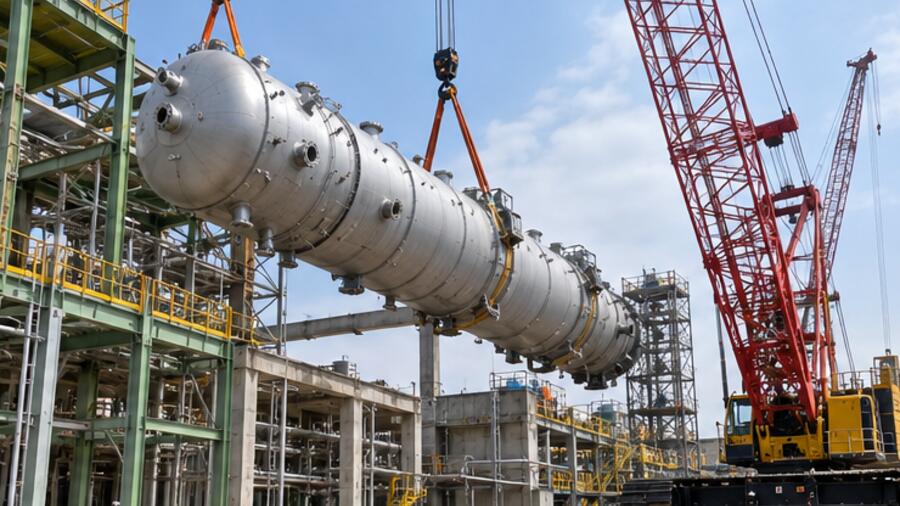
Pre-installation to remove sharp waste, loose rock and mobile mud, and to purge and level the ground. The plates were set up in the main direction and were sewd to avoid the deep path and to check the wells and legs. The turn and reverse areas are to be slightly wider and the connectors are to be locked as required. The site should also implement an “adjusting of routes ahead of schedule in accordance with weather forecasts” and include this requirement at the end of the shift and in the traffic organization chart.
Operating records include at least open hours, traffic through vehicles, unusual locations and disposal results. The first group of vehicles shall travel at a low speed to observe whether the plates are moving with the tyres; the second class shall then adjust the speed limits and frequency of the inspection to the records. Forklifts with frequent and rapid turnovers should check for surface wear and, if the crane changes the condition, re-check the retroactivity of the leg. Once maintenance is completed, access will be restored to the designated person.
For a temporary route mission that requires a site to be paved on the day after completion of the operation, the maintenance and repair phase may be established as an independent inspection node. On-site identification of vehicle lists and weather is followed by a check of drainage, connections and borders; if any conditions change, release is suspended and the road map updated. This scenario was used only to illustrate the way the project was organized, with an emphasis on reducing the probability of the floor being directly crushed by tyres and legs. It should also record the number of inputs, the time of laying, the time of stoppage, the location of maintenance and the condition of the ground after the evacuation site.
The bulk material project will also examine car car stickers, impact and wear. The UHMWPE car skateboard can improve offloading when materials, temperature and car structure are appropriate, but it is necessary to confirm fixation, thermal condensation, the end door gap and cleaning methods; it is not a substitute for the safe offloading procedure. If the project does not involve a self-loading vehicle, the budget should be focused on physical access and support points and not add irrelevant configurations to complete product portfolios.
It is best to complete small-scale technical confirmation before the next list. First, the maximum slope and discharge direction and complete field parameters are submitted, allowing the supplier to provide specifications, quantities and packaging advice; then the sample trails, links, dimensions and material documentation are checked; and finally, the container type, destination port, discharge method and batch identification are identified. The supplier recommended that it be used only as an input and that the project party remain responsible for the stabilization of the ground load, traffic organization and lifting.
Need for further evaluation of the actual project?
Applications, sizes, quantities, site photographs or drawings and delivery destinations are sent, on which we can identify more suitable products and processing programmes.







