
For installation movements, access targets should be identified: continuous transport, short-term suspension, or temporary parking during peak periods. Short-term construction of port repairs, logistics peaks, airport maintenance windows and industrial sites involves the installation of recovery equipment for transport trucks, forklifts, engineering vehicles and plates, while when the work is done, with little drainage, smoothing, connection and inspection, the passageway will result in a faulty or shifting of stations after the first heavy vehicle has passed. When targets, vehicles and vulnerable locations are matched, the scope is not too large or missing critical points; the practical implementation principle is that the installation area is linked to the vehicle release plan and that it avoids connecting personnel to plates in unseparated traffic.
On-site measurements cover a hard-surface, but empty, lower-drum floor and record weak ranges, slopes, drainage directions and underground pipes. Changes in the water-bearing state and the car tracks should be observed before and after consecutive rainfalls. Mobile equipment will need to provide the whole vehicle with its own weight, full load weight, a single axle load, tyre size, turn radius and projected duration; the crane will also need to provide the maximum reversibility of the leg and leg extension. Data sources and measurement dates should also be recorded to avoid different versions.
Where the route has both a mobile device and a fixed support point, the choice should be made between the pavement and the leg pad, respectively. The HDPE pavement with access holes and smooth-lined roads is suitable for modularization and can be moved to the next item after cleaning. The thickness can be screened from commonly used specifications such as 15, 20, 25, 30 mm, and the 25 mm appearing in this section does not constitute a direct recommendation. For information ranging from 120 to 160 tons, the purchaser should also request a test method and give priority to the equipment description, construction programme and on-site validation.
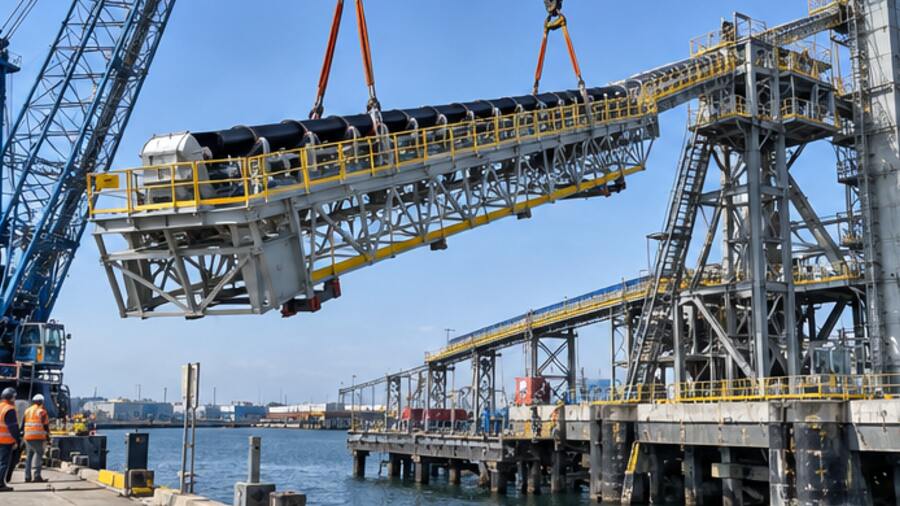
When the plates arrive at the site, the quantity, the connector and the crane are checked and the goods are discharged by route number. Upon completion of the grass-roots level, the vehicle entrance is prepared in sub-sections, and the level and edge support is checked at each stage of completion. The leg area of operation shall be separated from the area of passage. In the installation programme, the addition of “a column of sheeting to the outside of the turn” would allow field personnel to convert abstract requirements into actionable.
Temporary roads cannot be paved for long. Vehicle brakes, loading overloading and water stowing can gradually change the support under the plate, and surfaces may appear flat and may have created gaps. The site should be inspected before and after peak traffic, after continuous rainfall and when the route changes. In the event of a sinking, the ground and drainage should be checked before deciding whether to change or replace the panels, so as to avoid covering up the problem by filling the panels.
Assuming that a temporary access task requiring a site to be laid on the same day and to be vacated immediately after completion of operations is subject to an increase in traffic during the installation phase of the equipment, managers could first freeze the change of route and then divide the problems into four categories: ground, board, vehicle and movement control. Weak positions are reinforced, damage plates are replaced, vehicles are limited in speed, and one-way access is introduced for peak hours. The example does not correspond to the true customer, but shows how the supplier ' s offer is based on uniform parameters and how the on-site judgement is converted into a reusable list for the next project.
If the transport chain contains coal, ore, wet soil or food, self-release efficiency may be assessed as an independent subject. Car skateboards help to reduce the adhesiveness of certain materials, but prior to installation, the lining thickness, scalables, bolts or presses and tail door motion space should be confirmed. If there is no need for bulk discharges, there is no need to add the subparagraph; the procurement programme should be consistent with the use.
In addition to the total area, the request for quotation shall provide forklift doors at a level and clear passage, specifying the country, duration, conditions of handling, packing and port of destination. Compared suppliers can check the documentation, size difference, surface routing, connector, piece weight, effective area coverage, cabinet list and batch retroactive. The whole container shall be purchased in advance to confirm the discharge equipment. The final programme, which involves the safety of the ground, assembly or operation of the airport, must be approved by the project professional.
Need for further evaluation of the actual project?
Applications, sizes, quantities, site photographs or drawings and delivery destinations are sent, on which we can identify more suitable products and processing programmes.







