
For the use of records, the site should first identify the target for access: whether it is a continuous transport, short-term suspension or a temporary stop during peak periods. Short-term construction of port repairs, logistics peaks, airport maintenance windows and industrial sites involves the installation of recovery equipment for transport trucks, forklifts, engineering vehicles and plates, while when the work is done, with little drainage, smoothing, connection and inspection, the passageway will result in a faulty or shifting of stations after the first heavy vehicle has passed. When targets, vehicles and vulnerable locations are matched, key points will not be overstretched or omitted; the implementation principle is to establish the numbering, location, pass volume, damage and maintenance records for each batch to facilitate turnover management.
In order to determine whether the use of the records is enforceable, a spot should be set up, rather than just a few photographs. In particular, it is necessary to review the return of high water-rich powder to the soil after the rain, as the drying of the surface does not represent a continuous carrying of the lower part. The project information shall also include the maximum daily traffic, the duration of the vehicle ' s stay, the direction of the loading and unloading and the drainage route during continuous rainfall. For troughs, inspection wells and underground facilities, the prohibited support or need to be reinforced should be indicated in the road map.
Road-paving boards are responsible for spreading wheel pressure and leg mats for expanding static support areas, which cannot be replaced by one another. For this scenario, the HDPE pavement board with a connection to the hole and a smooth-lined road is suitable for modularization and can be moved to the next item after cleaning. 15 mm could be included as an option and compared with other thickness, provided that the size of the plate, the connection structure, the base level and the number of passages were verified. The labelling of 50 to 80 tons of products does not mean that all the same vehicles are available on the ground, and ground conditions remain the determining factor.
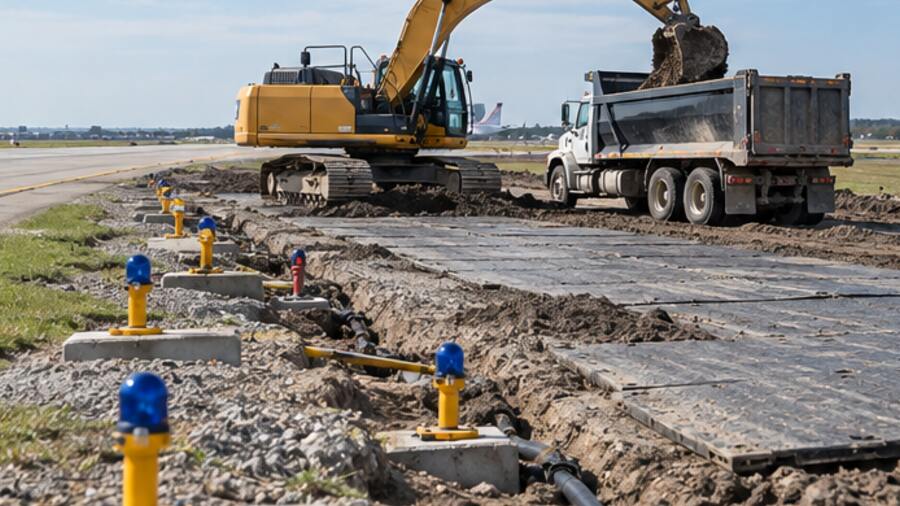
The sequence of laying would allow for the advance from the stable entrance to the area of operations. First, water and high differentials are processed, then the first plate is located; the subsequent plate is consistent in the direction of the texture and check if the seams form the steps. The ramp, turn and brake points shall increase the horizontal constraints or the width of the coverage. For this item, “Registration of the number of passing vehicles per shift” could be used as a key action, with dedicated personnel recording the time of completion and the results of the review.
Operating records include at least open hours, traffic through vehicles, unusual locations and disposal results. The first group of vehicles shall travel at a low speed to observe whether the plates are moving with the tyres; the second class shall then adjust the speed limits and frequency of the inspection to the records. Forklifts with frequent and rapid turnovers should check for surface wear and, if the crane changes the condition, re-check the retroactivity of the leg. Once maintenance is completed, access will be restored to the designated person.
The installation phase of the equipment may be established as an independent inspection node for a temporary route mission that requires that the site be laid on the same day and evacuated immediately after the completion of operations. On-site identification of vehicle lists and weather is followed by a check of drainage, connections and borders; if any conditions change, release is suspended and the road map updated. This scenario is used only to illustrate the way in which the project was organized, with a focus on maintaining a steady parking of vehicles while they are being handled. It should also record the number of inputs, the time of laying, the time of stoppage, the location of maintenance and the condition of the ground after the evacuation site.
Auxiliary equipment also affects the overall programme. A leg pad is required to accompany a vehicle, a forklift is required to focus on tyre contact, and a bulk vehicle may require a slab. The suitability of the UHMWPE liner depends on the work temperature, the chemical environment, the material impact and the car structure, and the manufacturer provides the installation requirements. Each product should be matched to specific equipment in the project form to avoid the use of the same parameter across uses.
In order to obtain a comparable offer, the purchaser should harmonize the request for quotations to at least specify the maximum gross vehicle weight and single axle load, route size, vehicle condition, ground condition and project time. Vendors are required to respond to material plates, sheeting, single weight, connection, packaging, containerization and quantity and quality documents. If the project is purchased on a containerized basis, the capability of the forklift or forklift on site or forklift is also confirmed. All safety-related selections are based on the equipment manual and the approval programme.
Need for further evaluation of the actual project?
Applications, sizes, quantities, site photographs or drawings and delivery destinations are sent, on which we can identify more suitable products and processing programmes.







