
The choice of pavement thickness for temporary access to port heavy vehicles cannot be answered by single-product parameters. Project leaders need to look at the flow organization, ground support and maintenance capacity at the same time; the thickness should not be limited to the total weight of the vehicle, but combined with axle load, tyre contact, grass-roots support and the number of times passed. When collectors, tractors, front-hand hangers, piles and maintenance vehicles enter container terminals, bulk berths and port area expansion areas, problems with turnovers, ramps, seams and waiting positions on routes may arise earlier than normal straight-line segments and should be individually marked on drawings.
On-site measurements cover soften shoulder near drains, recording weak ranges, slopes, drainage directions and underground pipes. Changes in the water-bearing state and the car tracks should be observed before and after short and heavy rainfall. Mobile equipment will need to provide the whole vehicle with its own weight, full load weight, a single axle load, tyre size, turn radius and projected duration; the crane will also need to provide the maximum reversibility of the leg and leg extension. Data sources and measurement dates should also be recorded to avoid different versions.
Material parameters should serve the field rather than be propaganda figures. The HDPE pavement board provides smoothing and partitioning for the continuous passage, and the crane leg pad is used for port machine overhaul or temporary suspension. The project compares 30 mm and the number of block weights, rigidity, laying efficiency and containers with the adjacent specifications, and cross-checks the links to the surface. 160 to 200 tonnes is only a primary sift; ground-based and support designs should be completed first when an underground hole, weak shoulder or hanger overload exists.
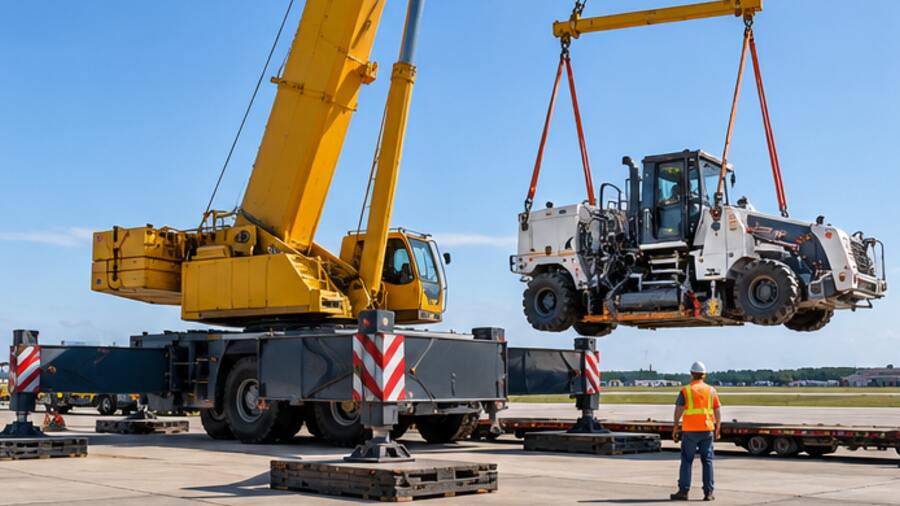
The sequence of laying would allow for the advance from the stable entrance to the area of operations. First, water and high differentials are processed, then the first plate is located; the subsequent plate is consistent in the direction of the texture and check if the seams form the steps. The ramp, turn and brake points shall increase the horizontal constraints or the width of the coverage. For this project, the “Definition of people's corridors with a clear target” could be a key action, with dedicated time and review results recorded.
Temporary roads cannot be paved for long. Vehicle brakes, loading overloading and water stowing can gradually change the support under the plate, and surfaces may appear flat and may have created gaps. The site should be inspected before and after peak traffic, after short and heavy rainfall and when the route changes. In the event of a sinking, the ground and drainage should be checked before deciding whether to change or replace the panels, so as to avoid covering up the problem by filling the panels.
In a simulation plan for a temporary port route connecting the stacks to the maintenance area, the maintenance overhaul phase involves the zonal release of areas that have completed the grass-roots processing and plate connection, with unaccepted areas remaining isolated. Each region designates a person responsible for the inspection and uses a number corresponding to the photograph. This example does not represent a specific project commitment, but allows the team to reduce vehicle mud to the hardened area. If the records show repeated maintenance at the same location, they should be re-analysed back to the ground and transport organization.
Auxiliary equipment also affects the overall programme. A leg pad is required to accompany a vehicle, a forklift is required to focus on tyre contact, and a bulk vehicle may require a slab. The suitability of the UHMWPE liner depends on the work temperature, the chemical environment, the material impact and the car structure, and the manufacturer provides the installation requirements. Each product should be matched to specific equipment in the project form to avoid the use of the same parameter across uses.
In order to obtain a comparable offer, the purchaser should harmonize the request for quotations, at least indicating the total length of the route, the net width and turn radius, the size of the route, the condition of the vehicle, the condition of the ground and the time of the project. Vendors are required to respond to material plates, sheeting, single weight, connection, packaging, containerization and quantity and quality documents. If the project is purchased on a containerized basis, the capability of the forklift or forklift on site or forklift is also confirmed. All safety-related selections are based on the equipment manual and the approval programme.
Need for further evaluation of the actual project?
Applications, sizes, quantities, site photographs or drawings and delivery destinations are sent, on which we can identify more suitable products and processing programmes.







