
The parameters that need to be prepared prior to the request for a temporary route for heavy vehicles at the port cannot be answered with a single product parameter. Project leaders need to view the flow organization, ground support and maintenance capacity at the same time; effective request for quotations requires at least vehicle, payload, ground, route size, quantity and destination port information. When collectors, tractors, front-hand hangers, piles and maintenance vehicles enter container terminals, bulk berths and port area expansion areas, problems with turnovers, ramps, seams and waiting positions on routes may arise earlier than normal straight-line segments and should be individually marked on drawings.
In order to determine whether the request for quotation parameters are to be implemented, the spot should be set up and not only a few photographs taken. In particular, there is a need to review narrow floors with insufficient convective radiuss for heavy vehicles, as dry surfaces do not represent a continuous carrying of the lower part. The project information shall also include the maximum daily traffic, the duration of the vehicle ' s stay, the direction of loading and unloading, and the drainage route during short and heavy rainfall. For troughs, inspection wells and underground facilities, the prohibited support or need to be reinforced should be indicated in the road map.
Product selection should be differentiated by stress. The HDPE pavement board provides smoothing and partitioning for the continuous passage, and the crane leg pad is used for port machine overhaul or temporary suspension. 15, 20, 25 and 30 mm are within the common thickness range and 20 mm can only serve as a starting point for comparison for this project; if there are holes or sediments at the grass-roots level, the increase in thickness will not be a substitute for peace and reinforcement. The 80 to 120 tonnes in the product information should also be understood in conjunction with the test conditions, with the final specifications to be confirmed by the approved programme and field professionals.
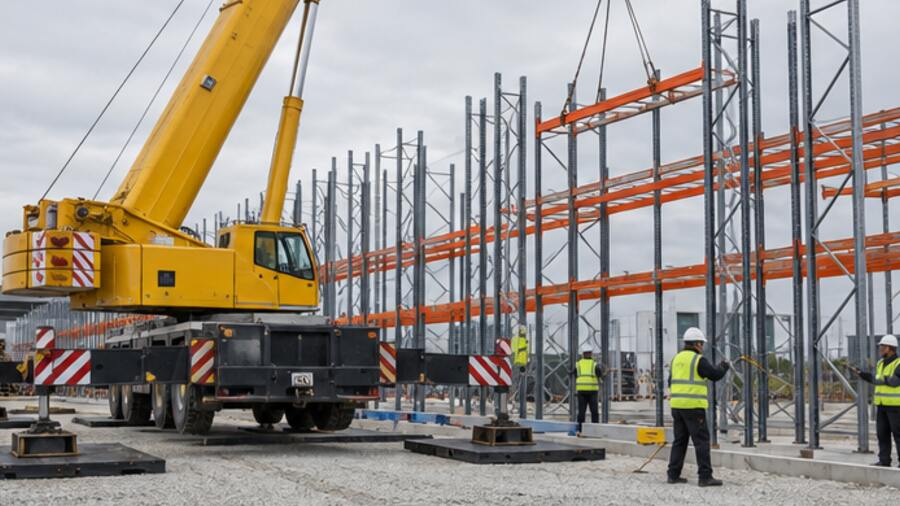
The fast-track installation still requires the retention of basic processes: drainage, debarment, peace-building, positioning, connection and trial passage. The plates remain continuous in line segments, leaving sufficient width at the intersections and outside areas; and they are to be removed from the rigid surface interface. The project leader should arrange for “the immediate decommissioning of the mud when it is discovered that it is coming out of the seams”, while specifying the conditions for its decommissioning, so as to prevent irregularity from being left to the next group during rush hours.
Operating records include at least open hours, traffic through vehicles, unusual locations and disposal results. The first group of vehicles shall travel at a low speed to observe whether the plates are moving with the tyres; the second class shall then adjust the speed limits and frequency of the inspection to the records. Forklifts with frequent and rapid turnovers should check for surface wear and, if the crane changes the condition, re-check the retroactivity of the leg. Once maintenance is completed, access will be restored to the designated person.
Assuming an increase in traffic during the maintenance and repair phase of a temporary port route connecting the stacking site to the maintenance area, managers could freeze the change of route before classifying the problems into four categories: ground, plates, vehicles and movement control. Weak positions are reinforced, damage plates are replaced, vehicles are limited in speed, and one-way access is introduced for peak hours. The example does not correspond to the true customer, but shows how to reduce the amount of time spent on cleaning car sticky and how to convert the site judgement into a list of reusable items for the next project.
In the integrated site, different problems were solved by the pavement, leg mats and carboards. Vehicle traffic is supported by a continuous focus on the maximum retroactivity of the leg and the friction and adhesion of material from the surface of the vehicle. If MHMWPE skateboards are used, thermal stretches should be set aside and fixed systems checked; if relevant material is not available at the site, they should be removed from the list and the investment targeted.
There must be a back-up ratio and on-site maintenance conditions in the request for quotations, otherwise it is likely that different vendors will calculate on different assumptions. The procurement staff shall also require the description of the effective size, weight, number of attachments, packing units, container load and delivery cycle of each plate. The evaluation will be based on technical conformity, installation efficiency and turnover. Where key payloads or ground data have not been confirmed, the quotations should be marked as preliminary and the review retained.
Need for further evaluation of the actual project?
Applications, sizes, quantities, site photographs or drawings and delivery destinations are sent, on which we can identify more suitable products and processing programmes.







