
Dismantling and recycling in container terminals, bulk berths and port areas has a direct impact on the planned availability of vehicles. Common on-site collection cards, tractors, front-hand hangings, heaps and maintenance vehicles with different dynamic wheel pressure, static de-loading and power. High axle loads, frequent turnovers, brakes and traffic crosses the seams, the shoulder of the road and the water vents are the first to sink. The programme should, therefore, first target routes and time windows that must be kept open, before arranging for materials and personnel to avoid temporary changes in rules of passage on the construction side.
In order to determine whether the demolition is to be carried out, the site should be set up at a point rather than taking only a few photographs. In particular, there is a need to review the transition between grassland and hard roads, as the surface is dry and does not represent a continuous carrying of the lower part. The project information should also include the maximum daily traffic, the length of vehicle stay, the direction of handling and the drainage route during the wet salt fog. For troughs, inspection wells and underground facilities, the prohibited support or need to be reinforced should be indicated in the road map.
Where the route has both a mobile device and a fixed support point, the choice should be made between the pavement and the leg pad, respectively. The HDPE pavement board provides smoothing and partitioning for the continuous passage, and the crane leg pad is used for port machine overhaul or temporary suspension. The thickness can be screened from commonly used specifications such as 15, 20, 25, 30 mm, and the 15 mm appearing in this section does not constitute a direct recommendation. For information ranging from 50 to 80 tons, the purchaser should also request the test method and give priority to the equipment description, construction programme and on-site validation.
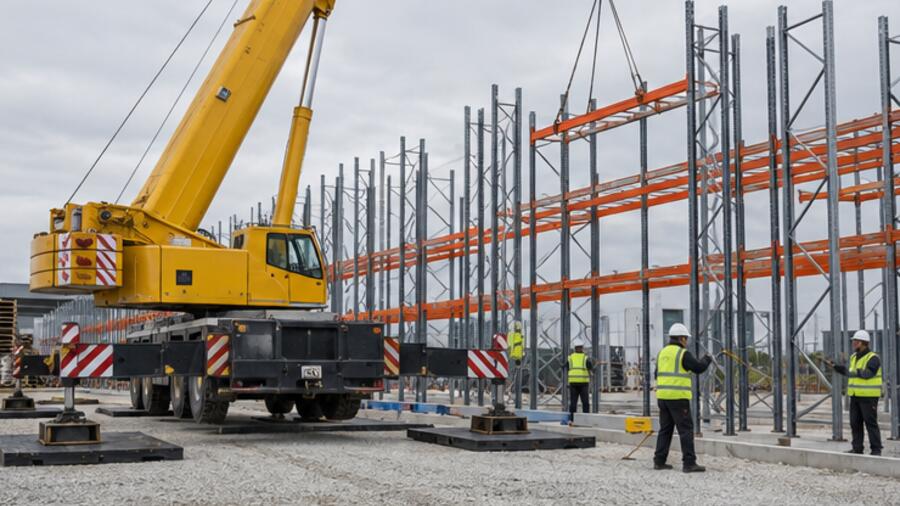
The sequence of laying would allow for the advance from the stable entrance to the area of operations. First, water and high differentials are processed, then the first plate is located; the subsequent plate is consistent in the direction of the texture and check if the seams form the steps. The ramp, turn and brake points shall increase the horizontal constraints or the width of the coverage. For this item, “Registration of the number of passing vehicles per shift” could be used as a key action, with dedicated personnel recording the time of completion and the results of the review.
Maintenance staff can divide the straight-line, turn-out, waiting areas and support points into different levels of inspection. The straight-line sections focus on the sutures and the tracks, turn around and look for lateral shifts, wait areas to see long-term static sinking, and support points to check whether the pads and the ground are sunk. Shorter check intervals after rain or when the traffic suddenly increases; any plate-side rise, loose connection or grass-roots plasma should trigger decommissioning.
For a temporary port route connecting the stacking site to the maintenance area, the installation phase of the equipment could be established as an independent inspection node. On-site identification of vehicle lists and weather is followed by a check of drainage, connections and borders; if any conditions change, release is suspended and the road map updated. This scenario is used only to illustrate the way the project is organized, with an emphasis on shifting post-rainfall repairs from ad hoc decision-making to a pre-set process. It should also record the number of inputs, the time of laying, the time of stoppage, the location of maintenance and the condition of the ground after the evacuation site.
Auxiliary equipment also affects the overall programme. A leg pad is required to accompany a vehicle, a forklift is required to focus on tyre contact, and a bulk vehicle may require a slab. The suitability of the UHMWPE liner depends on the work temperature, the chemical environment, the material impact and the car structure, and the manufacturer provides the installation requirements. Each product should be matched to specific equipment in the project form to avoid the use of the same parameter across uses.
The request for quotations shall include, in addition to the total area, a project schedule and plate turnover plan, specifying the country, duration, conditions of handling, mode of packaging and port of destination. Compared suppliers can check the documentation, size difference, surface routing, connector, piece weight, effective area coverage, cabinet list and batch retroactive. The whole container shall be purchased in advance to confirm the discharge equipment. The final programme, which involves the safety of the ground, assembly or operation of the airport, must be approved by the project professional.
Need for further evaluation of the actual project?
Applications, sizes, quantities, site photographs or drawings and delivery destinations are sent, on which we can identify more suitable products and processing programmes.







