
In the container terminal, bulk berthing and port area expansion areas, the width of the corridor directly affects the ability of vehicles to reach their operational areas as planned. Common on-site collection cards, tractors, front-hand hangings, heaps and maintenance vehicles with different dynamic wheel pressure, static de-loading and power. High axle loads, frequent turnovers, brakes and traffic crosses the seams, the shoulder of the road and the water vents are the first to sink. The programme should, therefore, first target routes and time windows that must be kept open, before arranging for materials and personnel to avoid temporary changes in rules of passage on the construction side.
On-site measurements cover the boundary between old concrete and new backfills and record weak ranges, slopes, drainage directions and underground pipes. The wet salt fog should be followed by a change in the water-bearing state and the car trail, respectively. Mobile equipment will need to provide the whole vehicle with its own weight, full load weight, a single axle load, tyre size, turn radius and projected duration; the crane will also need to provide the maximum reversibility of the leg and leg extension. Data sources and measurement dates should also be recorded to avoid different versions.
The selection is based on the calculation of the local pressure and the examination of whether the plate remains continuous at the grass-roots level. The HDPE pavement board provides smoothing and partitioning for the continuous passage, and the crane leg pad is used for port machine overhaul or temporary suspension. The common thickness ranges from 15 mm to 30 mm, and this option can first assess 25 mm and then adjust it through trial preparation or project accounting. The so-called 120-160-ton carrier should have a clear test boundary and cannot be cited separately from the distance, temperature, payload distribution and safety factor.
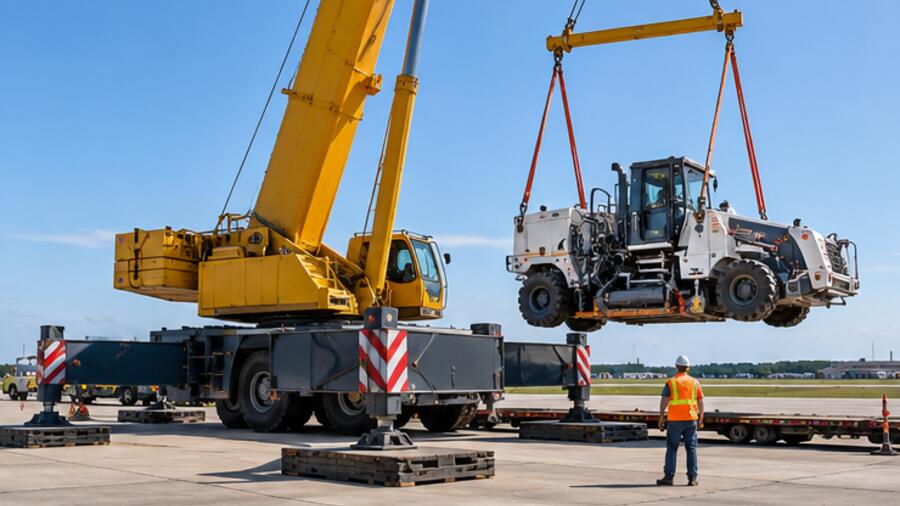
When the plates arrive at the site, the quantity, the connector and the crane are checked and the goods are discharged by route number. Upon completion of the grass-roots level, the vehicle entrance is prepared in sub-sections, and the level and edge support is checked at each stage of completion. The leg area of operation shall be separated from the area of passage. In the installation programme, the addition of “a column of sheeting to the outside of the turn” would allow field personnel to convert abstract requirements into actionable.
Operating records include at least open hours, traffic through vehicles, unusual locations and disposal results. The first group of vehicles shall travel at a low speed to observe whether the plates are moving with the tyres; the second class shall then adjust the speed limits and frequency of the inspection to the records. Forklifts with frequent and rapid turnovers should check for surface wear and, if the crane changes the condition, re-check the retroactivity of the leg. Once maintenance is completed, access will be restored to the designated person.
Assuming an increase in traffic during the installation phase of a temporary port route connecting the stacking site to the maintenance area, managers could freeze the change of route before classifying problems into four categories: ground, board, vehicle and movement control. Weak positions are reinforced, damage plates are replaced, vehicles are limited in speed, and one-way access is introduced for peak hours. The example does not correspond to the true customer, but shows how the shoulder of the original repeater is integrated into the continuous coverage and how the on-site judgement can be converted into the next reusable list of items.
If the transport chain contains coal, ore, wet soil or food, self-release efficiency may be assessed as an independent subject. Car skateboards help to reduce the adhesiveness of certain materials, but prior to installation, the lining thickness, scalables, bolts or presses and tail door motion space should be confirmed. If there is no need for bulk discharges, there is no need to add the subparagraph; the procurement programme should be consistent with the use.
It is best to complete small-scale technical confirmation before the next list. First, the maximum leg reaction and complete field parameters of the crane were submitted to the supplier for specification, quantity and packaging advice; then the sample trails, links, dimensions and material documentation were checked; and finally, the container type, destination port, method of discharge and batch identification were identified. The supplier recommended that it be used only as an input and that the project party remain responsible for the stabilization of the ground load, traffic organization and lifting.
Need for further evaluation of the actual project?
Applications, sizes, quantities, site photographs or drawings and delivery destinations are sent, on which we can identify more suitable products and processing programmes.







