
In the processing of the prior survey, “where to go, what to go, how many times a day” was written as a verifiable on-site condition. Flows in bulk-handling areas such as ore, coal, gravel, food and wet soil often include dumps, shovels, in-port troughs and silo-service vehicles, with only full tonnage to ignore the effects of tyre exposure and low-speed turns. The more reliable conclusion is that the route, load, surface and operational metronic records are complete, the number of plates is determined and the order in which they are laid, followed by a decision on the combination of pavement boards, leg mats or local grass-roots treatments.
In order to determine whether an earlier survey was to be carried out, a spot should be set up, rather than taking only a few photographs. In particular, it is necessary to review areas within the airport perimeter that are sensitive to the soil, as dry surface does not represent a continuous carrying of the lower part. The project information shall also include the maximum daily traffic, the duration of the vehicle ' s stay, the direction of loading and unloading, and the drainage route during short and heavy rainfall. For troughs, inspection wells and underground facilities, the prohibited support or need to be reinforced should be indicated in the road map.
Material parameters should serve the field rather than be propaganda figures. The route may be made on a HDPE paved board, which may be equipped with MHMWPE car skateboards to improve the discharge material, subject to applicable conditions. The project allows for a comparison of the 25 mm and the adjacent specifications of the single mass, rigidity, laying efficiency and number of containers, as well as a reconciliation of the links to the surface. 50-80 tonnes are only primary sifts; ground-based and support designs should be completed first when an underground hole, weak shoulder or hanger overload exists.
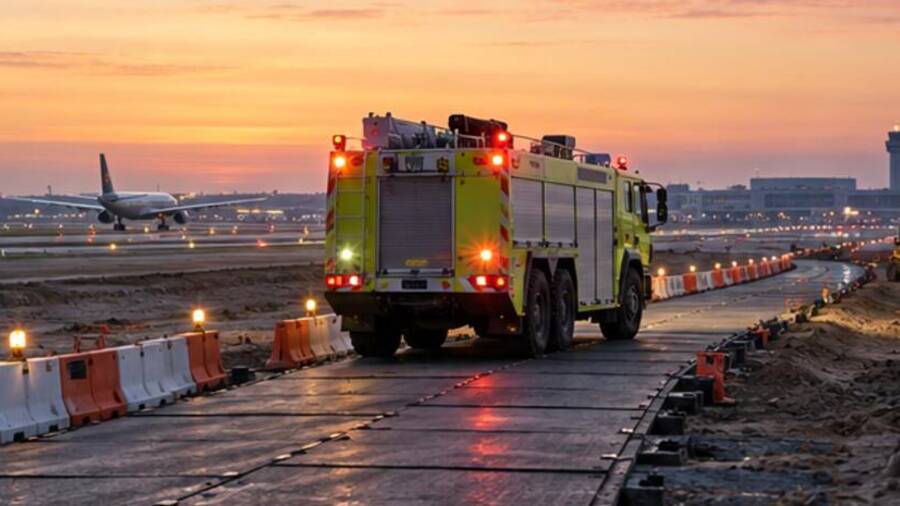
Pre-installation to remove sharp waste, loose rock and mobile mud, and to purge and level the ground. The plates were set up in the main direction and were sewd to avoid the deep path and to check the wells and legs. The turn and reverse areas are to be slightly wider and the connectors are to be locked as required. The site should also implement “the addition of a column of sheeting to the outside of the turn” and include this requirement at the end of the shift and in the traffic organization chart.
Operating records include at least open hours, traffic through vehicles, unusual locations and disposal results. The first group of vehicles shall travel at a low speed to observe whether the plates are moving with the tyres; the second class shall then adjust the speed limits and frequency of the inspection to the records. Forklifts with frequent and rapid turnovers should check for surface wear and, if the crane changes the condition, re-check the retroactivity of the leg. Once maintenance is completed, access will be restored to the designated person.
In the case of a short-barrel route of bulk material from the port yard to the discharge point, the site could be divided into five areas during the installation phase of the equipment, straight ahead, turning, operation and recovery. The entry point is responsible for vehicle reconciliation, maintaining continuous coverage of the straight-line segment, increasing the outer width of the turn-band, separate validation of the operating segment and completion of clean bundles in the recovery area. The simulation programme is used to illustrate the methodology and is not a client-specific performance; it can help the project team to separate temporary suspension points from the main traffic route and leave a record of the number of maintenances and the length of breaks.
In the integrated site, different problems were solved by the pavement, leg mats and carboards. Vehicle traffic is supported by a continuous focus on the maximum retroactivity of the leg and the friction and adhesion of material from the surface of the vehicle. If MHMWPE skateboards are used, thermal stretches should be set aside and fixed systems checked; if relevant material is not available at the site, they should be removed from the list and the investment targeted.
The request for quotations must be accompanied by an on-site head and security clearance process, otherwise it is likely that different vendors will calculate on different assumptions. The procurement staff shall also require the description of the effective size, weight, number of attachments, packing units, container load and delivery cycle of each plate. The evaluation will be based on technical conformity, installation efficiency and turnover. Where key payloads or ground data have not been confirmed, the quotations should be marked as preliminary and the review retained.
Need for further evaluation of the actual project?
Applications, sizes, quantities, site photographs or drawings and delivery destinations are sent, on which we can identify more suitable products and processing programmes.







