
For the frequency of the inspection, the site should first determine whether the target is a continuous transport, a short-term suspension or a temporary stop during peak periods. Mass handling areas, such as ores, coal, sandstone, food and wet soil, involve dumps, shovels, short-barriers and silo service vehicles, while glue increases backloads and clean-up times, and frequent shocks increase wear and tear and site contamination. When targets, vehicles and vulnerable positions are matched, the scope is not too large or missing critical points; the practical implementation principle is that sews, sunks and contamination should be checked after the first car, before the shift and after heavy rainfall.
The degree of completeness of the input conditions determines the quality of the subsequent selection. First, the length and width of the loose grass-roots after the winter freeze is measured, and then the maximum performance of the self-loading, shoveling, in-port barges and silo service vehicles is checked. In addition to the weight, the pressure of the tyre, the form of the belt, the position of the brake, the possibility of in situ transfer and the frequency of passage shall be recorded. In case of cryogenic freezing, a ground review should be carried out; if the data cannot be confirmed, the unknown item should be classified as a restriction and not replaced by an empirical value.
The selection is based on the calculation of the local pressure and the examination of whether the plate remains continuous at the grass-roots level. The route may be made on a HDPE paved board, which may be equipped with MHMWPE car skateboards to improve the discharge material, subject to applicable conditions. The common thickness ranges from 15 mm to 30 mm, and this option can first assess 25 mm and then adjust it through trial preparation or project accounting. The so-called 50-80-ton carrier should have a clear test boundary and cannot be cited separately from the distance, temperature, payload distribution and safety factor.
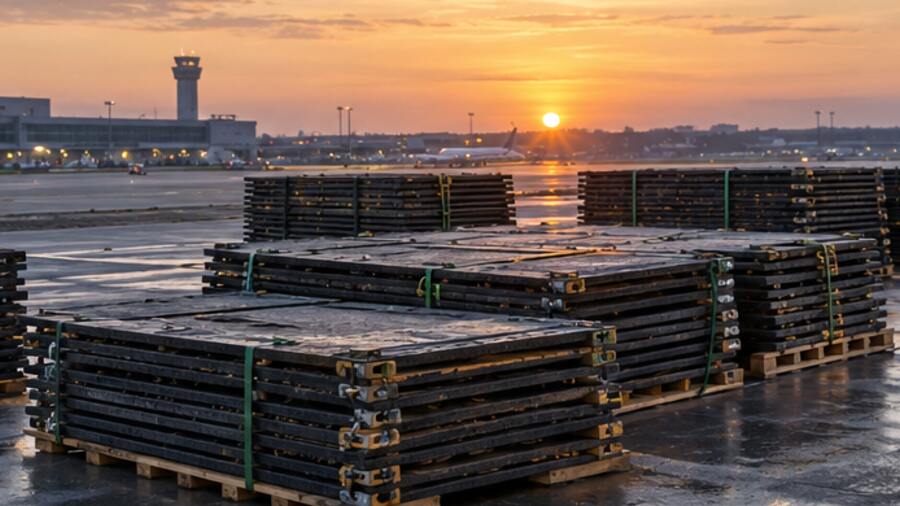
The construction staff should first seal the belts and confirm that no vehicles enter, then clear the floors and tablets. Do not leave the seams in the softest position, and do not let the edges remain open for long periods. Cleaning and installation of sandstones when the link is pierced, so that the connector is not fully in place. A low-speed test of access after a period of completion and the implementation of the “Settling of portable lighting for night shift teams” was completed before the next section became operational.
Operating records include at least open hours, traffic through vehicles, unusual locations and disposal results. The first group of vehicles shall travel at a low speed to observe whether the plates are moving with the tyres; the second class shall then adjust the speed limits and frequency of the inspection to the records. Forklifts with frequent and rapid turnovers should check for surface wear and, if the crane changes the condition, re-check the retroactivity of the leg. Once maintenance is completed, access will be restored to the designated person.
In the case of a short-barrel route of bulk material from the port yard to the discharge point, the site can be divided into five areas at the entrance preparation stage, straight, turning, operation and recovery. The entry point is responsible for vehicle reconciliation, maintaining continuous coverage of the straight-line segment, increasing the outer width of the turn-band, separate validation of the operating segment and completion of clean bundles in the recovery area. The simulation programme is used to describe the methodology and is not a client-specific performance; it can help the project team to base the vendor ' s offer on uniform parameters and leave a record of the number and duration of maintenance.
The bulk material project will also examine car car stickers, impact and wear. The UHMWPE car skateboard can improve offloading when materials, temperature and car structure are appropriate, but it is necessary to confirm fixation, thermal condensation, the end door gap and cleaning methods; it is not a substitute for the safe offloading procedure. If the project does not involve a self-loading vehicle, the budget should be focused on physical access and support points and not add irrelevant configurations to complete product portfolios.
In order to obtain a comparable offer, the purchaser should harmonize the request for quotations to at least indicate maximum slope and drainage direction, route size, vehicle condition, ground condition and project time. Vendors are required to respond to material plates, sheeting, single weight, connection, packaging, containerization and quantity and quality documents. If the project is purchased on a containerized basis, the capability of the forklift or forklift on site or forklift is also confirmed. All safety-related selections are based on the equipment manual and the approval programme.
Need for further evaluation of the actual project?
Applications, sizes, quantities, site photographs or drawings and delivery destinations are sent, on which we can identify more suitable products and processing programmes.







