
For the thickness selection, the site should first determine whether the target is a continuous transport, short-term suspension or a temporary stop during peak periods. Mass handling areas, such as ores, coal, sandstone, food and wet soil, involve dumps, shovels, short-barriers and silo service vehicles, while glue increases backloads and clean-up times, and frequent shocks increase wear and tear and site contamination. When targets, vehicles and vulnerable positions are matched, the scope is not too large or missing critical points; the practical implementation principle is that the thickness cannot be limited to the total weight of the vehicle, but is combined with axle load, tyre contact, grass-roots support and the number of passes.
In order to determine whether the thickness selection is to be implemented, the site should be set up, rather than taking only a few photographs. In particular, there is a need to review the sculpture base, which is uneven, since the drying of the surface does not represent a continuous carrying of the next. The project information shall also include the maximum daily traffic, the length of vehicle stay, the direction of handling and the drainage route during the cryogenic thaw. For troughs, inspection wells and underground facilities, the prohibited support or need to be reinforced should be indicated in the road map.
Road-paving boards are responsible for spreading wheel pressure and leg mats for expanding static support areas, which cannot be replaced by one another. For this scenario, the route may be made using the HDPE pavement, where the UHMWPE car skateboard may be fitted to improve the discharge material, subject to applicable conditions. 20 mm could be included as an option and compared with other thickness, subject to the simultaneous verification of plate size, connection structure, grass-roots rigidity and number of passages. The labelling of 160 to 200 tons of products does not mean that all the same vehicles are available on the ground, and ground conditions remain the determining factor.
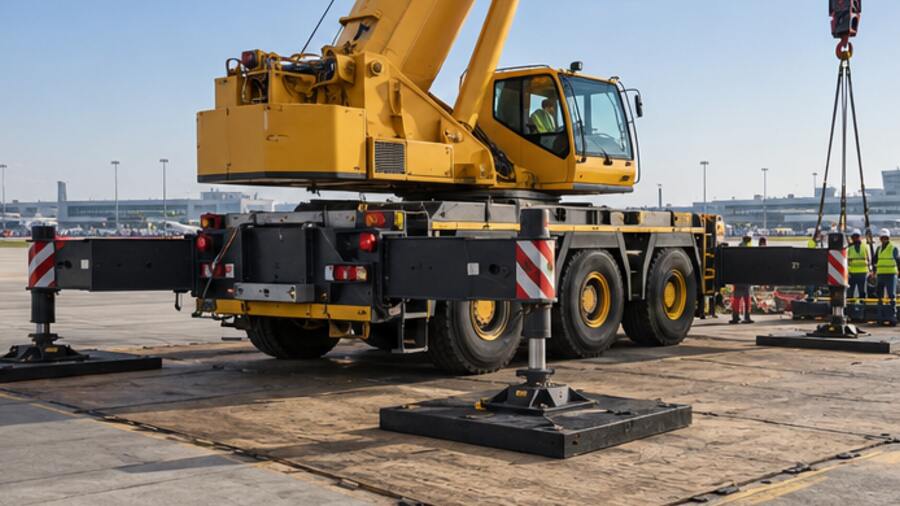
The sequence of laying would allow for the advance from the stable entrance to the area of operations. First, water and high differentials are processed, then the first plate is located; the subsequent plate is consistent in the direction of the texture and check if the seams form the steps. The ramp, turn and brake points shall increase the horizontal constraints or the width of the coverage. For this project, “Drain drainage and clean-up tools before rain” can be used as a key action, with dedicated time and results recorded.
Following the opening of access, the focus of the inspection was on the continued support under the plate. The first heavy vehicle passes by to check for high seams, peripheries, mudslides and planks; the shift is repeated after weather changes. The pressure of contact of the forklift ' s solid-heart wheel differs significantly from the concentrated static of the crane ' s legs, and anomalies should be detected first in isolation before being drained, evened or replaced, and the subsequent flow of the vehicle cannot continue to magnify the damage.
In a simulation plan for a short-barrel line of bulk material from the port dump to the discharge point, the area to be released at the entry stage was used: the area to be opened for primary treatment and the plate connection was opened and the unaccepted area remained isolated. Each region designates a person responsible for the inspection and uses a number corresponding to the photograph. This example does not represent a specific project commitment, but allows the team to recycle the plates to the next stage. If the records show repeated maintenance at the same location, they should be re-analysed back to the ground and transport organization.
If the transport chain contains coal, ore, wet soil or food, self-release efficiency may be assessed as an independent subject. Car skateboards help to reduce the adhesiveness of certain materials, but prior to installation, the lining thickness, scalables, bolts or presses and tail door motion space should be confirmed. If there is no need for bulk discharges, there is no need to add the subparagraph; the procurement programme should be consistent with the use.
The procurement list should provide suppliers with a real picture of the work, in which the sizes and quantities of tyres or belts are data that need to be highlighted in this section. The remaining information includes vehicle and leg loads, ground photographs and sizes, projected number of vehicles, number of days of use, colour trails, destination port and desired period. A comparison of the quotations should be converted to a valid area coverage and complete connection system and not only a single block price; the acceptance and inspection criteria should also be included in the document before the next list.
Need for further evaluation of the actual project?
Applications, sizes, quantities, site photographs or drawings and delivery destinations are sent, on which we can identify more suitable products and processing programmes.







