
In bulk-handling areas such as ores, coal, sandstone, food and wet soil, the recovery of rain after rain directly affects the ability of vehicles to access their operations as planned. In-situ self-loading, forklifts, short-barriers and silo service vehicles, with different dynamic wheel pressure, stationary load and power. The adhesive increases backloads and clean-up times, and frequent shocks exacerbate car wear and contamination. The programme should, therefore, first target routes and time windows that must be kept open, before arranging for materials and personnel to avoid temporary changes in rules of passage on the construction side.
In order to determine whether or not to recover from the rain, the site should be equipped with a spot rather than a few photographs. In particular, a review of the temporary intersection shared between construction and production is to be undertaken, as the surface is dry and does not represent a continuous carrying of the lower part. Information on the project should also include the maximum daily traffic, the length of vehicle stay, the direction of handling and the drainage route during high-temperature tan. For troughs, inspection wells and underground facilities, the prohibited support or need to be reinforced should be indicated in the road map.
Where the route has both a mobile device and a fixed support point, the choice should be made between the pavement and the leg pad, respectively. The route may be made on a HDPE paved board, which may be equipped with MHMWPE car skateboards to improve the discharge material, subject to applicable conditions. The thickness can be screened from commonly used specifications such as 15, 20, 25 and 30 mm, and the 30 mm appearing in this section does not constitute a direct recommendation. For information on ranges of 80 to 120 tons, the purchaser should also request a test method and give priority to the equipment description, construction programme and on-site validation.
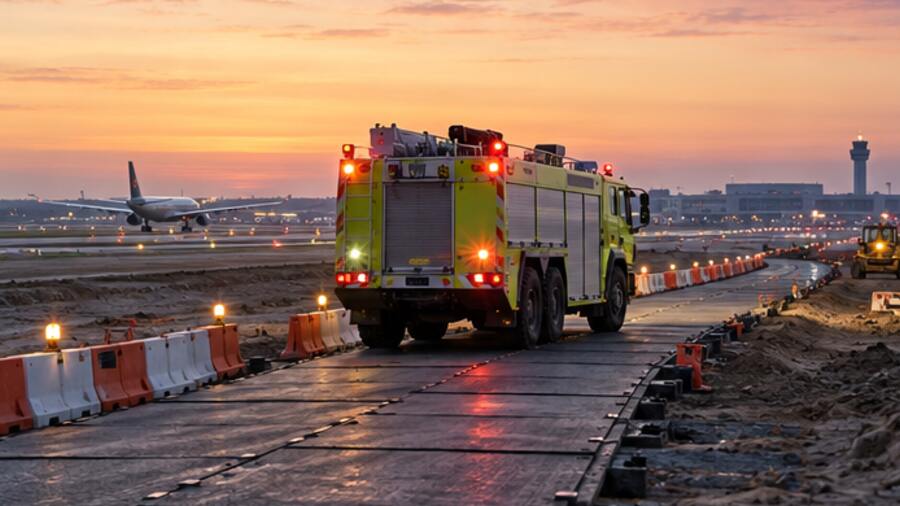
The construction staff should first seal the belts and confirm that no vehicles enter, then clear the floors and tablets. Do not leave the seams in the softest position, and do not let the edges remain open for long periods. Cleaning and installation of sandstones when the link is pierced, so that the connector is not fully in place. A low-speed test of access after a period of completion and the implementation of the “Definition of people's accesses with a clear target” was completed before the next section became operational.
Temporary roads cannot be paved for long. Vehicle brakes, loading overloading and water stowing can gradually change the support under the plate, and surfaces may appear flat and may have created gaps. The site should be inspected before and after peak traffic, after high temperatures and when the route changes. In the event of a sinking, the ground and drainage should be checked before deciding whether to change or replace the panels, so as to avoid covering up the problem by filling the panels.
An independent inspection node may be established for the maintenance and repair phase of a short-barrel line of bulk material from the port dump to the discharge point. On-site identification of vehicle lists and weather is followed by a check of drainage, connections and borders; if any conditions change, release is suspended and the road map updated. This scenario is used only to illustrate how the project is organized, with an emphasis on making it possible for laying and recycling to be carried over in shifts. It should also record the number of inputs, the time of laying, the time of stoppage, the location of maintenance and the condition of the ground after the evacuation site.
The bulk material project will also examine car car stickers, impact and wear. The UHMWPE car skateboard can improve offloading when materials, temperature and car structure are appropriate, but it is necessary to confirm fixation, thermal condensation, the end door gap and cleaning methods; it is not a substitute for the safe offloading procedure. If the project does not involve a self-loading vehicle, the budget should be focused on physical access and support points and not add irrelevant configurations to complete product portfolios.
It is best to complete small-scale technical confirmation before the next list. First, the expected delivery period and arrival sequence and complete field parameters are submitted, allowing the supplier to give specifications, quantities and packing suggestions; then the sample trail, connection holes, size differences and material documents are checked; and finally, the container type, destination port, discharge method and batch identification are identified. The supplier recommended that it be used only as an input and that the project party remain responsible for the stabilization of the ground load, traffic organization and lifting.
Need for further evaluation of the actual project?
Applications, sizes, quantities, site photographs or drawings and delivery destinations are sent, on which we can identify more suitable products and processing programmes.







