
The answer to how bulk material transport and discharges in ports can be strengthened should start with the operational route and not with a fixed specification. In-situ shifts, brakes and ramp start-up will magnify the horizontal power and should be broadened, connected and increased in frequency of patrols. Mass handling areas, such as ores, coal, sandstone, food and wet soil, are usually accompanied by offloaders, shovels, short-barriers and silo service vehicles, with different pressures on tyres, axles and shifting patterns. The adhesive increases backloads and clean-up times, and frequent shocks exacerbate car wear and contamination. The project team shall first delineate the main corridor, the waiting areas, the loading and unloading points and the emergency export, and then the boundary shall be confirmed jointly by the construction, logistics and security authorities.
In order to determine whether the twisting brakes can be carried out, the spot should be set up, rather than taking only a few photographs. In particular, the boundary between old concrete and new landfills is to be reviewed, as drying of the surface does not mean continuous carrying of the lower part. The project information should also include the maximum daily traffic, the length of vehicle stay, the direction of handling and the drainage route during the wet salt fog. For troughs, inspection wells and underground facilities, the prohibited support or need to be reinforced should be indicated in the road map.
The selection is based on the calculation of the local pressure and the examination of whether the plate remains continuous at the grass-roots level. The route may be made on a HDPE paved board, which may be equipped with MHMWPE car skateboards to improve the discharge material, subject to applicable conditions. The common thickness ranges from 15 mm to 30 mm, and this option can first assess 25 mm and then adjust it through trial preparation or project accounting. The so-called 50-80-ton carrier should have a clear test boundary and cannot be cited separately from the distance, temperature, payload distribution and safety factor.
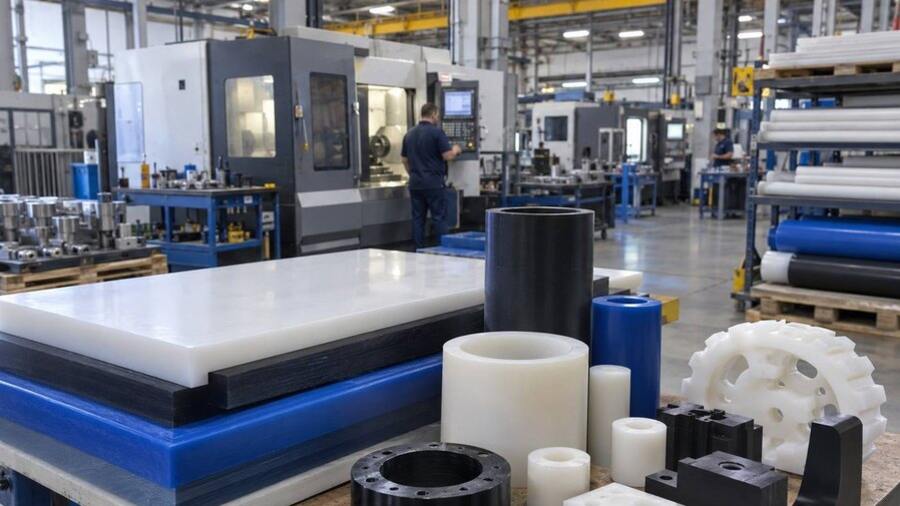
The fast-track installation still requires the retention of basic processes: drainage, debarment, peace-building, positioning, connection and trial passage. The plates remain continuous in line segments, leaving sufficient width at the intersections and outside areas; and they are to be removed from the rigid surface interface. Project leaders should arrange for “low-speed test and re-checking of the first heavy vehicle”, while specifying the conditions for decommissioning to prevent irregularity from being left to the next group during rush hours.
Maintenance staff can divide the straight-line, turn-out, waiting areas and support points into different levels of inspection. The straight-line sections focus on the sutures and the tracks, turn around and look for lateral shifts, wait areas to see long-term static sinking, and support points to check whether the pads and the ground are sunk. Shorter check intervals after rain or when the traffic suddenly increases; any plate-side rise, loose connection or grass-roots plasma should trigger decommissioning.
A reference scenario is a short barrage route for bulk material from the port stack to the discharge point. During the peak transport phase, the project made a short-term test preparation to record the relocation and deposition of the first vehicle after its adoption, before gradually extending the route. The turn areas, parking areas and pick-up points are inspected separately and no result is used to replace the full condition. This is an example of a method rather than a statement of performance, and the expected management effect is to reduce the probability of the floor being directly crushed by tires and legs; after completion, a comparison is also required between the original ground photographs, cleaning hours and the number of plates that can continue to be used.
Auxiliary equipment also affects the overall programme. A leg pad is required to accompany a vehicle, a forklift is required to focus on tyre contact, and a bulk vehicle may require a slab. The suitability of the UHMWPE liner depends on the work temperature, the chemical environment, the material impact and the car structure, and the manufacturer provides the installation requirements. Each product should be matched to specific equipment in the project form to avoid the use of the same parameter across uses.
The request for quotations shall, in addition to the total area, provide the maximum resonance of the legs of the crane, indicating the country, the duration, the conditions of handling, the manner of packing and the port of destination. Compared suppliers can check the documentation, size difference, surface routing, connector, piece weight, effective area coverage, cabinet list and batch retroactive. The whole container shall be purchased in advance to confirm the discharge equipment. The final programme, which involves the safety of the ground, assembly or operation of the airport, must be approved by the project professional.
Need for further evaluation of the actual project?
Applications, sizes, quantities, site photographs or drawings and delivery destinations are sent, on which we can identify more suitable products and processing programmes.







