
In response to the request for quotation parameters, the site should first determine whether the target is a continuous transport, a short-term suspension or a temporary stop during peak periods. Mass handling areas, such as ores, coal, sandstone, food and wet soil, involve dumps, shovels, short-barriers and silo service vehicles, while glue increases backloads and clean-up times, and frequent shocks increase wear and tear and site contamination. When targets, vehicles and vulnerable locations are matched, key points will not be overstretched or left out; the practical implementation principle is that valid request for quotations requires at least vehicle, payload, ground, route size, quantity and destination port information.
The project team could complete a joint pedal survey before the vehicle enters the site, focusing on the discharge areas, low discharge points, ramps and available car space as a result of bulk contamination. The retroactivity of the legs of the vehicle ' s axial load, the exterior dimensions, the minimum convective radius and the equipment for the suspension was then collected. Low-temperature freezing may change the state at the grass-roots level, so measurement results need to be date- and weather-specific. All parameters should be consolidated in the same version of the road map and equipment list.
Material parameters should serve the field rather than be propaganda figures. The route may be made on a HDPE paved board, which may be equipped with MHMWPE car skateboards to improve the discharge material, subject to applicable conditions. The project compares 30 mm and the number of block weights, rigidity, laying efficiency and containers with the adjacent specifications, and cross-checks the links to the surface. Between 80 and 120 tonnes are only primary sifts; ground-based and support designs should be completed when underground holes, weak shoulder or suspension loads are overloaded.
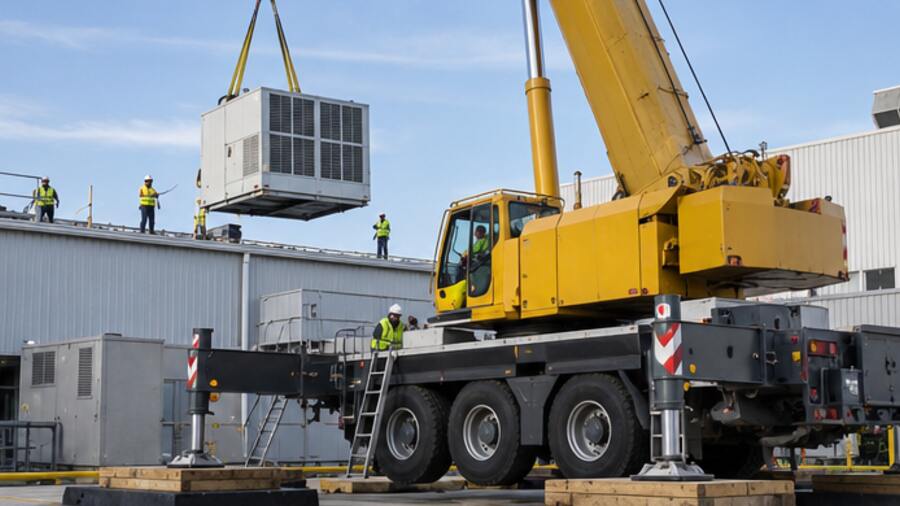
The fast-track installation still requires the retention of basic processes: drainage, debarment, peace-building, positioning, connection and trial passage. The plates remain continuous in line segments, leaving sufficient width at the intersections and outside areas; and they are to be removed from the rigid surface interface. The project leader should arrange for “dismantling the bulk and sharpness before removal”, while specifying the conditions for decommissioning to prevent irregularity from being left to the next group during rush hours.
The day-to-day management will include vehicle behaviour in the inspection. Speed-limiting, prohibition of in-situ movement, fixed reverse routes and placement of commanders are often more effective than simply adding plates. The inspectors should touch or step on the suspicious seams, check the links and take photographs to locate them. Where there are repeated shifts, the width of the road, the turn radius and the grass-roots level should be re-evaluated, rather than the continuous consolidation of the same position.
Assuming an increase in traffic during the pre-entry phase of a short-barrel line of bulk material from the port yard to the discharge point, managers could freeze the change of route before classifying the problems into four categories: ground, plates, vehicles and movement control. Weak positions are reinforced, damage plates are replaced, vehicles are limited in speed, and one-way access is introduced for peak hours. The example does not correspond to the true customer, but it shows how the receiving and inspection records can be matched with photographs and location maps of the site and how the site judgement can be converted into a reusable list for the next project.
Auxiliary equipment also affects the overall programme. A leg pad is required to accompany a vehicle, a forklift is required to focus on tyre contact, and a bulk vehicle may require a slab. The suitability of the UHMWPE liner depends on the work temperature, the chemical environment, the material impact and the car structure, and the manufacturer provides the installation requirements. Each product should be matched to specific equipment in the project form to avoid the use of the same parameter across uses.
It is best to complete small-scale technical confirmation before the next list. First, the size of the vehicle, the type of material and the working temperature and complete field parameters are submitted to the supplier for specification, quantity and packing advice; then the sample trails, connection holes, size differences and material documents are checked; and finally, the container type, destination port, method of discharge and batch identification are confirmed. The supplier recommended that it be used only as an input and that the project party remain responsible for the stabilization of the ground load, traffic organization and lifting.
Need for further evaluation of the actual project?
Applications, sizes, quantities, site photographs or drawings and delivery destinations are sent, on which we can identify more suitable products and processing programmes.







