
Port bulk transport and discharges cannot be answered by a single product parameter. Project leaders need to view the flow organization, ground support and maintenance capacity at the same time; recovery should be carried out in reverse from the end to the entrance, while cleaning, checking, sorting and binding is completed. When dumps, shovels, short barges and silo service vehicles enter bulk loading areas such as ore, coal, gravel, food and wet soil, problems will arise earlier on the route, ramps, seams and waiting positions, which should be individually marked on drawings.
The project team could complete a joint pedal before the vehicle enters the site, focusing on the hard-surfaced but empty floors, low-water drainage points, ramps and available car space. The retroactivity of the legs of the vehicle ' s axial load, the exterior dimensions, the minimum convective radius and the equipment for the suspension was then collected. Continuous rainfall may change the state of the grass-roots level, so measurements need to be date- and weather-specific. All parameters should be consolidated in the same version of the road map and equipment list.
The selection is based on the calculation of the local pressure and the examination of whether the plate remains continuous at the grass-roots level. The route may be made on a HDPE paved board, which may be equipped with MHMWPE car skateboards to improve the discharge material, subject to applicable conditions. The common thickness ranges from 15 mm to 30 mm, and this option can first assess 25 mm and then adjust it through trial preparation or project accounting. The so-called 50-80-ton carrier should have a clear test boundary and cannot be cited separately from the distance, temperature, payload distribution and safety factor.
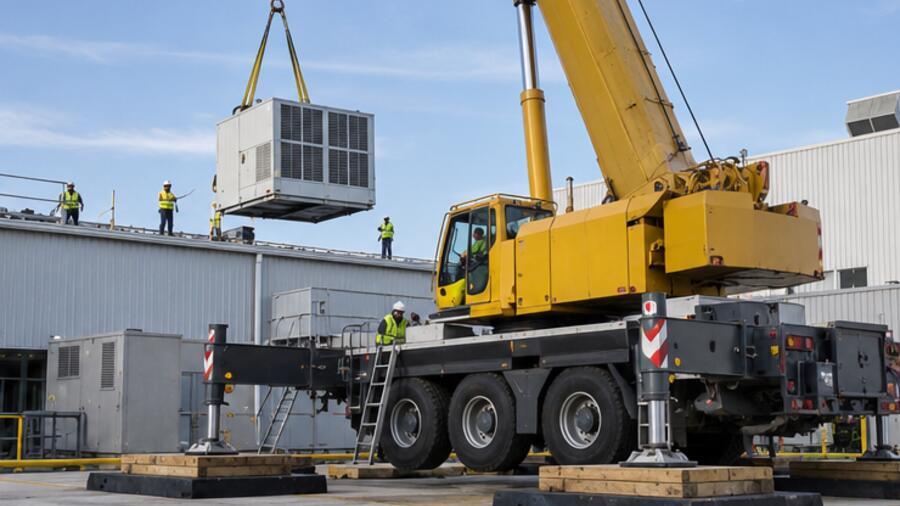
The sequence of laying would allow for the advance from the stable entrance to the area of operations. First, water and high differentials are processed, then the first plate is located; the subsequent plate is consistent in the direction of the texture and check if the seams form the steps. The ramp, turn and brake points shall increase the horizontal constraints or the width of the coverage. For this project, the use of soft-cleaning tools to protect panel-lined circuits can be used as a key action to record completion times and the results of the review.
Temporary roads cannot be paved for long. Vehicle brakes, loading overloading and water stowing can gradually change the support under the plate, and surfaces may appear flat and may have created gaps. The site should be inspected before and after peak traffic, after continuous rainfall and when the route changes. In the event of a sinking, the ground and drainage should be checked before deciding whether to change or replace the panels, so as to avoid covering up the problem by filling the panels.
For a short-link route of bulk material from the port dump to the discharge point, the extraction site recovery phase could be established as an independent inspection node. On-site identification of vehicle lists and weather is followed by a check of drainage, connections and borders; if any conditions change, release is suspended and the road map updated. This scenario is used only to illustrate how the project is organized and focuses on the accumulation of comparable data for subsequent projects. It should also record the number of inputs, the time of laying, the time of stoppage, the location of maintenance and the condition of the ground after the evacuation site.
If the transport chain contains coal, ore, wet soil or food, self-release efficiency may be assessed as an independent subject. Car skateboards help to reduce the adhesiveness of certain materials, but prior to installation, the lining thickness, scalables, bolts or presses and tail door motion space should be confirmed. If there is no need for bulk discharges, there is no need to add the subparagraph; the procurement programme should be consistent with the use.
The request for quotations must have a level of forklift doors and clear passages, otherwise it is likely that different vendors will have to calculate on different assumptions. The procurement staff shall also require the description of the effective size, weight, number of attachments, packing units, container load and delivery cycle of each plate. The evaluation will be based on technical conformity, installation efficiency and turnover. Where key payloads or ground data have not been confirmed, the quotations should be marked as preliminary and the review retained.
Need for further evaluation of the actual project?
Applications, sizes, quantities, site photographs or drawings and delivery destinations are sent, on which we can identify more suitable products and processing programmes.







