
In dealing with common problems, “where to go, what to go, how many times a day” is written as a verifiable on-site condition. Flows in bulk-handling areas such as ore, coal, gravel, food and wet soil often include dumps, shovels, in-port troughs and silo-service vehicles, with only full tonnage to ignore the effects of tyre exposure and low-speed turns. The more reliable conclusion is that most of the problems are concentrated on inadequate drainage, discontinuity at the grass-roots level, loose connectivity, suspension of edges and an erroneous shift, followed by a decision on the combination of pavement, leg mats or local grass-roots treatment.
On-site measurements cover narrow slopes with insufficient convective radiuss for heavy vehicles, recording weak ranges, slopes, drainage directions and underground pipes. Changes in the water-bearing state and the car tracks should be observed before and after short and heavy rainfall. Mobile equipment will need to provide the whole vehicle with its own weight, full load weight, a single axle load, tyre size, turn radius and projected duration; the crane will also need to provide the maximum reversibility of the leg and leg extension. Data sources and measurement dates should also be recorded to avoid different versions.
Road-paving boards are responsible for spreading wheel pressure and leg mats for expanding static support areas, which cannot be replaced by one another. For this scenario, the route may be made using the HDPE pavement, where the UHMWPE car skateboard may be fitted to improve the discharge material, subject to applicable conditions. 20 mm could be included as an option and compared with other thickness, subject to the simultaneous verification of plate size, connection structure, grass-roots rigidity and number of passages. The labelling of 160 to 200 tons of products does not mean that all the same vehicles are available on the ground, and ground conditions remain the determining factor.
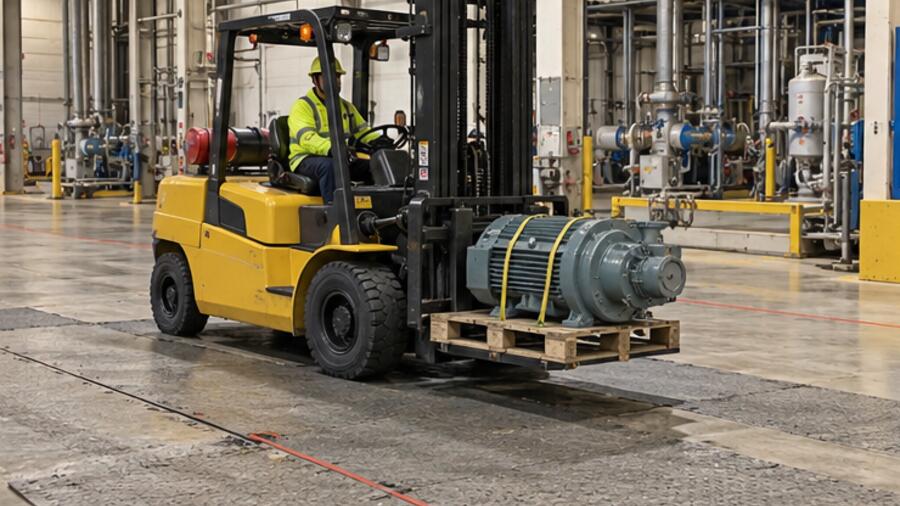
The fast-track installation still requires the retention of basic processes: drainage, debarment, peace-building, positioning, connection and trial passage. The plates remain continuous in line segments, leaving sufficient width at the intersections and outside areas; and they are to be removed from the rigid surface interface. The project owner shall arrange for “the location of each plate to be marked with a numbering chart” and shall specify the conditions for decommissioning in order to prevent unusual leave to the next group during rush hours.
Temporary roads cannot be paved for long. Vehicle brakes, loading overloading and water stowing can gradually change the support under the plate, and surfaces may appear flat and may have created gaps. The site should be inspected before and after peak traffic, after short and heavy rainfall and when the route changes. In the event of a sinking, the ground and drainage should be checked before deciding whether to change or replace the panels, so as to avoid covering up the problem by filling the panels.
The installation phase of the equipment may be established as an independent inspection node for a short-barrel line of bulk material from the port stack to the discharge point. On-site identification of vehicle lists and weather is followed by a check of drainage, connections and borders; if any conditions change, release is suspended and the road map updated. This scenario is used only to illustrate how the project is organized, with a focus on the softest 20 metres as the focus of the maintenance segment. It should also record the number of inputs, the time of laying, the time of stoppage, the location of maintenance and the condition of the ground after the evacuation site.
Auxiliary equipment also affects the overall programme. A leg pad is required to accompany a vehicle, a forklift is required to focus on tyre contact, and a bulk vehicle may require a slab. The suitability of the UHMWPE liner depends on the work temperature, the chemical environment, the material impact and the car structure, and the manufacturer provides the installation requirements. Each product should be matched to specific equipment in the project form to avoid the use of the same parameter across uses.
In order to obtain a comparable offer, the purchaser should harmonize the request for quotations to at least indicate the back-up ratio and the conditions for on-site maintenance, route size, vehicle condition, ground condition and project time. Vendors are required to respond to material plates, sheeting, single weight, connection, packaging, containerization and quantity and quality documents. If the project is purchased on a containerized basis, the capability of the forklift or forklift on site or forklift is also confirmed. All safety-related selections are based on the equipment manual and the approval programme.
Need for further evaluation of the actual project?
Applications, sizes, quantities, site photographs or drawings and delivery destinations are sent, on which we can identify more suitable products and processing programmes.







