
The accounting of the volume of procurement for bulk transport and discharges in ports cannot be answered by single product parameters. Project leaders need to view the flow organization, ground support and maintenance capacity at the same time; the quantity is calculated on the basis of net coverage, staggering, turn-widening, back-up ratio and turnover of batches. When dumps, shovels, short barges and silo service vehicles enter bulk loading areas such as ore, coal, gravel, food and wet soil, problems will arise earlier on the route, ramps, seams and waiting positions, which should be individually marked on drawings.
The degree of completeness of the input conditions determines the quality of the subsequent selection. First, the length and width of the restricted loads above the ditch are measured, and then the maximum performance of the self-loading, shoveling, in-port barges and silo service vehicles is checked. In addition to the weight, the pressure of the tyre, the form of the belt, the position of the brake, the possibility of in situ transfer and the frequency of passage shall be recorded. In case of continuous rainfall, a ground review should be carried out; if the data cannot be confirmed, the unknown item should be included as a restriction rather than replaced by an empirical value.
Road-paving boards are responsible for spreading wheel pressure and leg mats for expanding static support areas, which cannot be replaced by one another. For this scenario, the route may be made using the HDPE pavement, where the UHMWPE car skateboard may be fitted to improve the discharge material, subject to applicable conditions. 20 mm could be included as an option and compared with other thickness, subject to the simultaneous verification of plate size, connection structure, grass-roots rigidity and number of passages. The labelling of 160 to 200 tons of products does not mean that all the same vehicles are available on the ground, and ground conditions remain the determining factor.
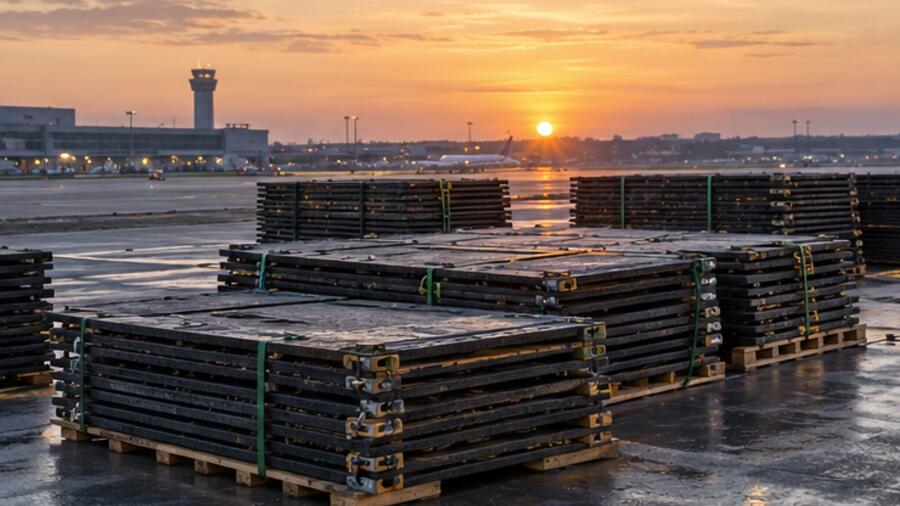
Pre-installation to remove sharp waste, loose rock and mobile mud, and to purge and level the ground. The plates were set up in the main direction and were sewd to avoid the deep path and to check the wells and legs. The turn and reverse areas are to be slightly wider and the connectors are to be locked as required. The site should also implement “the separation of the suspension area from the continuous lanes” and include this requirement at the end of the shift and in the traffic organization chart.
Maintenance staff can divide the straight-line, turn-out, waiting areas and support points into different levels of inspection. The straight-line sections focus on the sutures and the tracks, turn around and look for lateral shifts, wait areas to see long-term static sinking, and support points to check whether the pads and the ground are sunk. Shorter check intervals after rain or when the traffic suddenly increases; any plate-side rise, loose connection or grass-roots plasma should trigger decommissioning.
A reference scenario is a short barrage route for bulk material from the port stack to the discharge point. The project involves short-term trial preparation during the recovery phase of the evacuation site, recording the relocation and deposition of the first vehicle after its adoption, and a gradual extension of the route. The turn areas, parking areas and pick-up points are inspected separately and no result is used to replace the full condition. This is an example of a method rather than a statement of performance, and the expected management effect is to reduce the amount of time spent on cleaning car stickers; after completion, a comparison between the original ground photographs, cleaning hours and the number of plates that can be continued.
In the integrated site, different problems were solved by the pavement, leg mats and carboards. Vehicle traffic is supported by a continuous focus on the maximum retroactivity of the leg and the friction and adhesion of material from the surface of the vehicle. If MHMWPE skateboards are used, thermal stretches should be set aside and fixed systems checked; if relevant material is not available at the site, they should be removed from the list and the investment targeted.
It is best to complete small-scale technical confirmation before the next list. First, the expected daily number and number of days of use and complete field parameters were submitted to the supplier for specification, quantity and packaging advice; then the sample trails, links, dimensions and material documentation were checked; and finally, the container type, destination port, discharge method and batch identification were confirmed. The supplier recommended that it be used only as an input and that the project party remain responsible for the stabilization of the ground load, traffic organization and lifting.
Need for further evaluation of the actual project?
Applications, sizes, quantities, site photographs or drawings and delivery destinations are sent, on which we can identify more suitable products and processing programmes.







