
When dealing with drainage protection, “where to go, what to go, how many times a day” is written as a verifiable on-site condition. Flows in bulk-handling areas such as ore, coal, gravel, food and wet soil often include dumps, shovels, in-port troughs and silo-service vehicles, with only full tonnage to ignore the effects of tyre exposure and low-speed turns. The more reliable conclusion is that the water under the plate weakens the grass-roots level and takes the finer, and that it is necessary to keep the drainage direction and clean up the export, and then decide on the combination of pavements, leg mats or local grass-roots treatment.
The degree of completeness of the input conditions determines the quality of the subsequent selection. First, the length and width of the softened shoulder close to the drains are measured, and then the maximum performance of the self-loading, shoveling, short barges and silo service vehicles is checked. In addition to the weight, the pressure of the tyre, the form of the belt, the position of the brake, the possibility of in situ transfer and the frequency of passage shall be recorded. Short and heavy rainfall should be supplemented by a ground review; if data cannot be confirmed, unknown items should be included as a limitation rather than replaced by empirical values.
Where the route has both a mobile device and a fixed support point, the choice should be made between the pavement and the leg pad, respectively. The route may be made on a HDPE paved board, which may be equipped with MHMWPE car skateboards to improve the discharge material, subject to applicable conditions. The thickness can be screened from commonly used specifications such as 15, 20, 25 and 30 mm, and the 30 mm appearing in this section does not constitute a direct recommendation. For information on ranges of 80 to 120 tons, the purchaser should also request a test method and give priority to the equipment description, construction programme and on-site validation.
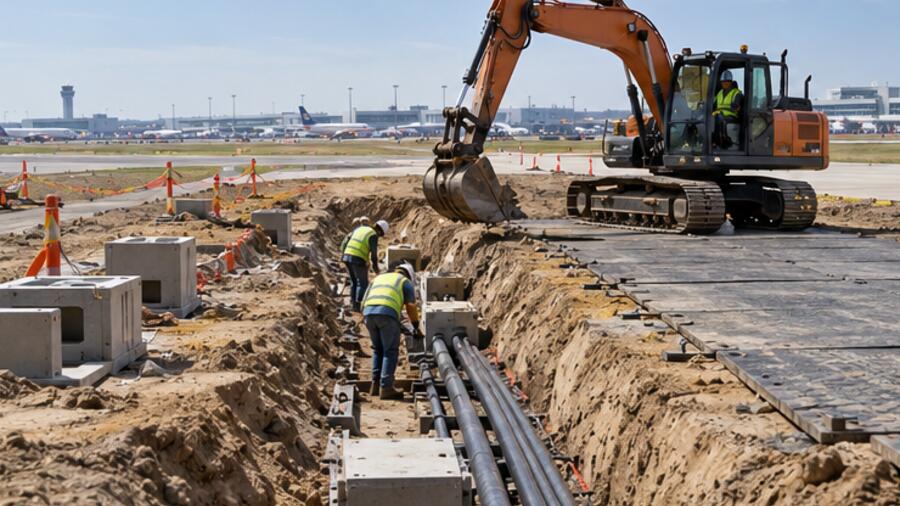
The sequence of laying would allow for the advance from the stable entrance to the area of operations. First, water and high differentials are processed, then the first plate is located; the subsequent plate is consistent in the direction of the texture and check if the seams form the steps. The ramp, turn and brake points shall increase the horizontal constraints or the width of the coverage. For this project, “pre-class confirmation of seams and connectors” can be used as a key action, with a dedicated person recording the completion time and the results of the review.
The day-to-day management will include vehicle behaviour in the inspection. Speed-limiting, prohibition of in-situ movement, fixed reverse routes and placement of commanders are often more effective than simply adding plates. The inspectors should touch or step on the suspicious seams, check the links and take photographs to locate them. Where there are repeated shifts, the width of the road, the turn radius and the grass-roots level should be re-evaluated, rather than the continuous consolidation of the same position.
Assuming an increase in traffic during the installation phase of a bulk barrage route from the port yard to the discharge point, managers could freeze the change of route before classifying problems into four categories: ground, plates, vehicles and movement control. Weak positions are reinforced, damage plates are replaced, vehicles are limited in speed, and one-way access is introduced for peak hours. The example does not correspond to the true client, but shows how project managers can locate the problem sheets by number and how to convert the on-site judgement into a reusable list for the next project.
If the transport chain contains coal, ore, wet soil or food, self-release efficiency may be assessed as an independent subject. Car skateboards help to reduce the adhesiveness of certain materials, but prior to installation, the lining thickness, scalables, bolts or presses and tail door motion space should be confirmed. If there is no need for bulk discharges, there is no need to add the subparagraph; the procurement programme should be consistent with the use.
In addition to the total area, the request for quotations shall provide a total length, net width and convection radius, indicating the country, the duration of the work, the conditions of handling, the manner of packing and the port of destination. Compared suppliers can check the documentation, size difference, surface routing, connector, piece weight, effective area coverage, cabinet list and batch retroactive. The whole container shall be purchased in advance to confirm the discharge equipment. The final programme, which involves the safety of the ground, assembly or operation of the airport, must be approved by the project professional.
Need for further evaluation of the actual project?
Applications, sizes, quantities, site photographs or drawings and delivery destinations are sent, on which we can identify more suitable products and processing programmes.







