
For the frequency of the inspection, the site should first determine whether the target is a continuous transport, a short-term suspension or a temporary stop during peak periods. The logistics park expansion area, the outer side of the warehouse platform and the waiting areas for peak vehicles involve semi-mounted vehicles, cold-chain vehicles, vans, forklifts and loading platform equipment, while vehicle parking, low-speed driving and overloading can easily result in staves, local downfalls and marginal damage. When targets, vehicles and vulnerable positions are matched, the scope is not too large or missing critical points; the practical implementation principle is that sews, sunks and contamination should be checked after the first car, before the shift and after heavy rainfall.
In order to determine whether the frequency of the inspection is to be carried out, a spot should be set up, rather than taking only a few photographs. In particular, there is a need to review the spill-off areas resulting from the contamination of the bulk, as the drying of the surface does not represent a continuous carrying of the lower part. The project information shall also include the maximum daily traffic, the length of vehicle stay, the direction of handling and the drainage route during the cryogenic thaw. For troughs, inspection wells and underground facilities, the prohibited support or need to be reinforced should be indicated in the road map.
Road-paving boards are responsible for spreading wheel pressure and leg mats for expanding static support areas, which cannot be replaced by one another. For this scenario, the pavement is suitable for making up the drive, parking spaces and loading and unloading links, and can be accompanied by a leg pad to handle the slinging points. 20 mm could be included as an option and compared with other thickness, subject to the simultaneous verification of plate size, connection structure, grass-roots rigidity and number of passages. The labelling of 120 to 160 tons of products does not mean that all the same vehicles are available on the ground, and ground conditions remain the determining factor.
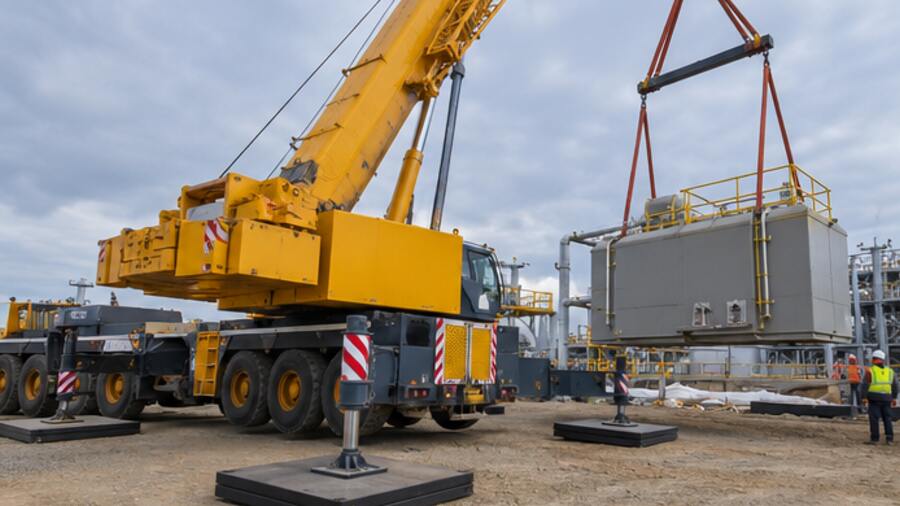
Pre-installation to remove sharp waste, loose rock and mobile mud, and to purge and level the ground. The plates were set up in the main direction and were sewd to avoid the deep path and to check the wells and legs. The turn and reverse areas are to be slightly wider and the connectors are to be locked as required. The site should also implement the “cleaning of bulk and sharp material before being dismantled” and include this requirement in the pre-class and traffic organization charts.
The day-to-day management will include vehicle behaviour in the inspection. Speed-limiting, prohibition of in-situ movement, fixed reverse routes and placement of commanders are often more effective than simply adding plates. The inspectors should touch or step on the suspicious seams, check the links and take photographs to locate them. Where there are repeated shifts, the width of the road, the turn radius and the grass-roots level should be re-evaluated, rather than the continuous consolidation of the same position.
Assuming that a temporary parking area of a logistics park, which would still need to be maintained during the construction of the warehouse, is subject to increased traffic during the pre-entry phase, managers could first freeze the change of route and then divide the problems into four categories: ground, board, vehicle and movement control. Weak positions are reinforced, damage plates are replaced, vehicles are limited in speed, and one-way access is introduced for peak hours. The example does not correspond to the true customer, but it shows how the receiving and inspection records can be matched with photographs and location maps of the site and how the site judgement can be converted into a reusable list for the next project.
Auxiliary equipment also affects the overall programme. A leg pad is required to accompany a vehicle, a forklift is required to focus on tyre contact, and a bulk vehicle may require a slab. The suitability of the UHMWPE liner depends on the work temperature, the chemical environment, the material impact and the car structure, and the manufacturer provides the installation requirements. Each product should be matched to specific equipment in the project form to avoid the use of the same parameter across uses.
The procurement list should provide suppliers with a real picture of the work, in which the sizes and quantities of tyres or belts are data that need to be highlighted in this section. The remaining information includes vehicle and leg loads, ground photographs and sizes, projected number of vehicles, number of days of use, colour trails, destination port and desired period. A comparison of the quotations should be converted to a valid area coverage and complete connection system and not only a single block price; the acceptance and inspection criteria should also be included in the document before the next list.
Need for further evaluation of the actual project?
Applications, sizes, quantities, site photographs or drawings and delivery destinations are sent, on which we can identify more suitable products and processing programmes.







