
The answer to how the temporary parking and loading areas of logistics parks should be strengthened should start with the operational route and not with a fixed specification. In-situ shifts, brakes and ramp start-up will magnify the horizontal power and should be broadened, connected and increased in frequency of patrols. The logistics park expansion area, the outside of the warehouse platform and the waiting areas for peak vehicles are usually accompanied by semi-mounted vehicles, cold-chain vehicles, vans, forklifts and loading platform equipment, with different pressures on tyres, axle loads and shifts. Vehicle parking, low-speed driving and overloading can easily result in road tracks, local downfalls and perimeter damage. The project team shall first delineate the main corridor, the waiting areas, the loading and unloading points and the emergency export, and then the boundary shall be confirmed jointly by the construction, logistics and security authorities.
The survey forms can be completed by the four columns of ground, equipment, route and time. The surface column indicates the mixed ground and adjacent drainage vents in a wet salt mist environment in the port area; the equipment column lists the vehicle ' s own weight, cargo weight, axle numbers and tyre specifications; the route column takes a clean width, slope and turn radius; and the time column describes the wet salt fog and the shift schedule. If a crane is present, it should be based on the retroactivity of the leg in the manufacturer ' s worksheet, and it cannot be rated as a ground load.
Road-paving boards are responsible for spreading wheel pressure and leg mats for expanding static support areas, which cannot be replaced by one another. For this scenario, the pavement is suitable for making up the drive, parking spaces and loading and unloading links, and can be accompanied by a leg pad to handle the slinging points. 20 mm could be included as an option and compared with other thickness, subject to the simultaneous verification of plate size, connection structure, grass-roots rigidity and number of passages. The labelling of 120 to 160 tons of products does not mean that all the same vehicles are available on the ground, and ground conditions remain the determining factor.
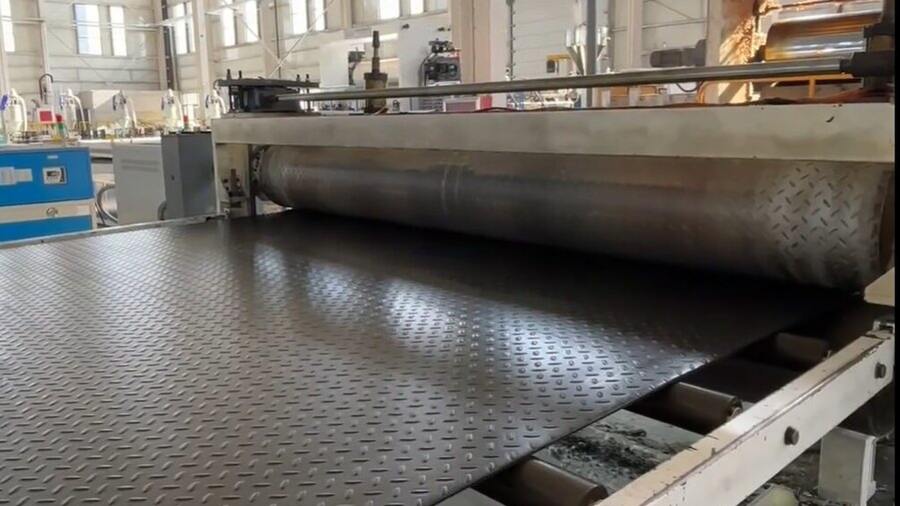
The sequence of laying would allow for the advance from the stable entrance to the area of operations. First, water and high differentials are processed, then the first plate is located; the subsequent plate is consistent in the direction of the texture and check if the seams form the steps. The ramp, turn and brake points shall increase the horizontal constraints or the width of the coverage. For this project, the “place the back-up sheet near the weak zone” could be used as a key action, with dedicated personnel recording the completion time and the results of the review.
Temporary roads cannot be paved for long. Vehicle brakes, loading overloading and water stowing can gradually change the support under the plate, and surfaces may appear flat and may have created gaps. The site should be inspected before and after peak traffic, after damp salt fog and when the route is changed. In the event of a sinking, the ground and drainage should be checked before deciding whether to change or replace the panels, so as to avoid covering up the problem by filling the panels.
In the case of a temporary parking area at a logistics park that would still need to be shipped during the construction of the warehouse, the peak transport phase could be established as an independent inspection node. On-site identification of vehicle lists and weather is followed by a check of drainage, connections and borders; if any conditions change, release is suspended and the road map updated. This scenario is used only to illustrate how the project is organized, with a focus on avoiding the sharing of a vague load assumption among different equipment. It should also record the number of inputs, the time of laying, the time of stoppage, the location of maintenance and the condition of the ground after the evacuation site.
Three products may be used in this category at the same time, but the boundaries of the use are clear: road-painted service vehicle routes, leg-past services are centrally supported, and carboard services are applied to bulk discharges. In particular, UHMWPE skateboards need to check the material particle size, water content rate, temperature, impact and car shape. No product could compensate for the error, and the configuration list should be deleted from the field mission.
There must be a demand for samples or small-scale trials in the request for quotations, otherwise different suppliers are likely to base their calculations on different assumptions. The procurement staff shall also require the description of the effective size, weight, number of attachments, packing units, container load and delivery cycle of each plate. The evaluation will be based on technical conformity, installation efficiency and turnover. Where key payloads or ground data have not been confirmed, the quotations should be marked as preliminary and the review retained.
Need for further evaluation of the actual project?
Applications, sizes, quantities, site photographs or drawings and delivery destinations are sent, on which we can identify more suitable products and processing programmes.







