
The answer to how the temporary parking and loading areas at logistics parks reduce the cost of ground repairs should start with the operational route rather than with a fixed specification. Early protection of high-risk wheels and support points is generally more manageable than after-effect restoration of coatings, grounding and drainage facilities. The logistics park expansion area, the outside of the warehouse platform and the waiting areas for peak vehicles are usually accompanied by semi-mounted vehicles, cold-chain vehicles, vans, forklifts and loading platform equipment, with different pressures on tyres, axle loads and shifts. Vehicle parking, low-speed driving and overloading can easily result in road tracks, local downfalls and perimeter damage. The project team shall first delineate the main corridor, the waiting areas, the loading and unloading points and the emergency export, and then the boundary shall be confirmed jointly by the construction, logistics and security authorities.
In order to determine whether the repair costs could be implemented, the site should be set up at a point rather than taking only a few photographs. In particular, there is a need to review the transition between grassland and hard roads, as the surface is dry and does not represent a continuous carrying of the lower part. The project information should also include the maximum daily traffic, the length of vehicle stay, the direction of handling and the drainage route during the wet salt fog. For troughs, inspection wells and underground facilities, the prohibited support or need to be reinforced should be indicated in the road map.
The selection is based on the calculation of the local pressure and the examination of whether the plate remains continuous at the grass-roots level. Road panels are suitable for making up the driveway, parking spaces and loading and unloading links, and can be accompanied, as necessary, by leg mats for the handling of the vehicle support points. The common thickness ranges from 15 mm to 30 mm, and this option can first assess 25 mm and then adjust it through trial preparation or project accounting. The so-called 160 to 200-ton carrier should have a clear test boundary and cannot be cited separately from the distance, temperature, payload distribution and safety factor.
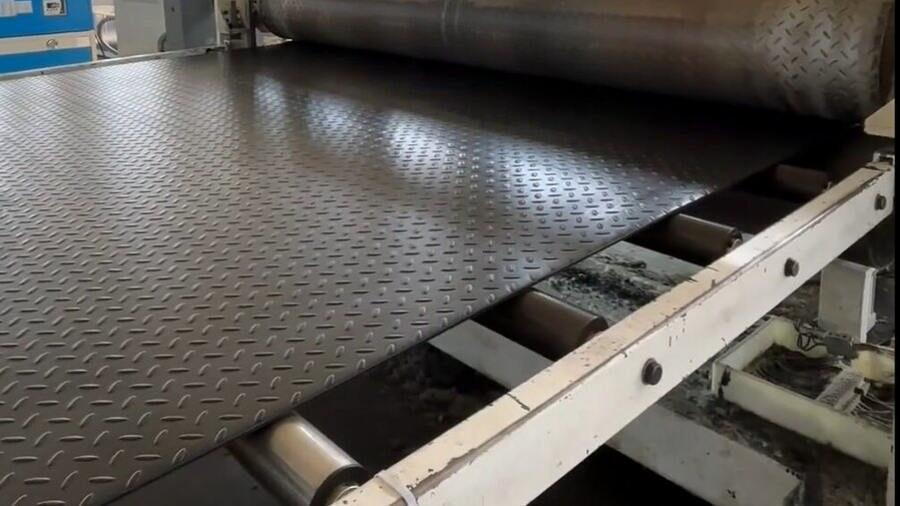
The construction staff should first seal the belts and confirm that no vehicles enter, then clear the floors and tablets. Do not leave the seams in the softest position, and do not let the edges remain open for long periods. Cleaning and installation of sandstones when the link is pierced, so that the connector is not fully in place. A low-speed test pass was completed and a “plastering of damaged plates” was implemented before the next section was opened.
Following the opening of access, the focus of the inspection was on the continued support under the plate. The first heavy vehicle passes by to check for high seams, peripheries, mudslides and planks; the shift is repeated after weather changes. The pressure of contact of the forklift ' s solid-heart wheel differs significantly from the concentrated static of the crane ' s legs, and anomalies should be detected first in isolation before being drained, evened or replaced, and the subsequent flow of the vehicle cannot continue to magnify the damage.
In a simulation plan for a temporary parking area at a logistics park that still needs to be maintained during the construction of the warehouse, the peak transport phase involves the release of a section: the area that completes grass-roots processing and the plate connection is opened and the unaccepted area remains isolated. Each region designates a person responsible for the inspection and uses a number corresponding to the photograph. This example does not represent a specific project commitment, but allows the team to separate the main wheel of the heavy vehicle from the personnel route. If the records show repeated maintenance at the same location, they should be re-analysed back to the ground and transport organization.
In the integrated site, different problems were solved by the pavement, leg mats and carboards. Vehicle traffic is supported by a continuous focus on the maximum retroactivity of the leg and the friction and adhesion of material from the surface of the vehicle. If MHMWPE skateboards are used, thermal stretches should be set aside and fixed systems checked; if relevant material is not available at the site, they should be removed from the list and the investment targeted.
The request for quotations shall, in addition to the total area, provide the maximum resonance of the legs of the crane, indicating the country, the duration, the conditions of handling, the manner of packing and the port of destination. Compared suppliers can check the documentation, size difference, surface routing, connector, piece weight, effective area coverage, cabinet list and batch retroactive. The whole container shall be purchased in advance to confirm the discharge equipment. The final programme, which involves the safety of the ground, assembly or operation of the airport, must be approved by the project professional.
Need for further evaluation of the actual project?
Applications, sizes, quantities, site photographs or drawings and delivery destinations are sent, on which we can identify more suitable products and processing programmes.







