
Cross-cutting operations have a direct impact on the ability of vehicles to access the area of operations as planned in the logistics park expansion area, on the outside of the warehouse platform and in the peak vehicle waiting areas. On-site, semi-mounted, cold-chained, vans, forklifts and loading platform equipment with different dynamic wheel pressure, stationary trajectories and power. Vehicle parking, low-speed driving and overloading can easily result in road tracks, local downfalls and perimeter damage. The programme should, therefore, first target routes and time windows that must be kept open, before arranging for materials and personnel to avoid temporary changes in rules of passage on the construction side.
The degree of completeness of the input conditions determines the quality of the subsequent selection. First, the length and width of the old site, which has a clear upwelling and poorly drained direction, is measured, and then the maximum performance of the semi-mounted, cold-chained, vans, forklifts and loading platform equipment is checked. In addition to the weight, the pressure of the tyre, the form of the belt, the position of the brake, the possibility of in situ transfer and the frequency of passage shall be recorded. In case of high temperatures, a ground review should be carried out; if data cannot be confirmed, unknown items should be listed as a restriction rather than being replaced by empirical values.
Product selection should be differentiated by stress. Road panels are suitable for making up the driveway, parking spaces and loading and unloading links, and can be accompanied, as necessary, by leg mats for the handling of the vehicle support points. 15, 20, 25 and 30 mm are in the common thickness range and 15 mm can only serve as a starting point for comparison for the project; if there are holes or sediments at the grass-roots level, the increase in thickness is not a substitute for the search for peace and reinforcement. The 80 to 120 tonnes in the product information should also be understood in conjunction with the test conditions, with the final specifications to be confirmed by the approved programme and field professionals.
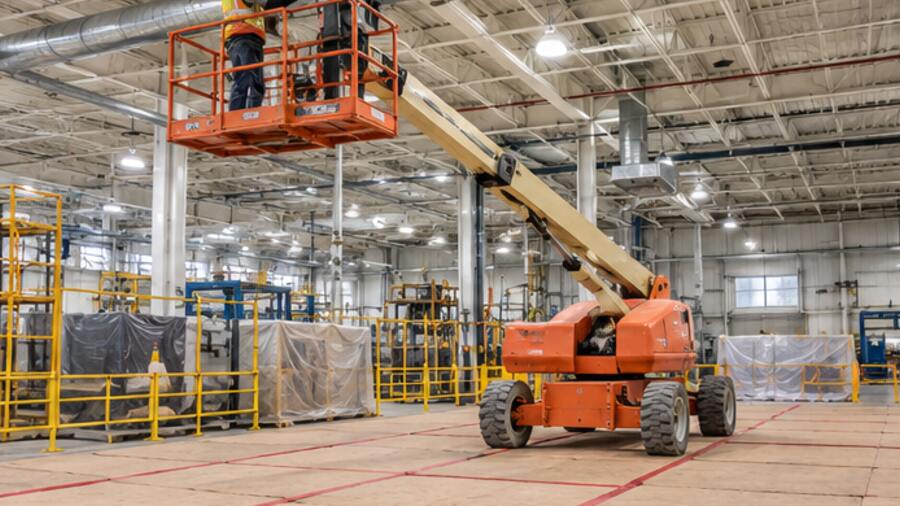
The construction staff should first seal the belts and confirm that no vehicles enter, then clear the floors and tablets. Do not leave the seams in the softest position, and do not let the edges remain open for long periods. Cleaning and installation of sandstones when the link is pierced, so that the connector is not fully in place. A low-speed test pass after a period of completion and the implementation of “an earlier re-routing based on weather forecasts” before the next segment becomes operational.
The day-to-day management will include vehicle behaviour in the inspection. Speed-limiting, prohibition of in-situ movement, fixed reverse routes and placement of commanders are often more effective than simply adding plates. The inspectors should touch or step on the suspicious seams, check the links and take photographs to locate them. Where there are repeated shifts, the width of the road, the turn radius and the grass-roots level should be re-evaluated, rather than the continuous consolidation of the same position.
Assuming that a temporary parking area of a logistics park, which would still need to be maintained during the construction of the warehouse, would experience increased traffic during the maintenance and repair phase, managers could first freeze route changes and then divide the problems into four categories: ground, board, vehicle and movement control. Weak positions are reinforced, damage plates are replaced, vehicles are limited in speed, and one-way access is introduced for peak hours. The example does not correspond to the true customer, but shows how the shoulder of the original repeater is integrated into the continuous coverage and how the on-site judgement can be converted into the next reusable list of items.
In the integrated site, different problems were solved by the pavement, leg mats and carboards. Vehicle traffic is supported by a continuous focus on the maximum retroactivity of the leg and the friction and adhesion of material from the surface of the vehicle. If MHMWPE skateboards are used, thermal stretches should be set aside and fixed systems checked; if relevant material is not available at the site, they should be removed from the list and the investment targeted.
The demand for quotations must be based on ground type, water-bearing status and permitted loads, otherwise it is likely that the different suppliers will calculate on different assumptions. The procurement staff shall also require the description of the effective size, weight, number of attachments, packing units, container load and delivery cycle of each plate. The evaluation will be based on technical conformity, installation efficiency and turnover. Where key payloads or ground data have not been confirmed, the quotations should be marked as preliminary and the review retained.
Need for further evaluation of the actual project?
Applications, sizes, quantities, site photographs or drawings and delivery destinations are sent, on which we can identify more suitable products and processing programmes.







