
When handling night operations, “where to go, what to go, how many times a day” is written as a verifiable on-site condition. The flow of vehicles outside the logistics park expansion area, outside the warehouse platform and in the waiting areas of peak vehicles often consists of semi-mounted vehicles, cold-chain vehicles, vans, forklifts and loading platform equipment, with the impact of tyre exposures and low-speed turns being ignored by the whole tonnage. The more reliable conclusion is that at night, border markings, lighting, seam visibility and the location of command officers are to be enhanced, followed by a decision on the combination of pavements, leg mats or local ground handling.
The degree of completeness of the input conditions determines the quality of the subsequent selection. First, the length and width of a narrow courtyard with insufficient convection radius for heavy vehicles is measured, and then the maximum performance of the semi-mounted, cold-chained, vans, forklifts and loading platform equipment is checked. In addition to the weight, the pressure of the tyre, the form of the belt, the position of the brake, the possibility of in situ transfer and the frequency of passage shall be recorded. Short and heavy rainfall should be supplemented by a ground review; if data cannot be confirmed, unknown items should be included as a limitation rather than replaced by empirical values.
Where the route has both a mobile device and a fixed support point, the choice should be made between the pavement and the leg pad, respectively. Road panels are suitable for making up the driveway, parking spaces and loading and unloading links, and can be accompanied, as necessary, by leg mats for the handling of the vehicle support points. The thickness can be screened from commonly used specifications such as 15, 20, 25 and 30 mm, and the 30 mm appearing in this section does not constitute a direct recommendation. For information ranging from 50 to 80 tons, the purchaser should also request the test method and give priority to the equipment description, construction programme and on-site validation.
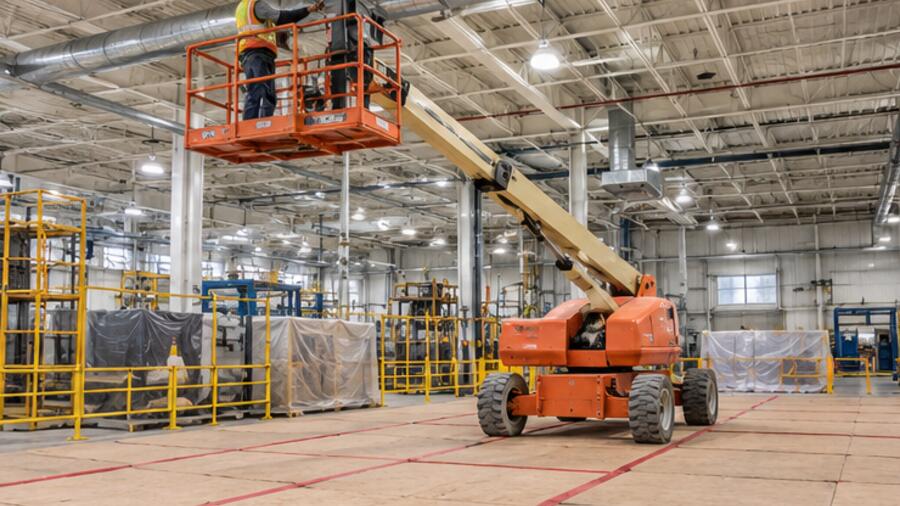
Pre-installation to remove sharp waste, loose rock and mobile mud, and to purge and level the ground. The plates were set up in the main direction and were sewd to avoid the deep path and to check the wells and legs. The turn and reverse areas are to be slightly wider and the connectors are to be locked as required. The site should also “mark the location of each plate with a numbered chart” and include this requirement at the end of the shift and in the traffic organization chart.
Temporary roads cannot be paved for long. Vehicle brakes, loading overloading and water stowing can gradually change the support under the plate, and surfaces may appear flat and may have created gaps. The site should be inspected before and after peak traffic, after short and heavy rainfall and when the route changes. In the event of a sinking, the ground and drainage should be checked before deciding whether to change or replace the panels, so as to avoid covering up the problem by filling the panels.
In the case of a temporary parking area at a logistics park that would still need to be shipped during the construction of the warehouse, the installation phase of the equipment could be established as an independent inspection node. On-site identification of vehicle lists and weather is followed by a check of drainage, connections and borders; if any conditions change, release is suspended and the road map updated. This scenario is used only to illustrate how the project is organized, with a focus on the softest 20 metres as the focus of the maintenance segment. It should also record the number of inputs, the time of laying, the time of stoppage, the location of maintenance and the condition of the ground after the evacuation site.
Auxiliary equipment also affects the overall programme. A leg pad is required to accompany a vehicle, a forklift is required to focus on tyre contact, and a bulk vehicle may require a slab. The suitability of the UHMWPE liner depends on the work temperature, the chemical environment, the material impact and the car structure, and the manufacturer provides the installation requirements. Each product should be matched to specific equipment in the project form to avoid the use of the same parameter across uses.
In addition to the total area, the request for quotations shall provide a total length, net width and convection radius, indicating the country, the duration of the work, the conditions of handling, the manner of packing and the port of destination. Compared suppliers can check the documentation, size difference, surface routing, connector, piece weight, effective area coverage, cabinet list and batch retroactive. The whole container shall be purchased in advance to confirm the discharge equipment. The final programme, which involves the safety of the ground, assembly or operation of the airport, must be approved by the project professional.
Need for further evaluation of the actual project?
Applications, sizes, quantities, site photographs or drawings and delivery destinations are sent, on which we can identify more suitable products and processing programmes.







