
How the temporary parking and loading areas of logistics parks are accounted for cannot be answered with single-product parameters. Project leaders need to view the flow organization, ground support and maintenance capacity at the same time; the quantity is calculated on the basis of net coverage, staggering, turn-widening, back-up ratio and turnover of batches. When semi-mounted vehicles, cold-chained vehicles, vans, forklifts and loading platform equipment enter the logistics park extension area, the outer side of the warehouse platform and the waiting area for peak vehicles, problems will arise earlier on the route, ramps, seams and waiting positions and should be separately marked on the drawings.
In order to determine whether quantitative accounting is to be implemented, a site-site monitoring point should be set up, rather than just a few photographs. In particular, there is a need to review the surface, which is hard but empty, since the surface is dry and does not represent a continuous carrying of the lower. The project information shall also include the maximum daily traffic, the duration of the vehicle ' s stay, the direction of the loading and unloading and the drainage route during continuous rainfall. For troughs, inspection wells and underground facilities, the prohibited support or need to be reinforced should be indicated in the road map.
Product selection should be differentiated by stress. Road panels are suitable for making up the driveway, parking spaces and loading and unloading links, and can be accompanied, as necessary, by leg mats for the handling of the vehicle support points. 15, 20, 25 and 30 mm are in the common thickness range and 15 mm can only serve as a starting point for comparison for the project; if there are holes or sediments at the grass-roots level, the increase in thickness is not a substitute for the search for peace and reinforcement. The 80 to 120 tonnes in the product information should also be understood in conjunction with the test conditions, with the final specifications to be confirmed by the approved programme and field professionals.
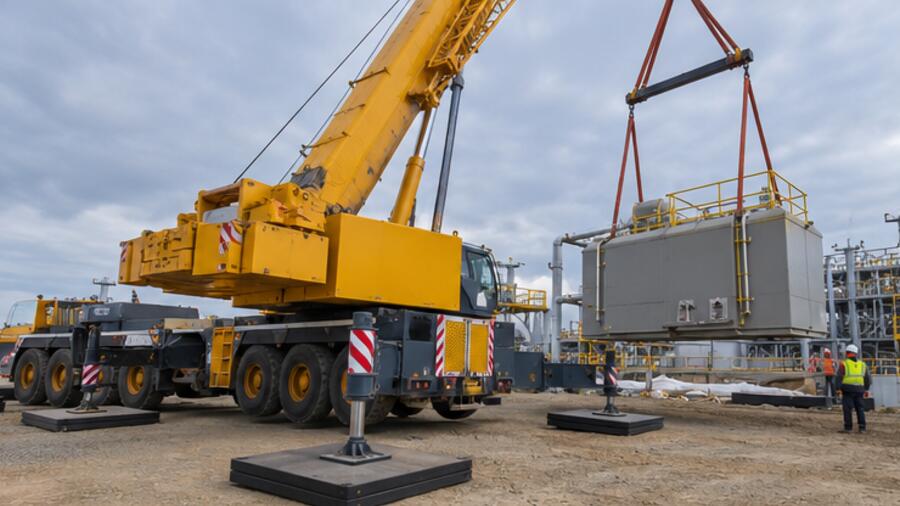
The fast-track installation still requires the retention of basic processes: drainage, debarment, peace-building, positioning, connection and trial passage. The plates remain continuous in line segments, leaving sufficient width at the intersections and outside areas; and they are to be removed from the rigid surface interface. Project leaders should arrange for “the use of soft and clean tools to protect panel-lined roads”, while specifying the conditions for decommissioning and preventing unusual leave to the next group during work-time.
Temporary roads cannot be paved for long. Vehicle brakes, loading overloading and water stowing can gradually change the support under the plate, and surfaces may appear flat and may have created gaps. The site should be inspected before and after peak traffic, after continuous rainfall and when the route changes. In the event of a sinking, the ground and drainage should be checked before deciding whether to change or replace the panels, so as to avoid covering up the problem by filling the panels.
In the case of a temporary parking area at a logistics park, which would still need to be shipped during the construction of the warehouse, the recovery phase of the site could be established as an independent inspection node. On-site identification of vehicle lists and weather is followed by a check of drainage, connections and borders; if any conditions change, release is suspended and the road map updated. This scenario is used only to illustrate how the project is organized and focuses on the accumulation of comparable data for subsequent projects. It should also record the number of inputs, the time of laying, the time of stoppage, the location of maintenance and the condition of the ground after the evacuation site.
If the transport chain contains coal, ore, wet soil or food, self-release efficiency may be assessed as an independent subject. Car skateboards help to reduce the adhesiveness of certain materials, but prior to installation, the lining thickness, scalables, bolts or presses and tail door motion space should be confirmed. If there is no need for bulk discharges, there is no need to add the subparagraph; the procurement programme should be consistent with the use.
In order to obtain a comparable offer, the purchaser should harmonize the request for quotations to at least specify the maximum gross vehicle weight and single axle load, route size, vehicle condition, ground condition and project time. Vendors are required to respond to material plates, sheeting, single weight, connection, packaging, containerization and quantity and quality documents. If the project is purchased on a containerized basis, the capability of the forklift or forklift on site or forklift is also confirmed. All safety-related selections are based on the equipment manual and the approval programme.
Need for further evaluation of the actual project?
Applications, sizes, quantities, site photographs or drawings and delivery destinations are sent, on which we can identify more suitable products and processing programmes.







