
When processing case data, “where to go, what to go, how many times a day” is written as a verifiable on-site condition. The unstoppable retrofitting, upgrading of old plant areas, maintenance of the underground network and phased expansion projects often include construction vehicles, material transport vehicles, forklifts, excavators and temporary cranes, with only full tonnage to ignore the effects of tyre contact and low-speed turns. The more reliable conclusion is that the case should record the pre-input condition, the time of laying, the type of vehicle, the number of maintenance, the recovery and the results of the ground restoration, and then decide on the combination of pavement, leg pads or local grass-roots treatment.
The survey forms can be completed by the four columns of ground, equipment, route and time. The field column indicates the powder with a higher water content to be returned to the soil and the adjacent drainage vents; the equipment column lists the vehicle ' s own weight, cargo weight, number of axes and tyre specifications; the route column takes a clean width, slope and turn radius; and the time column describes continuous rainfall and shift arrangements. If a crane is present, it should be based on the retroactivity of the leg in the manufacturer ' s worksheet, and it cannot be rated as a ground load.
The selection is based on the calculation of the local pressure and the examination of whether the plate remains continuous at the grass-roots level. Reusable pavements facilitate relocation along the construction surface, and leg mats are used for equipment suspension and overhaul support. The common thickness ranges from 15 mm to 30 mm, and this option can first assess 25 mm and then adjust it through trial preparation or project accounting. The so-called 80 to 120-ton carrier should have a clear test boundary and cannot be cited separately from the distance, temperature, payload distribution and safety factor.
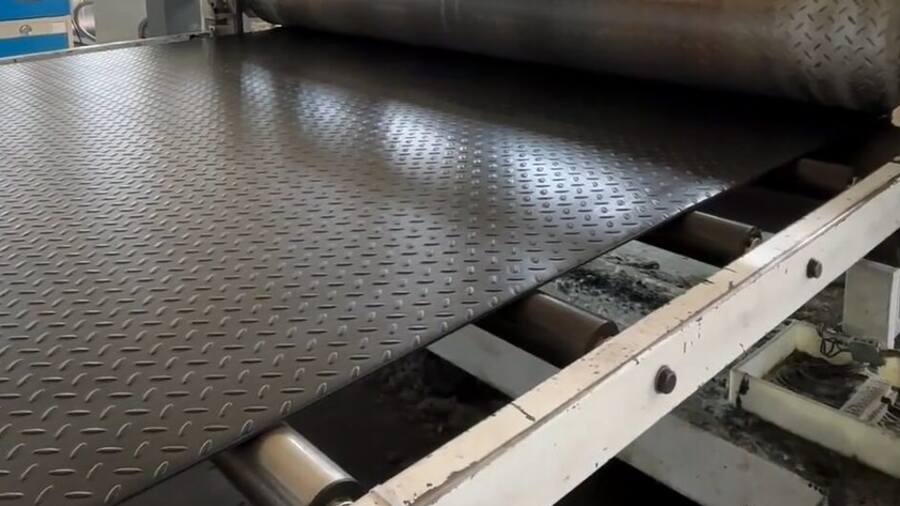
When the plates arrive at the site, the quantity, the connector and the crane are checked and the goods are discharged by route number. Upon completion of the grass-roots level, the vehicle entrance is prepared in sub-sections, and the level and edge support is checked at each stage of completion. The leg area of operation shall be separated from the area of passage. In the installation programme, insert the words “set up protections at the lower end of the ramp” to allow field personnel to convert abstract requirements into actionable.
Maintenance staff can divide the straight-line, turn-out, waiting areas and support points into different levels of inspection. The straight-line sections focus on the sutures and the tracks, turn around and look for lateral shifts, wait areas to see long-term static sinking, and support points to check whether the pads and the ground are sunk. Shorter check intervals after rain or when the traffic suddenly increases; any plate-side rise, loose connection or grass-roots plasma should trigger decommissioning.
Assuming that a phased site retrofit that must maintain the plant ' s delivery capacity is subject to an increase in traffic during the maintenance and overhaul phase, managers could first freeze the change of route and then divide the problems into four categories: ground, board, vehicle and movement control. Weak positions are reinforced, damage plates are replaced, vehicles are limited in speed, and one-way access is introduced for peak hours. The example does not correspond to real clients, but shows how to focus the inspection on turnovers, ramps and seams, and how to convert the field judgement into a reusable list for the next project.
In the integrated site, different problems were solved by the pavement, leg mats and carboards. Vehicle traffic is supported by a continuous focus on the maximum retroactivity of the leg and the friction and adhesion of material from the surface of the vehicle. If MHMWPE skateboards are used, thermal stretches should be set aside and fixed systems checked; if relevant material is not available at the site, they should be removed from the list and the investment targeted.
The procurement list should allow suppliers to see the true state of work, in which the level of the forklift doors and the cleanness of the passage are data that need to be highlighted for addition in this section. The remaining information includes vehicle and leg loads, ground photographs and sizes, projected number of vehicles, number of days of use, colour trails, destination port and desired period. A comparison of the quotations should be converted to a valid area coverage and complete connection system and not only a single block price; the acceptance and inspection criteria should also be included in the document before the next list.
Need for further evaluation of the actual project?
Applications, sizes, quantities, site photographs or drawings and delivery destinations are sent, on which we can identify more suitable products and processing programmes.







