
The answer to the parameters that need to be prepared before the request for a conversion of an industrial site begins with the course of operation rather than with a fixed specification. The valid request for quotation requires at least information on the vehicle, payload, ground, route size, quantity and port of destination. The unstoppable retrofitting, upgrading of old plant areas, maintenance of the underground network and phased expansion projects usually include construction vehicles, material transporters, forklifts, excavators and temporary cranes, with different pressures on tyres, axle loads and diversions. Production and construction parallels the compression of the width of the route, and frequent changes in routes can lead to duplication of laying and disruption of material movement. The project team shall first delineate the main corridor, the waiting areas, the loading and unloading points and the emergency export, and then the boundary shall be confirmed jointly by the construction, logistics and security authorities.
On-site measurements cover old sites with visible ups and downs, with no clear direction of discharge, and record weak ranges, slopes, drainage directions and underground pipes. Changes in the water-bearing state and in the car tracks should be observed before and after the heatstorm. Mobile equipment will need to provide the whole vehicle with its own weight, full load weight, a single axle load, tyre size, turn radius and projected duration; the crane will also need to provide the maximum reversibility of the leg and leg extension. Data sources and measurement dates should also be recorded to avoid different versions.
Product selection should be differentiated by stress. Reusable pavements facilitate relocation along the construction surface, and leg mats are used for equipment suspension and overhaul support. 15, 20, 25 and 30 mm are in the common thickness range and 15 mm can only serve as a starting point for comparison for the project; if there are holes or sediments at the grass-roots level, the increase in thickness is not a substitute for the search for peace and reinforcement. The 160 to 200 tonnes in the product information should also be understood in conjunction with the test conditions, with the final specifications to be confirmed by the approved programme and field professionals.
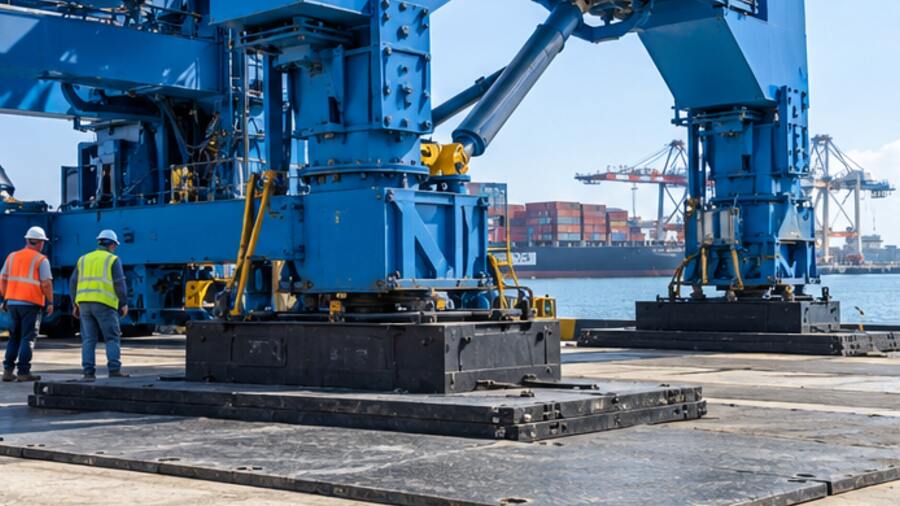
The sequence of laying would allow for the advance from the stable entrance to the area of operations. First, water and high differentials are processed, then the first plate is located; the subsequent plate is consistent in the direction of the texture and check if the seams form the steps. The ramp, turn and brake points shall increase the horizontal constraints or the width of the coverage. For this item, the key action could be to “add a column of sheeting to the side of the turn” and to record the completion time and the results of the review.
Temporary roads cannot be paved for long. Vehicle brakes, loading overloading and water stowing can gradually change the support under the plate, and surfaces may appear flat and may have created gaps. The site should be inspected before and after peak traffic, after high temperatures and when the route changes. In the event of a sinking, the ground and drainage should be checked before deciding whether to change or replace the panels, so as to avoid covering up the problem by filling the panels.
A reference scenario is a phased site retrofit that must maintain the plant ' s delivery capacity. During the installation phase of the project, a short-range test lay was made to record the relocation and deposition of the first vehicle after its adoption, and the route was gradually extended. The turn areas, parking areas and pick-up points are inspected separately and no result is used to replace the full condition. This is an example of a method rather than a statement of performance, and the expected management effect is to reduce the probability of the floor being directly crushed by tires and legs; after completion, a comparison is also required between the original ground photographs, cleaning hours and the number of plates that can continue to be used.
The bulk material project will also examine car car stickers, impact and wear. The UHMWPE car skateboard can improve offloading when materials, temperature and car structure are appropriate, but it is necessary to confirm fixation, thermal condensation, the end door gap and cleaning methods; it is not a substitute for the safe offloading procedure. If the project does not involve a self-loading vehicle, the budget should be focused on physical access and support points and not add irrelevant configurations to complete product portfolios.
The procurement list should allow suppliers to see the real situation, in which the ground type, water-bearing state and capacity allowed are data that need to be focused on. The remaining information includes vehicle and leg loads, ground photographs and sizes, projected number of vehicles, number of days of use, colour trails, destination port and desired period. A comparison of the quotations should be converted to a valid area coverage and complete connection system and not only a single block price; the acceptance and inspection criteria should also be included in the document before the next list.
Need for further evaluation of the actual project?
Applications, sizes, quantities, site photographs or drawings and delivery destinations are sent, on which we can identify more suitable products and processing programmes.







