
Industrial equipment suspension support cannot be answered by a single-product parameter to reduce ground repair costs. Project leaders need to look at the flow organization, ground support and maintenance capacity at the same time; the early protection of high-risk wheels and support points is usually more manageable than the after-action repair of coatings, grass-roots and drainage facilities. When car slings, tracked sling aids, slings, pumpers and hydraulic support equipment enter the port for repair, production equipment is in place, storage machine electrical installation and airport facilities are replaced, problems with turnovers, ramps, seams and waiting positions on the route may arise earlier than the normal straight-line segment and should be individually marked on the drawings.
The survey forms can be completed by the four columns of ground, equipment, route and time. The surface column indicates the interior floor and the adjacent drainage vents that require the protection of epoxy coating; the equipment column lists vehicle self-heaviness, cargo weight, axle numbers and tyre specifications; the route column takes a clean width, slope and turn radius; and the time bar indicates cryogenic freezing and shift arrangements. If a crane is present, it should be based on the retroactivity of the leg in the manufacturer ' s worksheet, and it cannot be rated as a ground load.
Where the route has both a mobile device and a fixed support point, the choice should be made between the pavement and the leg pad, respectively. The size and thickness of the leg pads must be determined on the basis of the maximum retroactivity of the leg, the permitted ground-based load and the material performance of the mattress. The thickness can be screened from commonly used specifications such as 15, 20, 25, 30 mm, and the 25 mm appearing in this section does not constitute a direct recommendation. For information ranging from 160 to 200 tons, the purchaser should also request the test method and give priority to the equipment description, construction programme and on-site validation.
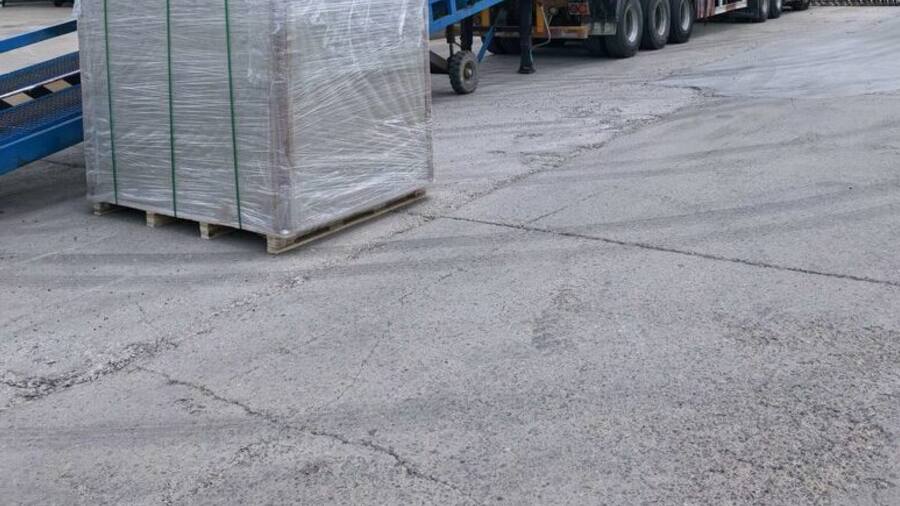
The fast-track installation still requires the retention of basic processes: drainage, debarment, peace-building, positioning, connection and trial passage. The plates remain continuous in line segments, leaving sufficient width at the intersections and outside areas; and they are to be removed from the rigid surface interface. The project manager shall arrange for “recording of the number of vehicles passing through each shift”, while specifying the conditions for decommissioning, so as to prevent irregularity from being left to the next group during rush hours.
Following the opening of access, the focus of the inspection was on the continued support under the plate. The first heavy vehicle passes by to check for high seams, peripheries, mudslides and planks; the shift is repeated after weather changes. The pressure of contact of the forklift ' s solid-heart wheel differs significantly from the concentrated static of the crane ' s legs, and anomalies should be detected first in isolation before being drained, evened or replaced, and the subsequent flow of the vehicle cannot continue to magnify the damage.
Assuming that a large-scale equipment hoisting mission completed in a limited industrial field experienced an increase in traffic during the installation phase of the equipment, managers could first freeze the change of route and then divide the problems into four categories: ground, slabs, vehicles and movement control. Weak positions are reinforced, damage plates are replaced, vehicles are limited in speed, and one-way access is introduced for peak hours. The example does not correspond to the true customer, but shows how to maintain access without expanding the permanent sclerosis area and how to convert the on-site judgement into a reusable list for the next project.
If the transport chain contains coal, ore, wet soil or food, self-release efficiency may be assessed as an independent subject. Car skateboards help to reduce the adhesiveness of certain materials, but prior to installation, the lining thickness, scalables, bolts or presses and tail door motion space should be confirmed. If there is no need for bulk discharges, there is no need to add the subparagraph; the procurement programme should be consistent with the use.
In addition to the total area, the request shall provide a maximum slope and drainage direction, indicating the country, duration, conditions of handling, mode of packaging and port of destination. Compared suppliers can check the documentation, size difference, surface routing, connector, piece weight, effective area coverage, cabinet list and batch retroactive. The whole container shall be purchased in advance to confirm the discharge equipment. The final programme, which involves the safety of the ground, assembly or operation of the airport, must be approved by the project professional.
Need for further evaluation of the actual project?
Applications, sizes, quantities, site photographs or drawings and delivery destinations are sent, on which we can identify more suitable products and processing programmes.







