
The answer to how multi-equipment cross-operations are managed by industrial equipment suspension should start with the course of operation and not with a fixed specification. Forklifts, trucks and cranes should be divided into routes and waiting areas, and who has priority access. There are different pressures on tires, axle loads and the way in which they are carried, as well as on the power and power installations of the port, and the replacement of the airport facilities, which usually include both car hanging, tracked cranes, cranes and hydraulic support equipment. Retroactivity of the legs is concentrated and may vary with the angle of the arm, with the potential to reduce stability in the ground hollow, slope distance and eccentric receptivity. The project team shall first delineate the main corridor, the waiting areas, the loading and unloading points and the emergency export, and then the boundary shall be confirmed jointly by the construction, logistics and security authorities.
In order to determine whether cross-cutting operations could be carried out, the site should be set up at a point rather than taking only a few photographs. In particular, it is necessary to review areas within the airport perimeter that are sensitive to the soil, as dry surface does not represent a continuous carrying of the lower part. The project information shall also include the maximum daily traffic, the duration of the vehicle ' s stay, the direction of loading and unloading, and the drainage route during short and heavy rainfall. For troughs, inspection wells and underground facilities, the prohibited support or need to be reinforced should be indicated in the road map.
The selection is based on the calculation of the local pressure and the examination of whether the plate remains continuous at the grass-roots level. The size and thickness of the leg pads must be determined on the basis of the maximum retroactivity of the leg, the permitted ground-based load and the material performance of the mattress. The common thickness ranges from 15 mm to 30 mm, and this option can first assess 15 mm and then adjust it through a trial preparation or project accounting. The so-called 80 to 120-ton carrier should have a clear test boundary and cannot be cited separately from the distance, temperature, payload distribution and safety factor.
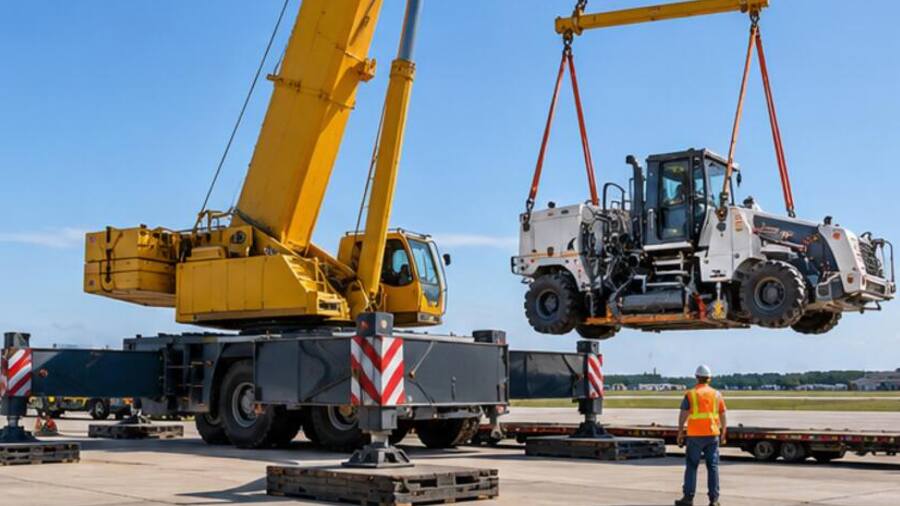
The fast-track installation still requires the retention of basic processes: drainage, debarment, peace-building, positioning, connection and trial passage. The plates remain continuous in line segments, leaving sufficient width at the intersections and outside areas; and they are to be removed from the rigid surface interface. Project leaders should arrange for “the use of soft and clean tools to protect panel-lined roads”, while specifying the conditions for decommissioning and preventing unusual leave to the next group during work-time.
The day-to-day management will include vehicle behaviour in the inspection. Speed-limiting, prohibition of in-situ movement, fixed reverse routes and placement of commanders are often more effective than simply adding plates. The inspectors should touch or step on the suspicious seams, check the links and take photographs to locate them. Where there are repeated shifts, the width of the road, the turn radius and the grass-roots level should be re-evaluated, rather than the continuous consolidation of the same position.
For a large-scale equipment slinging mission performed within a limited industrial field, the extraction site recovery phase could be established as an independent inspection node. On-site identification of vehicle lists and weather is followed by a check of drainage, connections and borders; if any conditions change, release is suspended and the road map updated. This scenario was used only to illustrate the way the project was organized, with an emphasis on reducing the probability of the floor being directly crushed by tyres and legs. It should also record the number of inputs, the time of laying, the time of stoppage, the location of maintenance and the condition of the ground after the evacuation site.
If the transport chain contains coal, ore, wet soil or food, self-release efficiency may be assessed as an independent subject. Car skateboards help to reduce the adhesiveness of certain materials, but prior to installation, the lining thickness, scalables, bolts or presses and tail door motion space should be confirmed. If there is no need for bulk discharges, there is no need to add the subparagraph; the procurement programme should be consistent with the use.
There must be a connection and a need for tools in the request for quotations, otherwise different suppliers are likely to calculate on different assumptions. The procurement staff shall also require the description of the effective size, weight, number of attachments, packing units, container load and delivery cycle of each plate. The evaluation will be based on technical conformity, installation efficiency and turnover. Where key payloads or ground data have not been confirmed, the quotations should be marked as preliminary and the review retained.
Need for further evaluation of the actual project?
Applications, sizes, quantities, site photographs or drawings and delivery destinations are sent, on which we can identify more suitable products and processing programmes.







