
The answer to how the forklift crane and engineering equipment operations were to establish a prior survey list should start with the course of operation and not with a fixed specification. First, the route, load, ground and operational metronic records are complete, and then the number and order of panels are determined. Forklifts, forklifts, forklifts, high-altitude operating vehicles and equipment transporters are usually present at the same time as cross-task operations in port areas, logistics parks, factories and warehouses, with different pressures on tyres, axles and diversions. Forklift tyres are exposed to a small area, with a concentrated retrogression of the legs of the crane, and the two types of equipment cannot be based only on the full tonnage of the vehicle. The project team shall first delineate the main corridor, the waiting areas, the loading and unloading points and the emergency export, and then the boundary shall be confirmed jointly by the construction, logistics and security authorities.
The survey forms can be completed by the four columns of ground, equipment, route and time. The surface column indicates the area of refilling close to the building base and the adjacent drainage port; the equipment column lists the vehicle ' s weight, cargo weight, number of axes and tyre specifications; the route column takes a net width, slope and turn radius; and the time column describes continuous rainfall and shift arrangements. If a crane is present, it should be based on the retroactivity of the leg in the manufacturer ' s worksheet, and it cannot be rated as a ground load.
Road-paving boards are responsible for spreading wheel pressure and leg mats for expanding static support areas, which cannot be replaced by one another. For this scenario, the pavements address the continuous movement of mobile devices and the spread of pressure from the static support points through the leg pads, which need to be accounted for separately. 20 mm could be included as an option and compared with other thickness, subject to the simultaneous verification of plate size, connection structure, grass-roots rigidity and number of passages. The labelling of 120 to 160 tons of products does not mean that all the same vehicles are available on the ground, and ground conditions remain the determining factor.
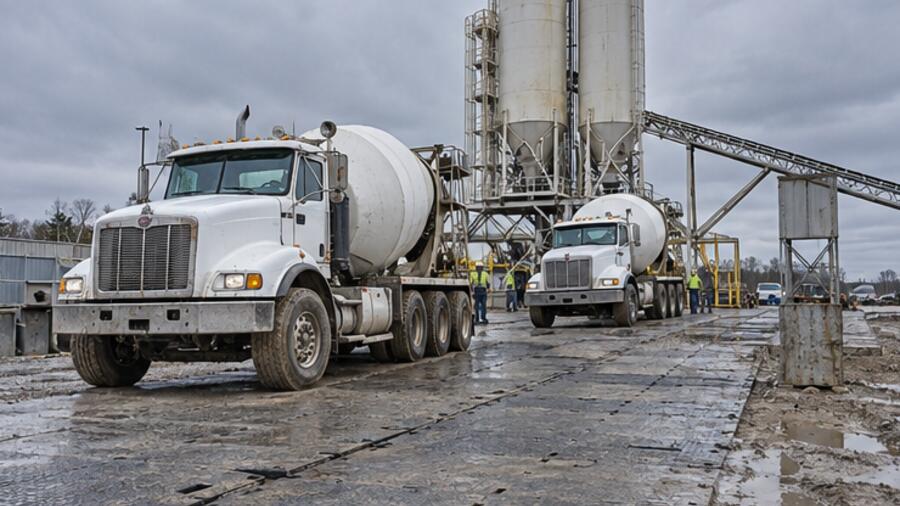
The construction staff should first seal the belts and confirm that no vehicles enter, then clear the floors and tablets. Do not leave the seams in the softest position, and do not let the edges remain open for long periods. Cleaning and installation of sandstones when the link is pierced, so that the connector is not fully in place. A low-speed test traffic was completed and the “dismantling of bulk and sharp material before being removed” was implemented before the next section was opened.
Temporary roads cannot be paved for long. Vehicle brakes, loading overloading and water stowing can gradually change the support under the plate, and surfaces may appear flat and may have created gaps. The site should be inspected before and after peak traffic, after continuous rainfall and when the route changes. In the event of a sinking, the ground and drainage should be checked before deciding whether to change or replace the panels, so as to avoid covering up the problem by filling the panels.
In a simulation plan for the industrial equipment installation area, which is being carried out in conjunction with the mobile crane, the area to which the ground is being prepared is being released in a zoning phase: the area to which the grass-roots treatment and the plate connection have been completed is open and the unaccepted area remains isolated. Each region designates a person responsible for the inspection and uses a number corresponding to the photograph. This example does not represent a specific project commitment, but allows the team to avoid sharing a fuzzy load assumption with different equipment. If the records show repeated maintenance at the same location, they should be re-analysed back to the ground and transport organization.
If the transport chain contains coal, ore, wet soil or food, self-release efficiency may be assessed as an independent subject. Car skateboards help to reduce the adhesiveness of certain materials, but prior to installation, the lining thickness, scalables, bolts or presses and tail door motion space should be confirmed. If there is no need for bulk discharges, there is no need to add the subparagraph; the procurement programme should be consistent with the use.
The procurement list should provide suppliers with a real picture of the work, with the number of trips per day and the number of days spent projected to be the data to be highlighted for the current section. The remaining information includes vehicle and leg loads, ground photographs and sizes, projected number of vehicles, number of days of use, colour trails, destination port and desired period. A comparison of the quotations should be converted to a valid area coverage and complete connection system and not only a single block price; the acceptance and inspection criteria should also be included in the document before the next list.
Need for further evaluation of the actual project?
Applications, sizes, quantities, site photographs or drawings and delivery destinations are sent, on which we can identify more suitable products and processing programmes.







