
When the rain is treated and recovered, “where, what, how many times a day” is written as a verifiable on-site condition. Cross-operating traffic in port areas, logistics parks, factories and warehouses often consists of forklifts, car hangings, forklifts with stretching arms, high-altitude operating vehicles and equipment transport vehicles, with the impact of tyre exposures and low-speed rotations being ignored by the whole tonnage. The more reliable conclusion is that first drainage and the closing of the softest sections of the road is to be completed in phases until the grass-roots level is supported on a continuous basis, before deciding on the combination of pavement, leg pads or local grass-roots treatment.
The survey forms can be completed by the four columns of ground, equipment, route and time. The surface column indicates the interior floor and the adjacent drainage vents that require the protection of epoxy coating; the equipment column lists vehicle self-heaviness, cargo weight, axle numbers and tyre specifications; the route column takes a clean width, slope and turn radius; and the time bar indicates cryogenic freezing and shift arrangements. If a crane is present, it should be based on the retroactivity of the leg in the manufacturer ' s worksheet, and it cannot be rated as a ground load.
The selection is based on the calculation of the local pressure and the examination of whether the plate remains continuous at the grass-roots level. The pavements address the continuous movement of mobile devices and the spread of pressure at static support points through the slabs, which need to be accounted for separately. The common thickness ranges from 15 mm to 30 mm, and this option can first assess 25 mm and then adjust it through trial preparation or project accounting. The so-called 160 to 200-ton carrier should have a clear test boundary and cannot be cited separately from the distance, temperature, payload distribution and safety factor.
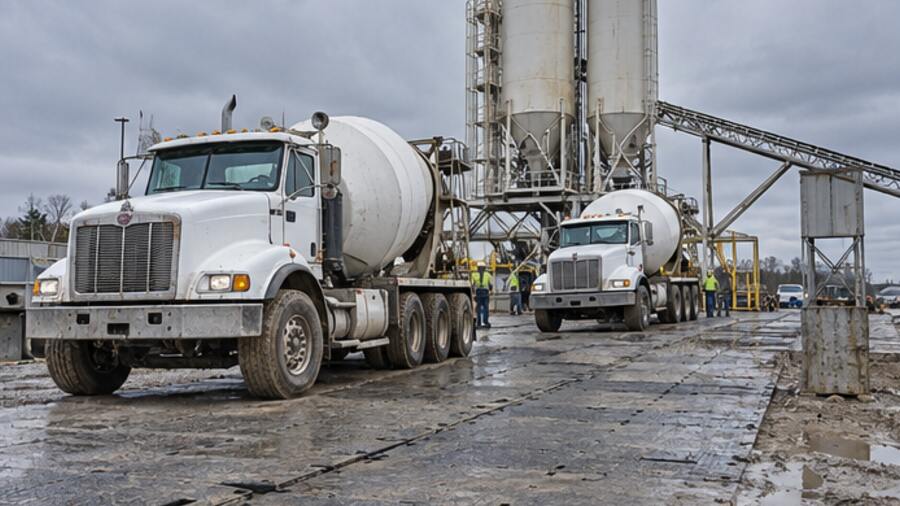
When the plates arrive at the site, the quantity, the connector and the crane are checked and the goods are discharged by route number. Upon completion of the grass-roots level, the vehicle entrance is prepared in sub-sections, and the level and edge support is checked at each stage of completion. The leg area of operation shall be separated from the area of passage. The inclusion of “segregation of damaged plates” in the installation programme would allow field personnel to convert abstract requirements into actionable.
The day-to-day management will include vehicle behaviour in the inspection. Speed-limiting, prohibition of in-situ movement, fixed reverse routes and placement of commanders are often more effective than simply adding plates. The inspectors should touch or step on the suspicious seams, check the links and take photographs to locate them. Where there are repeated shifts, the width of the road, the turn radius and the grass-roots level should be re-evaluated, rather than the continuous consolidation of the same position.
A reference scenario is an industrial installation area where forklifts are transported in conjunction with mobile cranes. During the peak transport phase, the project made a short-term test preparation to record the relocation and deposition of the first vehicle after its adoption, before gradually extending the route. The turn areas, parking areas and pick-up points are inspected separately and no result is used to replace the full condition. This is an example of a methodology rather than a statement of performance, and the expected management effect is to focus the inspection on turnovers, ramps and seams; after completion, a comparison of the original ground photographs, cleaning hours and the number of plates that can be used for use.
Auxiliary equipment also affects the overall programme. A leg pad is required to accompany a vehicle, a forklift is required to focus on tyre contact, and a bulk vehicle may require a slab. The suitability of the UHMWPE liner depends on the work temperature, the chemical environment, the material impact and the car structure, and the manufacturer provides the installation requirements. Each product should be matched to specific equipment in the project form to avoid the use of the same parameter across uses.
In addition to the total area, the request shall provide a maximum slope and drainage direction, indicating the country, duration, conditions of handling, mode of packaging and port of destination. Compared suppliers can check the documentation, size difference, surface routing, connector, piece weight, effective area coverage, cabinet list and batch retroactive. The whole container shall be purchased in advance to confirm the discharge equipment. The final programme, which involves the safety of the ground, assembly or operation of the airport, must be approved by the project professional.
Need for further evaluation of the actual project?
Applications, sizes, quantities, site photographs or drawings and delivery destinations are sent, on which we can identify more suitable products and processing programmes.







