
In the case of turn brakes, the site should first determine whether the target is a continuous transport, a short-term suspension or a temporary stop during peak periods. Cross-operating operations in port areas, logistics parks, factories and warehouses involve forklifts, car hangings, forklifts with scalding arms, high-altitude operating vehicles and equipment transport vehicles, while forklift tyres are exposed to small areas, with a concentrated retrogression of the legs of the crane, and two types of equipment cannot be based solely on the full tonnage of the vehicle. When targets, vehicles and vulnerable positions are matched, the scope is not too large or missing key points; the practical implementation principle is that the in situ shift, the brakes and the ramp start will magnify the horizontal power, which should be broadened, connected and increased frequency of inspections.
The survey forms can be completed by the four columns of ground, equipment, route and time. The ground column indicates temporary intersections and adjacent drainage points shared between construction and production; the equipment column lists vehicle self-heaviness, cargo weights, axle numbers and tyre specifications; the route column takes a net width, slopes and turn radius; and the time column describes the high temperature storm and shift arrangements. If a crane is present, it should be based on the retroactivity of the leg in the manufacturer ' s worksheet, and it cannot be rated as a ground load.
Product selection should be differentiated by stress. The pavements address the continuous movement of mobile devices and the spread of pressure at static support points through the slabs, which need to be accounted for separately. 15, 20, 25 and 30 mm are within the common thickness range and 20 mm can only serve as a starting point for comparison for this project; if there are holes or sediments at the grass-roots level, the increase in thickness will not be a substitute for peace and reinforcement. The 120 to 160 tonnes in the product information should also be understood in conjunction with the test conditions, with the final specifications to be confirmed by the approved programme and field professionals.
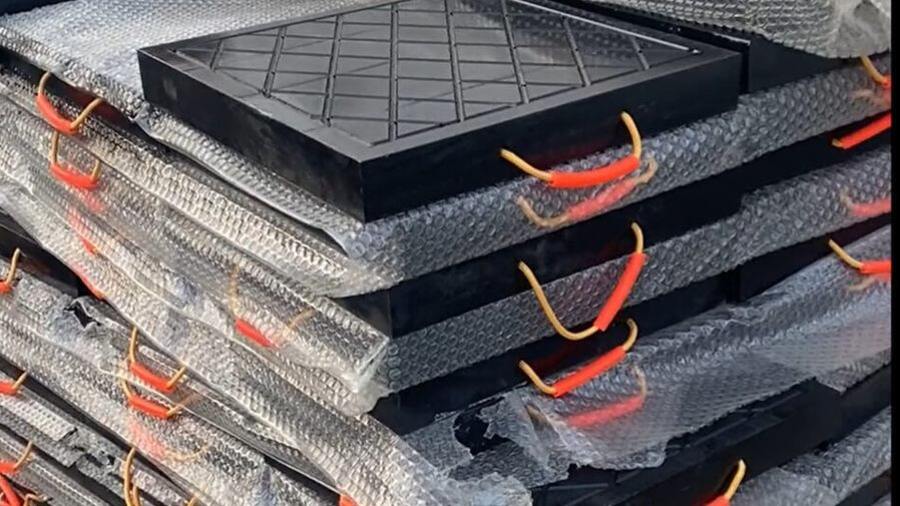
Pre-installation to remove sharp waste, loose rock and mobile mud, and to purge and level the ground. The plates were set up in the main direction and were sewd to avoid the deep path and to check the wells and legs. The turn and reverse areas are to be slightly wider and the connectors are to be locked as required. The site should also implement a “review of the original ground condition after the completion of the project” and include this requirement at the end of the shift and in the traffic organization chart.
Operating records include at least open hours, traffic through vehicles, unusual locations and disposal results. The first group of vehicles shall travel at a low speed to observe whether the plates are moving with the tyres; the second class shall then adjust the speed limits and frequency of the inspection to the records. Forklifts with frequent and rapid turnovers should check for surface wear and, if the crane changes the condition, re-check the retroactivity of the leg. Once maintenance is completed, access will be restored to the designated person.
Assuming an increase in the number of traffic during the evacuation site recovery phase in the area where industrial equipment is installed when a forklift transport is carried out in conjunction with mobile cranes, managers can first freeze the change of route and then divide the problems into four categories: ground, board, vehicle and movement control. Weak positions are reinforced, damage plates are replaced, vehicles are limited in speed, and one-way access is introduced for peak hours. The example does not correspond to the true customer, but it shows how the receiving and inspection records can be matched with photographs and location maps of the site and how the site judgement can be converted into a reusable list for the next project.
Three products may be used in this category at the same time, but the boundaries of the use are clear: road-painted service vehicle routes, leg-past services are centrally supported, and carboard services are applied to bulk discharges. In particular, UHMWPE skateboards need to check the material particle size, water content rate, temperature, impact and car shape. No product could compensate for the error, and the configuration list should be deleted from the field mission.
In order to obtain a comparable offer, the purchaser should harmonize the request for quotations to at least indicate the colour of the sheet, the texture and custom holes, the size of the route, the condition of the vehicle, the condition of the ground and the time of the project. Vendors are required to respond to material plates, sheeting, single weight, connection, packaging, containerization and quantity and quality documents. If the project is purchased on a containerized basis, the capability of the forklift or forklift on site or forklift is also confirmed. All safety-related selections are based on the equipment manual and the approval programme.
Need for further evaluation of the actual project?
Applications, sizes, quantities, site photographs or drawings and delivery destinations are sent, on which we can identify more suitable products and processing programmes.







