
For the cost of repair, the site should first determine whether the target is a continuous transport, short-term suspension or a temporary stop during peak periods. Cross-operating operations in port areas, logistics parks, factories and warehouses involve forklifts, car hangings, forklifts with scalding arms, high-altitude operating vehicles and equipment transport vehicles, while forklift tyres are exposed to small areas, with a concentrated retrogression of the legs of the crane, and two types of equipment cannot be based solely on the full tonnage of the vehicle. When targets, vehicles and vulnerable locations are matched, the scope is not too large or missing; the implementation principle is to protect high-risk wheels and support points in advance, which is usually more manageable than the after-action repair of coatings, grass-roots and drainage facilities.
In order to determine whether the repair costs could be implemented, the site should be set up at a point rather than taking only a few photographs. In particular, there is a need to review the arctics that are formed after repeated crushing, since dry surfaces do not represent a continuous carrying of the lower part. Information on the project should also include the maximum daily traffic, the length of vehicle stay, the direction of handling and the drainage route during high-temperature tan. For troughs, inspection wells and underground facilities, the prohibited support or need to be reinforced should be indicated in the road map.
Road-paving boards are responsible for spreading wheel pressure and leg mats for expanding static support areas, which cannot be replaced by one another. For this scenario, the pavements address the continuous movement of mobile devices and the spread of pressure from the static support points through the leg pads, which need to be accounted for separately. An alternative 25 mm could be included and compared with other thickness, subject to the simultaneous validation of plate sizes, connection structures, grass-roots stratification and number of passages. The labelling of 160 to 200 tons of products does not mean that all the same vehicles are available on the ground, and ground conditions remain the determining factor.
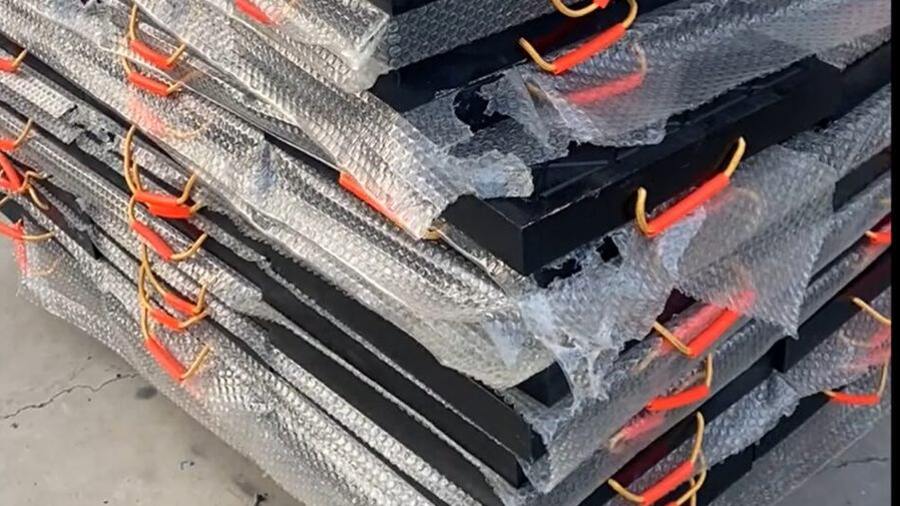
The sequence of laying would allow for the advance from the stable entrance to the area of operations. First, water and high differentials are processed, then the first plate is located; the subsequent plate is consistent in the direction of the texture and check if the seams form the steps. The ramp, turn and brake points shall increase the horizontal constraints or the width of the coverage. For this project, “Arrange a commander to control the car and back-up” could be a key move, with a dedicated person recording the time of completion and the results of the review.
The day-to-day management will include vehicle behaviour in the inspection. Speed-limiting, prohibition of in-situ movement, fixed reverse routes and placement of commanders are often more effective than simply adding plates. The inspectors should touch or step on the suspicious seams, check the links and take photographs to locate them. Where there are repeated shifts, the width of the road, the turn radius and the grass-roots level should be re-evaluated, rather than the continuous consolidation of the same position.
A reference scenario is an industrial installation area where forklifts are transported in conjunction with mobile cranes. The project involves short-term trial preparation during the recovery phase of the evacuation site, recording the relocation and deposition of the first vehicle after its adoption, and a gradual extension of the route. The turn areas, parking areas and pick-up points are inspected separately and no result is used to replace the full condition. This is an example of a methodology rather than a statement of performance, and the expected management effect is to keep the load and load waiting for a steady parking of the vehicle; after completion, a comparison between the original ground photographs, cleaning hours and the number of plates that can continue to be used is required.
In the integrated site, different problems were solved by the pavement, leg mats and carboards. Vehicle traffic is supported by a continuous focus on the maximum retroactivity of the leg and the friction and adhesion of material from the surface of the vehicle. If MHMWPE skateboards are used, thermal stretches should be set aside and fixed systems checked; if relevant material is not available at the site, they should be removed from the list and the investment targeted.
It is best to complete small-scale technical confirmation before the next list. First, the packing form and handling equipment and complete field parameters are submitted, allowing the supplier to give specifications, quantities and packing recommendations; then the sample trail, connection holes, size and material documents are checked; and finally the container type, destination port, method of discharge and batch identification are identified. The supplier recommended that it be used only as an input and that the project party remain responsible for the stabilization of the ground load, traffic organization and lifting.
Need for further evaluation of the actual project?
Applications, sizes, quantities, site photographs or drawings and delivery destinations are sent, on which we can identify more suitable products and processing programmes.







