
Forklift cranes and engineering equipment require preparation of parameters that cannot be answered with single-product parameters prior to the request for operational prices. Project leaders need to view the flow organization, ground support and maintenance capacity at the same time; effective request for quotations requires at least vehicle, payload, ground, route size, quantity and destination port information. When forklifts, vehicle cranes, forklifts, high-altitude operators and equipment transporters enter the port area, logistics parks, factories and warehouses on a cross-section, problems with turnovers, ramps, seams and waiting positions on routes may arise earlier than normal straight-line segments and should be individually marked on drawings.
The degree of completeness of the input conditions determines the quality of the subsequent selection. The length and width of the ramps that have been washed with water for long periods of time at the entrance to the warehouse are first measured, and the maximum performance of the forklift, car hanging, forklift fora fora fora fora fora, high-altitude operating vehicles and equipment transporters is checked. In addition to the weight, the pressure of the tyre, the form of the belt, the position of the brake, the possibility of in situ transfer and the frequency of passage shall be recorded. Short and heavy rainfall should be supplemented by a ground review; if data cannot be confirmed, unknown items should be included as a limitation rather than replaced by empirical values.
Road-paving boards are responsible for spreading wheel pressure and leg mats for expanding static support areas, which cannot be replaced by one another. For this scenario, the pavements address the continuous movement of mobile devices and the spread of pressure from the static support points through the leg pads, which need to be accounted for separately. An alternative 25 mm could be included and compared with other thickness, subject to the simultaneous validation of plate sizes, connection structures, grass-roots stratification and number of passages. The labelling of 160 to 200 tons of products does not mean that all the same vehicles are available on the ground, and ground conditions remain the determining factor.
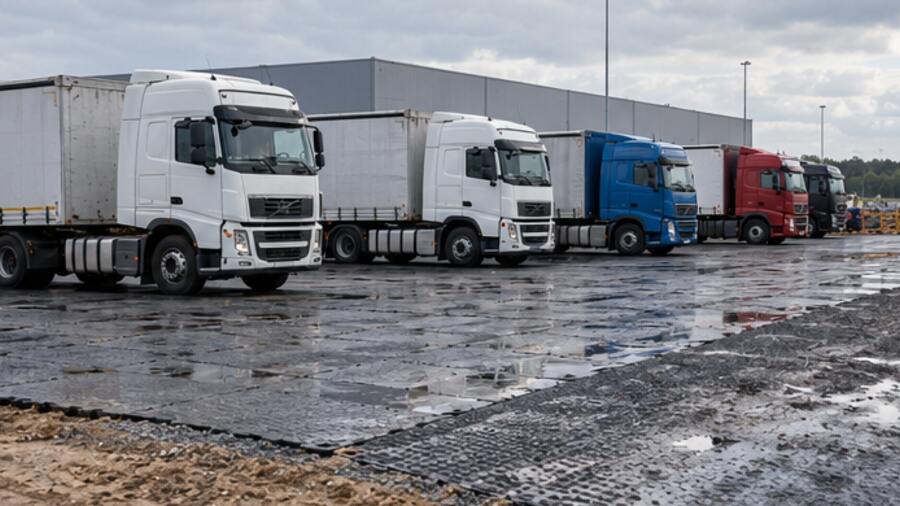
Pre-installation to remove sharp waste, loose rock and mobile mud, and to purge and level the ground. The plates were set up in the main direction and were sewd to avoid the deep path and to check the wells and legs. The turn and reverse areas are to be slightly wider and the connectors are to be locked as required. The site should also put in place a “set-down of the ramp” and include this requirement at the end of the shift and in the traffic organization chart.
Following the opening of access, the focus of the inspection was on the continued support under the plate. The first heavy vehicle passes by to check for high seams, peripheries, mudslides and planks; the shift is repeated after weather changes. The pressure of contact of the forklift ' s solid-heart wheel differs significantly from the concentrated static of the crane ' s legs, and anomalies should be detected first in isolation before being drained, evened or replaced, and the subsequent flow of the vehicle cannot continue to magnify the damage.
In the case of industrial equipment installation areas, where a forklift transport is carried out at the same time as a mobile crane, the site can be divided into five areas for entry, straight, turn, operation and recovery during maintenance repairs. The entry point is responsible for vehicle reconciliation, maintaining continuous coverage of the straight-line segment, increasing the outer width of the turn-band, separate validation of the operating segment and completion of clean bundles in the recovery area. This simulation programme is used to describe the methodology and is not a client-specific performance; it can help the project team to maintain access without expanding permanent hardened areas and leave a record of the number of maintenances and the length of breaks.
Three products may be used in this category at the same time, but the boundaries of the use are clear: road-painted service vehicle routes, leg-past services are centrally supported, and carboard services are applied to bulk discharges. In particular, UHMWPE skateboards need to check the material particle size, water content rate, temperature, impact and car shape. No product could compensate for the error, and the configuration list should be deleted from the field mission.
In addition to the total area, the request for quotations should provide the person in charge of the site and the security clearance process, with an indication of the country, duration, conditions of handling, packing and port of destination. Compared suppliers can check the documentation, size difference, surface routing, connector, piece weight, effective area coverage, cabinet list and batch retroactive. The whole container shall be purchased in advance to confirm the discharge equipment. The final programme, which involves the safety of the ground, assembly or operation of the airport, must be approved by the project professional.
Need for further evaluation of the actual project?
Applications, sizes, quantities, site photographs or drawings and delivery destinations are sent, on which we can identify more suitable products and processing programmes.







