
The width of the corridor has a direct impact on the ability of vehicles to access the site as planned, on the intersection of operations in port areas, logistics parks, factories and warehouses. Forklifts, forklifts, forklifts, high-altitude operating vehicles and equipment transporters, which are common in the field, have different dynamic voltage, stationary outlay and power. Forklift tyres are exposed to a small area, with a concentrated retrogression of the legs of the crane, and the two types of equipment cannot be based only on the full tonnage of the vehicle. The programme should, therefore, first target routes and time windows that must be kept open, before arranging for materials and personnel to avoid temporary changes in rules of passage on the construction side.
The survey forms can be completed by the four columns of ground, equipment, route and time. The ground column indicates that the vehicle has been parked for a long period of time to form a partially sedentary parking belt and a nearby drainage vent; the equipment column lists the vehicle ' s own weight, cargo weight, number of axes and tyre specifications; the route column is taken with a clean width, slope and turn radius; and the time column describes the wet salt fog and the shift schedule. If a crane is present, it should be based on the retroactivity of the leg in the manufacturer ' s worksheet, and it cannot be rated as a ground load.
Material parameters should serve the field rather than be propaganda figures. The pavements address the continuous movement of mobile devices and the spread of pressure at static support points through the slabs, which need to be accounted for separately. The project compares 30 mm and the number of block weights, rigidity, laying efficiency and containers with the adjacent specifications, and cross-checks the links to the surface. 50-80 tonnes are only primary sifts; ground-based and support designs should be completed first when an underground hole, weak shoulder or hanger overload exists.
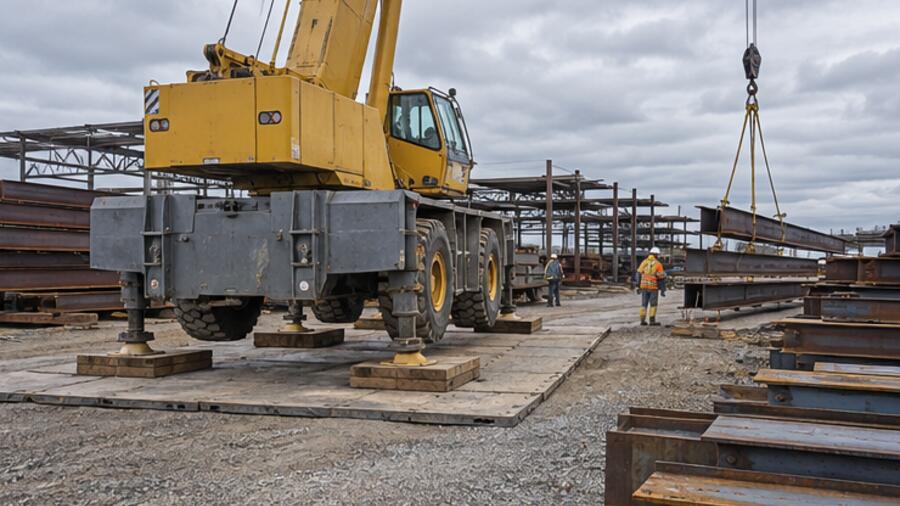
The sequence of laying would allow for the advance from the stable entrance to the area of operations. First, water and high differentials are processed, then the first plate is located; the subsequent plate is consistent in the direction of the texture and check if the seams form the steps. The ramp, turn and brake points shall increase the horizontal constraints or the width of the coverage. For this item, “the location of each plate will be marked with a numbering chart” will be used as a key action to record the completion time and the results of the review.
Following the opening of access, the focus of the inspection was on the continued support under the plate. The first heavy vehicle passes by to check for high seams, peripheries, mudslides and planks; the shift is repeated after weather changes. The pressure of contact of the forklift ' s solid-heart wheel differs significantly from the concentrated static of the crane ' s legs, and anomalies should be detected first in isolation before being drained, evened or replaced, and the subsequent flow of the vehicle cannot continue to magnify the damage.
In the case of industrial equipment installation areas, where a forklift transport is carried out at the same time as a mobile crane, the site can be divided into five areas during the installation phase of the equipment to enter, go straight, turn, operate and recover. The entry point is responsible for vehicle reconciliation, maintaining continuous coverage of the straight-line segment, increasing the outer width of the turn-band, separate validation of the operating segment and completion of clean bundles in the recovery area. This simulation programme is used to illustrate the methodology and is not a client-specific performance; it helps project teams to synchronize the clean-up and classification of panels when they are evacuated and to keep records of the number of maintenances and the length of breaks.
In the integrated site, different problems were solved by the pavement, leg mats and carboards. Vehicle traffic is supported by a continuous focus on the maximum retroactivity of the leg and the friction and adhesion of material from the surface of the vehicle. If MHMWPE skateboards are used, thermal stretches should be set aside and fixed systems checked; if relevant material is not available at the site, they should be removed from the list and the investment targeted.
Indoor and outdoor temperatures and chemical contamination must be present in the request for quotations, otherwise different suppliers are likely to calculate on different assumptions. The procurement staff shall also require the description of the effective size, weight, number of attachments, packing units, container load and delivery cycle of each plate. The evaluation will be based on technical conformity, installation efficiency and turnover. Where key payloads or ground data have not been confirmed, the quotations should be marked as preliminary and the review retained.
Need for further evaluation of the actual project?
Applications, sizes, quantities, site photographs or drawings and delivery destinations are sent, on which we can identify more suitable products and processing programmes.







