
Forklift cranes and engineering equipment operations cannot be answered with single-product parameters for setting acceptance standards. Project leaders need to check both traffic organization, ground support and maintenance capabilities; receiving and inspection check the continuity of routes, high seams, panel stability, clear borders and obstruction of drainage. When forklifts, vehicle cranes, forklifts, high-altitude operators and equipment transporters enter the port area, logistics parks, factories and warehouses on a cross-section, problems with turnovers, ramps, seams and waiting positions on routes may arise earlier than normal straight-line segments and should be individually marked on drawings.
The project team could complete a joint pedestal before the vehicle enters the field, focusing on a narrow field, low drainage points, ramps and available car space, where the heavy turn radius is insufficient. The retroactivity of the legs of the vehicle ' s axial load, the exterior dimensions, the minimum convective radius and the equipment for the suspension was then collected. Short and heavy rainfall can change the state of the grass-roots level, so measurements need to be date- and weather-specific. All parameters should be consolidated in the same version of the road map and equipment list.
The selection is based on the calculation of the local pressure and the examination of whether the plate remains continuous at the grass-roots level. The pavements address the continuous movement of mobile devices and the spread of pressure at static support points through the slabs, which need to be accounted for separately. The common thickness ranges from 15 mm to 30 mm, and this option can first assess 30 mm and then adjust it through trial preparation or project accounting. The so-called 50-80-ton carrier should have a clear test boundary and cannot be cited separately from the distance, temperature, payload distribution and safety factor.
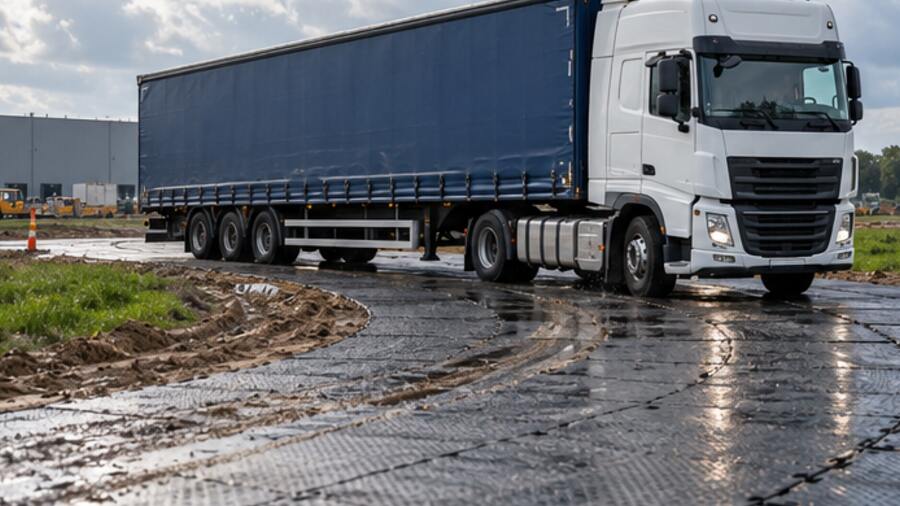
The sequence of laying would allow for the advance from the stable entrance to the area of operations. First, water and high differentials are processed, then the first plate is located; the subsequent plate is consistent in the direction of the texture and check if the seams form the steps. The ramp, turn and brake points shall increase the horizontal constraints or the width of the coverage. For this project, the key action could be “the immediate discontinuation of the slurry when it is found to be coming out of the seam” and the completion time and the results of the review could be recorded by a dedicated person.
Operating records include at least open hours, traffic through vehicles, unusual locations and disposal results. The first group of vehicles shall travel at a low speed to observe whether the plates are moving with the tyres; the second class shall then adjust the speed limits and frequency of the inspection to the records. Forklifts with frequent and rapid turnovers should check for surface wear and, if the crane changes the condition, re-check the retroactivity of the leg. Once maintenance is completed, access will be restored to the designated person.
Assuming an increase in the number of traffic during the maintenance and repair phase in the industrial equipment installation area, where a forklift transport is carried out at the same time as a mobile crane, managers can first freeze the change of route and then divide the problems into four categories: ground, board, vehicle and movement control. Weak positions are reinforced, damage plates are replaced, vehicles are limited in speed, and one-way access is introduced for peak hours. The example does not correspond to the true customer, but shows how to reduce the amount of time spent on cleaning car sticky and how to convert the site judgement into a list of reusable items for the next project.
In the integrated site, different problems were solved by the pavement, leg mats and carboards. Vehicle traffic is supported by a continuous focus on the maximum retroactivity of the leg and the friction and adhesion of material from the surface of the vehicle. If MHMWPE skateboards are used, thermal stretches should be set aside and fixed systems checked; if relevant material is not available at the site, they should be removed from the list and the investment targeted.
The procurement list should allow suppliers to see the real situation, in which the total length, net width and turn radius are data that need to be highlighted and supplemented. The remaining information includes vehicle and leg loads, ground photographs and sizes, projected number of vehicles, number of days of use, colour trails, destination port and desired period. A comparison of the quotations should be converted to a valid area coverage and complete connection system and not only a single block price; the acceptance and inspection criteria should also be included in the document before the next list.
Need for further evaluation of the actual project?
Applications, sizes, quantities, site photographs or drawings and delivery destinations are sent, on which we can identify more suitable products and processing programmes.







