
In processing the acceptance criteria, “where to go, what to go, how many times a day” is written as a verifiable on-site condition. The flow of vehicles to and from equipment relocation workshops, production line retrofitting areas and plant premises often consists of forklifts, trajectories, hydraulic modular vehicles, equipment loaders and small cranes, with the impact of tyre exposure and low-speed rotations being ignored by the whole tonnage. The more reliable conclusion is that the acceptance and inspection is to check the continuity of the route, the high seams, the stability of the surface, the clarity of the border and the obstruction of drainage, and then determine the combination of pavement, leg mats or local grass-roots treatment.
The survey forms can be completed by the four columns of ground, equipment, route and time. The surface column indicates the mixed ground and adjacent drainage vents in a wet salt mist environment in the port area; the equipment column lists the vehicle ' s own weight, cargo weight, axle numbers and tyre specifications; the route column takes a clean width, slope and turn radius; and the time column describes the wet salt fog and the shift schedule. If a crane is present, it should be based on the retroactivity of the leg in the manufacturer ' s worksheet, and it cannot be rated as a ground load.
The selection is based on the calculation of the local pressure and the examination of whether the plate remains continuous at the grass-roots level. Appropriate pavements of surfaced roads can isolate tyres from the floor, and a calculator leg pad should be used below a crane or equipment jack. The common thickness ranges from 15 mm to 30 mm, and this option can first assess 20 mm and then adjust it through trial preparation or project accounting. The so-called 50-80-ton carrier should have a clear test boundary and cannot be cited separately from the distance, temperature, payload distribution and safety factor.
The fast-track installation still requires the retention of basic processes: drainage, debarment, peace-building, positioning, connection and trial passage. The plates remain continuous in line segments, leaving sufficient width at the intersections and outside areas; and they are to be removed from the rigid surface interface. The project leader should arrange for “a review of the original ground condition after the completion of the project” and at the same time clarify the conditions for decommissioning in order to prevent irregularity from being left to the next group when work is due.
Maintenance staff can divide the straight-line, turn-out, waiting areas and support points into different levels of inspection. The straight-line sections focus on the sutures and the tracks, turn around and look for lateral shifts, wait areas to see long-term static sinking, and support points to check whether the pads and the ground are sunk. Shorter check intervals after rain or when the traffic suddenly increases; any plate-side rise, loose connection or grass-roots plasma should trigger decommissioning.
In the case of a relocation route for equipment that passes through normal production areas, the site can be divided into five areas during the extraction site recovery phase, straight ahead, turn, operate and recover. The entry point is responsible for vehicle reconciliation, maintaining continuous coverage of the straight-line segment, increasing the outer width of the turn-band, separate validation of the operating segment and completion of clean bundles in the recovery area. This simulation programme is used to describe the methodology and is not a client-specific performance; it can help the project team to position the problem sheets by number and leave a record of the number of maintenances and interruptions.
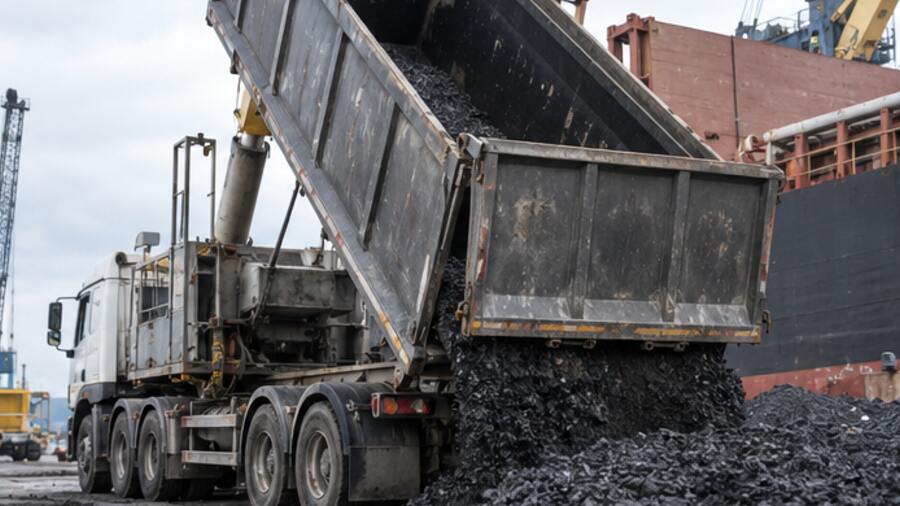
Auxiliary equipment also affects the overall programme. A leg pad is required to accompany a vehicle, a forklift is required to focus on tyre contact, and a bulk vehicle may require a slab. The suitability of the UHMWPE liner depends on the work temperature, the chemical environment, the material impact and the car structure, and the manufacturer provides the installation requirements. Each product should be matched to specific equipment in the project form to avoid the use of the same parameter across uses.
There must be a demand for samples or small-scale trials in the request for quotations, otherwise different suppliers are likely to base their calculations on different assumptions. The procurement staff shall also require the description of the effective size, weight, number of attachments, packing units, container load and delivery cycle of each plate. The evaluation will be based on technical conformity, installation efficiency and turnover. Where key payloads or ground data have not been confirmed, the quotations should be marked as preliminary and the review retained.
Need for further evaluation of the actual project?
Applications, sizes, quantities, site photographs or drawings and delivery destinations are sent, on which we can identify more suitable products and processing programmes.







