
The combination of drainage and ground protection in plant workshop ground protection cannot be answered with a single product parameter. Project leaders need to look at the flow organization, ground support and maintenance capacity at the same time; underboard water accumulates at the grass-roots level and takes the finer, and it is necessary to keep the drainage direction and clean up the exports. When forklifts, trajectories, hydraulic modular vehicles, equipment loaders and small cranes enter the equipment relocation workshop, the production line retrofitting area and the factory entrance, problems with turnovers, ramps, seams and waiting positions on the route may arise earlier than the normal straight-line segment and shall be individually marked on the drawings.
The project team could complete a joint pedal survey before the vehicle enters the site, focusing on old sites, low drainage points, ramps and available vehicle space with visible ups and downs. The retroactivity of the legs of the vehicle ' s axial load, the exterior dimensions, the minimum convective radius and the equipment for the suspension was then collected. High-temperature tans may change the state at the grass-roots level, so measurements need to be date- and weather-specific. All parameters should be consolidated in the same version of the road map and equipment list.
The selection is based on the calculation of the local pressure and the examination of whether the plate remains continuous at the grass-roots level. Appropriate pavements of surfaced roads can isolate tyres from the floor, and a calculator leg pad should be used below a crane or equipment jack. The common thickness ranges from 15 mm to 30 mm, and this option can first assess 15 mm and then adjust it through a trial preparation or project accounting. The so-called 160 to 200-ton carrier should have a clear test boundary and cannot be cited separately from the distance, temperature, payload distribution and safety factor.
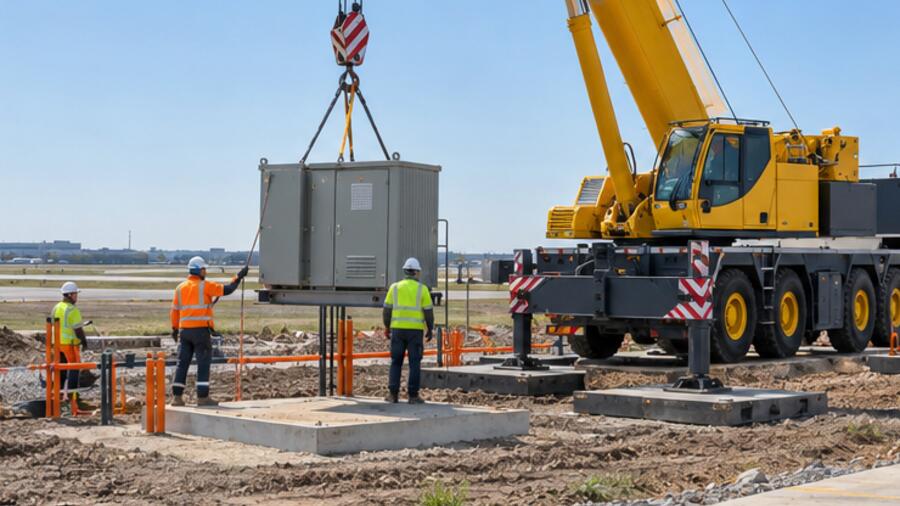
Pre-installation to remove sharp waste, loose rock and mobile mud, and to purge and level the ground. The plates were set up in the main direction and were sewd to avoid the deep path and to check the wells and legs. The turn and reverse areas are to be slightly wider and the connectors are to be locked as required. This requirement should also be included at the end of the shift and in the traffic organization chart.
The day-to-day management will include vehicle behaviour in the inspection. Speed-limiting, prohibition of in-situ movement, fixed reverse routes and placement of commanders are often more effective than simply adding plates. The inspectors should touch or step on the suspicious seams, check the links and take photographs to locate them. Where there are repeated shifts, the width of the road, the turn radius and the grass-roots level should be re-evaluated, rather than the continuous consolidation of the same position.
In a simulation plan for the relocation of equipment through normal production areas, a zonal release was introduced during the peak transport phase: the area that had completed the grass-roots processing and plate connection was opened and the unaccepted area remained isolated. Each region designates a person responsible for the inspection and uses a number corresponding to the photograph. This example does not represent specific project commitments, but allows teams to accumulate comparable data for subsequent projects. If the records show repeated maintenance at the same location, they should be re-analysed back to the ground and transport organization.
In the integrated site, different problems were solved by the pavement, leg mats and carboards. Vehicle traffic is supported by a continuous focus on the maximum retroactivity of the leg and the friction and adhesion of material from the surface of the vehicle. If MHMWPE skateboards are used, thermal stretches should be set aside and fixed systems checked; if relevant material is not available at the site, they should be removed from the list and the investment targeted.
In addition to the total area, the request for quotations shall provide information on the ground type, water-bearing state and permissible carrying capacity, as well as a description of the country, the duration, the conditions of handling, the manner of packing and the port of destination. Compared suppliers can check the documentation, size difference, surface routing, connector, piece weight, effective area coverage, cabinet list and batch retroactive. The whole container shall be purchased in advance to confirm the discharge equipment. The final programme, which involves the safety of the ground, assembly or operation of the airport, must be approved by the project professional.
Need for further evaluation of the actual project?
Applications, sizes, quantities, site photographs or drawings and delivery destinations are sent, on which we can identify more suitable products and processing programmes.







